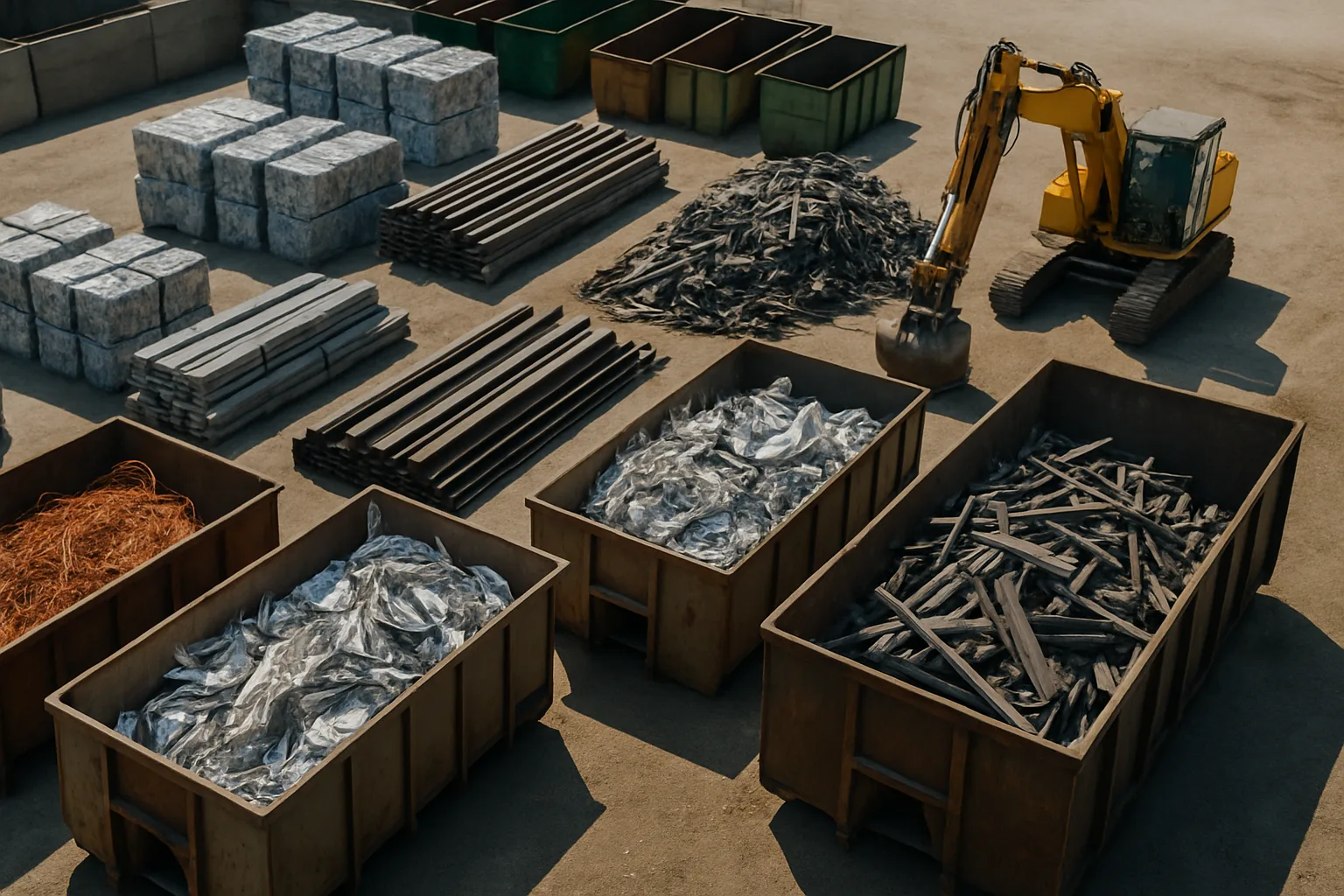
Most people drive up to a scrap yard, hand over their metal, and walk away with a number they didn't see coming. If you've ever left wondering whether you got a fair price — you're not alone. Understanding how scrap yards actually weigh and price your metals puts you in control. Whether you're hauling in a load from a renovation job in Brandon, cleaning out a shop in rural Manitoba, or dropping off a pile of copper wire, the process is more transparent than most sellers realize — once you know what to look for.
This guide breaks down exactly how yards assess your material, what drives the numbers on the board, and how platforms like SMASH scrap metal auction are changing the way sellers get paid.
---How Scrap Yards Actually Weigh Your Metal
Every transaction starts at the scale. Commercial scrap yards use certified platform scales — also called truck scales or drive-on scales — to weigh incoming loads. You pull your vehicle onto the scale, they record your gross weight. You offload your material, drive back over the scale, and they subtract the tare weight (that's your empty vehicle). What's left is your net weight — the number they'll pay you on.
This process sounds simple, but the details matter. A scale that hasn't been recently certified can drift. Tare weights can vary depending on fuel level and what's still in your truck. The better yards in the Brandon area post their scale certifications publicly or will show them on request. Always ask if you're unsure. Certified scales in Canada are regulated under Measurement Canada standards — and any reputable yard is required to comply.
For smaller loads — a trunk full of aluminum cans, a bag of copper fittings — yards use bench scales or hanging scales. These are faster but work on the same principle: gross minus tare equals net. The key is consistency and certification.
How Scrap Metal Prices Are Set — and Why They Change Daily
The price board at your local scrap yard isn't arbitrary. Yards base their buy prices on commodity markets — primarily the London Metal Exchange (LME) for non-ferrous metals like copper, aluminum, brass, and stainless, and regional index pricing for ferrous metals like steel and iron. Those market prices move every single trading day.
Here's what that means in practice: the price you got for your copper last Tuesday may be different from what you'd get this Tuesday. Scrap metal prices today can shift based on global demand, supply chain pressures, currency exchange (especially relevant when you're selling in CAD), and seasonal patterns. Yards also factor in their processing costs, transport to the mill, and the local supply-demand balance.
Beyond the commodity price, yards apply a grade discount. Clean #1 copper wire gets top dollar. Copper with insulation, solder, or mixed alloys gets priced lower — because the yard has to process it before it's sellable to a mill. The same logic applies across every metal category:
- Aluminum: Clean extrusion vs. mixed aluminum vs. painted or coated aluminum all land at different price points.
- Steel: Heavy melt, plate and structural, and light iron are separate grades with separate prices.
- Catalytic converters: Priced individually based on precious metal content — grade matters enormously here.
- Stainless steel: Grade 304 vs. 316 vs. 430 — the alloy composition changes the value significantly.
If you want a realistic number before you load up your truck, read Canadian scrap yard guides that break down grading by metal type — understanding the grade your material will be assigned is the fastest way to avoid being surprised at the window.
The Grading Process: What the Yard Is Looking For
Before they weigh your load, a yard inspector will sort and grade your material. This is where a lot of sellers lose money — not because they're being cheated, but because they don't know how their metal will be classified.
Yards look at several factors during grading:
- Contamination: Dirt, rubber, plastic, insulation, and non-metal attachments all drive your grade down. A clean load pays more.
- Alloy identification: For non-ferrous metals, yards may use a handheld XRF analyzer (an alloy testing gun) to confirm the exact composition of your material. This is standard practice for stainless, aluminum, and high-value alloys.
- Size and form: Shredded, baled, or cut-to-length material is easier to process. Oversized pieces, tangled wire, or mixed bundles get graded lower because of the extra handling required.
- Origin documentation: Some yards — especially for higher-value loads or catalytic converters — will ask for a bill of lading (BOL), packing list, or proof of ownership. This is increasingly standard across Manitoba and the rest of Canada as anti-theft regulations tighten.
Clean your material before you bring it in. Pull off the plastic, strip the insulation if it's worth your time, and separate your metals by type. It takes an extra hour on your end — and it can meaningfully change what you walk away with.
Single Buyer vs. Competitive Bids: Why the Gap Can Be Significant
Here's the part most sellers don't think about. When you drive to one yard and accept their price, you've got exactly one data point. You don't know if the yard across town would have paid more. You don't know what the market actually looked like that day.
That's the old way: one buyer, one phone call, one price. You take it or you drive somewhere else and hope for better. For occasional sellers with a small load, that might be fine. But if you're moving volume — loads of non-ferrous, cores, a collection of cats, a full truckload of material — leaving money on the table because you didn't test the market is a real cost.
This is exactly the problem SMASH was built to fix. SMASH puts your documented load in front of multiple vetted buyers simultaneously. Instead of one price from one yard, you get competitive bids — and competition reveals what the market actually values your material at. More buyers means better price discovery. That's not a slogan; that's how markets work.
If you're a yard operator or a high-volume seller in Brandon or anywhere else in Canada, find a scrap yard near you in Canada and compare what you're currently getting against what a competitive process might deliver. The gap isn't always huge — but it's rarely zero.
Documentation, Photos, and Why They Matter for Your Price
Professional buyers — especially those bidding through auction platforms — pay more for documented loads. Here's why: if a buyer can see a clear photo of your material, a weight from a certified scale, and a serial or grade note, they can bid confidently. When they're bidding blind, they discount for risk.
Good documentation for a load includes:
- Photos of the material before loading (top view, side view, any relevant detail shots)
- Certified scale weight or estimated weight range if pre-weighed
- Metal type and grade (as best you can identify it)
- Any serial numbers for cores or catalytic converters (VIN lookup is useful here)
- A packing list or basic inventory if you're selling multiple metal types in one load
Platforms like SMASH build this documentation process into the listing workflow — photo uploads, inventory tools, serial and VIN tracking. When buyers see a well-documented load, they bid sharper. Documented inventory gives buyers more confidence, and that confidence flows back to the seller as a better price. It's a straightforward dynamic that most sellers never take advantage of because the old single-yard system never required it.
Finding the Right Buyer in Brandon and Across Manitoba
Not every scrap yard is right for every load. A yard that specializes in ferrous and light iron might not be your best option for a pallet of stainless steel or a collection of catalytic converters. Knowing which buyers in your area are actively looking for your specific material type — and which ones are currently well-stocked and less motivated to bid high — changes your outcome.
If you're in Brandon or surrounding communities across Manitoba, you have options. Regional yards handle everything from light iron and appliances to aluminum, copper, and automotive cores. The question is whether you're getting to all of them or just the one closest to your shop.
To locate the closest Canadian scrap yard and understand which facilities take what material, use a directory built specifically for Canadian sellers. And when you're ready to move serious volume, putting that load in front of multiple vetted buyers through SMASH is how you stop guessing and start knowing what your material is actually worth.
Prices fluctuate. Market conditions change week to week. Always check current rates before you load your truck — this article reflects general market dynamics as of July 2026, and commodity prices move daily.
If you've been driving to the same yard out of habit, it might be time to run the numbers. Start at scrap-yard-near-me.ca — find trusted facilities near you, understand your options, and make sure your next load gets the price it deserves.
---Frequently Asked Questions
Q: How do I know if a scrap yard in Brandon is giving me a fair price?
The best way to benchmark is to get more than one quote. Call two or three yards with the same material description and compare. For larger loads, platforms like SMASH let you get competitive bids from multiple vetted buyers simultaneously — which is the clearest signal of what your material is actually worth on the market today.
Q: What affects scrap metal prices today in Manitoba?
Scrap metal prices are tied to global commodity markets — primarily the London Metal Exchange for non-ferrous metals. Local factors like transportation costs, mill demand, and the CAD/USD exchange rate also influence what Manitoba yards pay. Prices can shift daily, so always check current rates before you sell. This article reflects general conditions as of July 2026.
Q: Does it matter how I prepare my metal before bringing it to a scrap yard near me?
Absolutely. Clean, separated, and uncontaminated metal gets graded higher — and higher grades pay more. Strip insulation from copper wire, remove plastic and rubber attachments from aluminum, and keep your metal types separate. An hour of prep at home can meaningfully increase what you're paid at the window.
Q: What is the best scrap yard in Brandon for selling non-ferrous metal?
The best yard depends on what you're selling and current buyer demand. Use scrap-yard-near-me.ca to find facilities near Brandon that accept your specific material type. For higher-value non-ferrous loads, getting competitive bids through a platform like SMASH can reveal whether local yard pricing is aligned with the broader market.
Q: Do scrap yards in Brandon require documentation for drop-offs?
Requirements vary by yard and by material type. For catalytic converters, cores, and higher-value metals, most yards now require photo ID and may ask for a bill of lading or proof of ownership — this is standard practice across Manitoba as anti-theft regulations have strengthened. For basic ferrous loads, requirements are typically lighter. When in doubt, call ahead.
---Follow SMASH on LinkedIn for weekly market insights, scrap metal price updates, and industry news across Canada.