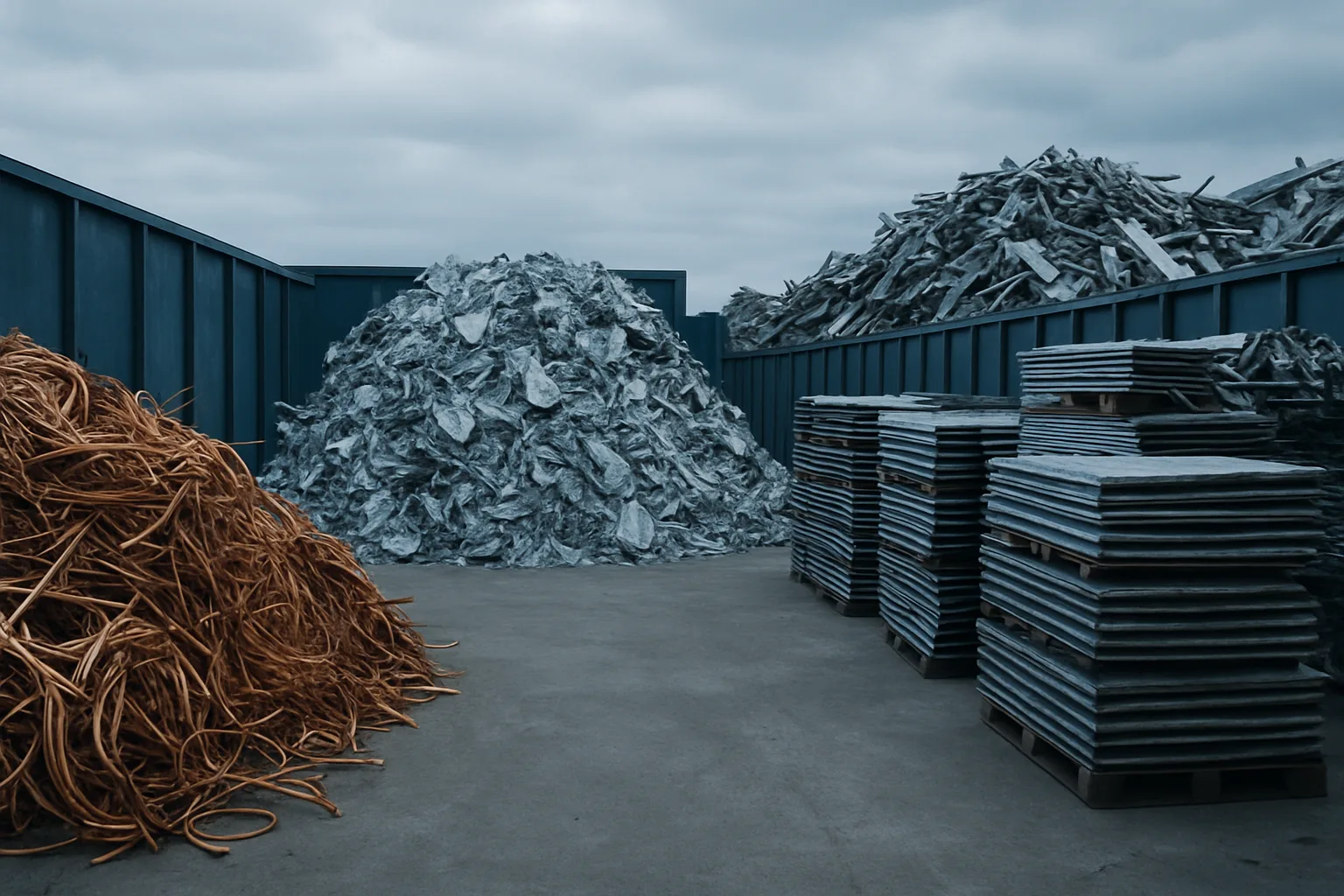
You Drop Off the Load. Then What? Inside the Scrap Metal Journey After the Yard Buys It
Most people who pull up to a local scrap yard in Brampton hand over their metal, collect their cash, and drive away. That's the whole transaction as far as they're concerned. But what happens to that pile of copper wire, those old catalytic converters, or that rusted car frame after the gate closes? Understanding the downstream journey matters — not just out of curiosity, but because it directly affects what yards pay you today and what they'll pay you next month.
This is a market report, not a feel-good recycling story. Knowing how your metal moves helps you sell smarter.
The First Stop: Sorting, Grading, and Consolidation at the Yard
When your load hits the scale, the yard isn't just weighing it — they're already mentally sorting it. Every piece of metal gets assigned a grade based on alloy, contamination level, and form factor. Clean bare bright copper wire is worth more than insulated wire not because of the wire itself, but because of the processing cost difference downstream.
Yards in Brampton and across Ontario accumulate incoming loads until they can build a full truckload or container of a single grade. That consolidation step is critical. Buyers at mills and smelters don't want mixed loads — they want consistency. A yard that can deliver 20 tonnes of clean #1 copper gets a better per-pound price than one piecing together a mixed container.
- Ferrous metals (steel, iron, cast) typically get baled, shredded, or torched into manageable forms before shipping to steel mills.
- Non-ferrous metals (copper, aluminum, brass, stainless) are hand-sorted into specific grades, then consolidated into lots for smelters or secondary refiners.
- Catalytic converters go into a completely separate stream — more on that in a moment.
This is where documentation matters more than most sellers realize. Yards that track their inventory with precision — weights by grade, source, photo records — can build more accurate loads and negotiate better with buyers. Platforms like sell your scrap metal on SMASH Recycling give yards exactly that kind of inventory infrastructure, which tightens the whole operation from intake to outbound sale.
Catalytic Converters: The Most Complex Downstream Path in the Yard
If you're dropping off cats at a local scrap yard in Brampton, your converter doesn't get melted down locally. Not even close. The downstream journey for cats is the longest and most specialized in the scrap world.
Here's what actually happens:
- Grading at intake: Yards identify the converter by make, model, and year — often using VIN-based lookup tools or serial tracking — to assign a market value based on the platinum group metals (PGMs) inside.
- Lot building: Cats are consolidated into lots, often hundreds or thousands of units, before being sold to a processor.
- Processing: A specialized processor decans the converters, crushes the ceramic substrate, and sends the powder to an assay lab.
- Assay and refining: The lab measures the exact PGM content — platinum, palladium, rhodium — and the material goes to a refinery to be separated and purified.
- Re-entry into manufacturing: Refined PGMs feed back into automotive manufacturing, electronics, jewelry, and pharmaceutical production.
The reason cat prices swing so hard — sometimes dramatically week over week — is that PGM prices trade on commodity exchanges with real-time volatility. If you want to sell catalytic converters online or through a competitive platform rather than settling for a single buyer's posted rate, the difference in what you receive can be meaningful. That's exactly the tension SMASH was built to solve: one buyer guessing at your price versus multiple vetted buyers competing for your load.
Where Ferrous Metal Goes: From Your Yard to the Steel Mill
Ferrous scrap — your old beams, car bodies, appliance steel, rebar — has a more direct downstream path, but scale is everything. Individual loads from a single yard aren't large enough to ship direct to a steel mill. So yards sell to dealers, who consolidate loads from multiple yards, who then ship to mills.
Steel mills use scrap as a primary input in electric arc furnace (EAF) production. EAF mills don't need iron ore — they melt scrap directly, which is why the health of the scrap market is tied so tightly to steel demand. When construction slows, infrastructure projects stall, or automotive production dips, ferrous scrap prices follow. The yard you visited in Brampton felt that the same week the mill did.
In Ontario, proximity to major manufacturing corridors means yards often have shorter supply chains to mills than yards in more remote regions. That geographic advantage can translate — sometimes — into slightly better rates on heavy steel grades. But it's never guaranteed, and it changes with freight costs and mill capacity.
Non-Ferrous Metal: The Path to Smelters and Secondary Refiners
Non-ferrous scrap commands higher prices per pound, but it also demands more precision in the supply chain. Copper, aluminum, brass, zinc, lead — each one has its own grading system, its own set of buyers, and its own refining destination.
Copper wire, for example, might move from your Brampton yard to a regional dealer, then to a wire chopping operation that separates copper from insulation, then to a copper smelter that produces refined copper cathode, which then sells to wire and rod manufacturers. Each step adds value — and each step takes a margin.
That's why the price you see posted on a yard's board is never the terminal price. It's the terminal price minus every downstream handler's cut. Yards that access more competitive buyer pools on the outbound side can sometimes afford to offer stronger intake prices. Competitive auction platforms like sell your scrap metal on SMASH Recycling exist precisely because more buyer competition on the sale side creates better price discovery for everyone in the chain — including you at intake.
If you want to understand how yards price what they pay you, read Canadian scrap yard guides that break down the math behind the margin.
Why Downstream Market Conditions Set Today's Scrap Metal Price
Here's the direct connection between what happens after the yard buys your metal and what the yard pays you right now: yards price their intake based on what they can sell outbound for, minus their operating costs and margin. Full stop.
If a mill in Hamilton posts a lower buy price this week, yards in Brampton adjust their ferrous intake rates accordingly — usually within days. If palladium futures drop on the London Platinum and Palladium Market, cat prices at street level follow. If aluminum ingot demand slows because of a manufacturing pullback, your old wheels and extrusions are worth less at the scale.
This is why chasing a single posted price from one yard is a weak strategy. Prices move. Yards have different outbound relationships, different buyer pools, different operating structures. What one yard offers for a mixed non-ferrous load might be materially different from what another quotes for the same material — and both quotes might be honest, just reflecting different downstream access.
The smartest sellers — whether you're a one-time homeowner cleaning a garage or a business moving regular loads — treat scrap pricing like any other commodity. Get multiple data points. Document your material. Know your grades. When you're ready to find a scrap yard near you in Canada, go in informed, not just hopeful.
Disclaimer: Scrap metal prices fluctuate daily based on commodity markets, local demand, and yard conditions. Always check current rates directly with your yard or through a live platform before making decisions. Prices in this article are contextual, not quoted rates.
How SMASH Connects the Dots Between the Yard and the Buyer Market
Most sellers never see past the scale. Most yards manage their outbound sales the old way — a few trusted buyers, a phone call, a verbal quote. That works until it doesn't. One slow buyer, one missed call, one relationship that's gone stale, and you're leaving money on the table load after load.
SMASH puts the auction format into that outbound sale. Vetted buyers compete for loads — cats, non-ferrous, cores, whatever the yard is moving. The yard uploads inventory with photos, weights, and documentation. Buyers bid. Auto-invoicing and BOL handling reduce the admin drag. No subscription fees. SMASH only makes money when the yard does.
For sellers trying to locate the closest Canadian scrap yard that's operating efficiently and paying competitive rates, the yards plugged into real buyer competition on their outbound side are often the ones with more room to move on intake pricing. That's not a guarantee — it's market logic. More buyer competition can help reveal the real market. Better price discovery on the sale side makes the whole chain healthier.
If you're in Brampton and want to understand your options — whether that's dropping a load at a local yard or exploring platforms that let you sell directly into a competitive buyer market — start by knowing what your metal is worth and where it ends up. That knowledge is the edge most sellers never bother to build.
Find a trusted scrap yard near you in Canada — check locations at scrap-yard-near-me.ca and go in knowing what happens to your metal after it leaves your hands.
Frequently Asked Questions
Q: What does a local scrap yard in Brampton actually do with the metal I bring in?
The yard sorts, grades, and consolidates your metal into sellable lots by material type. Ferrous scrap typically moves toward steel mills. Non-ferrous goes to smelters or secondary refiners. Catalytic converters go to specialized processors for PGM extraction. Each stream has its own downstream buyers and pricing dynamics.
Q: How do I find a scrap yard in Brampton that pays competitive rates?
Call or visit multiple yards and compare rates for your specific grades — don't just ask for "scrap price." Yards with more active buyer networks on their outbound sales often have more room on intake pricing. You can also find a scrap yard near you in Canada through scrap-yard-near-me.ca to locate vetted facilities in the Brampton area.
Q: Can I sell catalytic converters online instead of at a local yard?
Yes. Platforms that let you sell catalytic converters online connect your material to a wider pool of vetted buyers, which can produce better price discovery than a single yard's posted rate. SMASH is one option — the auction format puts buyer competition directly into the transaction rather than leaving you with one offer to accept or reject.
Q: Why does the scrap metal price I'm quoted change so often?
Scrap prices track commodity markets in near real-time. Copper, aluminum, platinum, palladium — all trade on exchanges that move daily. Yards adjust their intake rates as their outbound selling prices shift. Always check current rates on the day you plan to sell, not the day before.
Q: Does SMASH work for individual sellers, or only scrap yards?
SMASH is primarily a B2B platform connecting scrap yards and recycling operations with vetted buyers. If you're an individual with a smaller load, your best first step is to find a scrap yard near you in Canada that can assess your material. For businesses or yards moving regular volume, SMASH's auction platform is worth exploring at smashrecycling.ca.
Stay ahead of scrap metal market trends — follow SMASH on LinkedIn for industry updates, price insights, and news from across the North American recycling market.