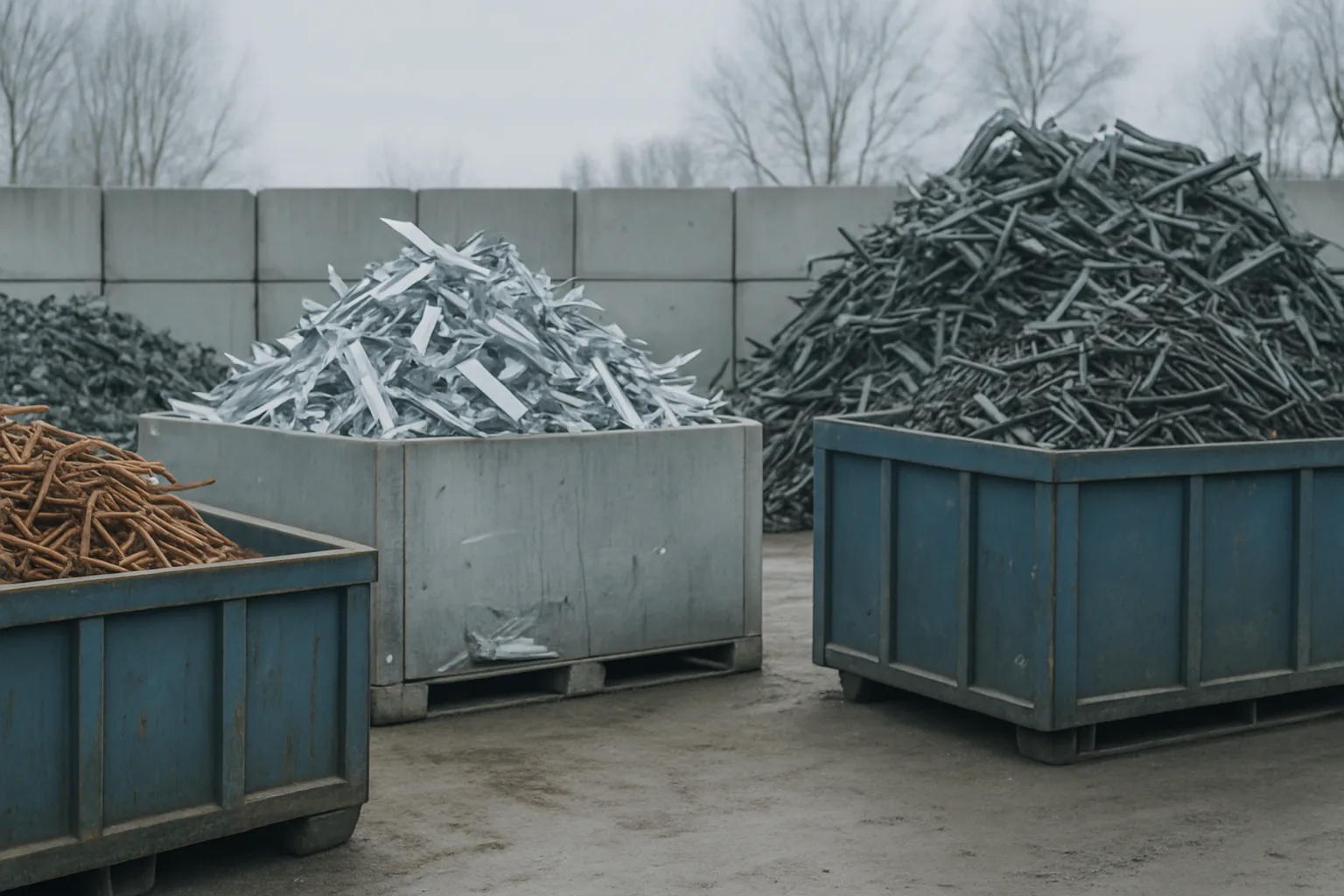
Before You Load That Truck, Read This First
Every year, scrap metal loads shift, slide, and spill on roads across Canada — and Prince Edward Island is no exception. A loose sheet of steel or an unsecured car door becomes a road hazard the moment you hit the highway. If you're planning to haul scrap metal to a yard in or around Charlottetown, doing it safely isn't just good practice — it's the law.
This guide walks you through exactly how to load, secure, and transport scrap metal without putting yourself, your vehicle, or other drivers at risk. Whether you're hauling a truckload of non-ferrous odds and ends or a few catalytic converters in a pickup bed, these tips apply to you.
Know What You're Hauling Before You Load
Not all scrap is the same. The way you handle a pile of copper wire is completely different from how you'd deal with steel beams, engine cores, or a stripped car frame. Before you touch a single piece, sort and identify your load. This protects you physically and helps you get a faster, more accurate quote when you arrive at the yard.
Here's what to think about before loading:
- Ferrous vs. non-ferrous: Ferrous metals (steel, iron) are heavier and denser. Non-ferrous materials like copper, aluminum, and brass are lighter but often higher value. Keep them separated if possible — it speeds up processing at the yard.
- Sharp edges and points: Sheared steel, cut rebar, and broken appliance panels all have edges that can cut through straps, puncture tires, or injure hands. Handle these with heavy gloves and stack them flat.
- Fluids in vehicles or parts: If you're hauling car components — engines, transmissions, radiators — drain fluids first. Spilling oil or coolant in a truck bed creates a slip hazard and may violate transport regulations.
- Weight limits: Know your vehicle's payload capacity. Overloading a half-ton pickup with dense steel is a quick way to blow out rear springs or get flagged at a weigh station.
- Catalytic converters (cats): These are high-value, and many yards now require documentation at drop-off. Have your paperwork ready before you arrive.
Sorting at home also saves you time at the scale. Yards near Charlottetown are busy operations — showing up with a sorted, documented load makes the whole transaction faster and smoother for everyone involved.
Loading Tips That Protect Your Vehicle and Your Load
Loading scrap is physical work, but it's also a logic problem. You want weight distributed evenly, sharp edges contained, and nothing that can shift at speed. A load that feels stable in a driveway can move significantly once you're on a highway doing 100 km/h.
Follow these loading principles every time:
- Heaviest material goes on the bottom and forward. Put dense steel and iron near the cab. This keeps your vehicle's weight distribution stable and reduces the chance of the rear end becoming uncontrollable during braking.
- Line your truck bed if hauling small pieces. Loose bolts, copper fittings, and small non-ferrous pieces can bounce out or fall through gaps. Use a tarp or plywood sheet to catch them.
- Don't stack above the cab or over the sideboards. In Prince Edward Island, as across Canada, overloaded trucks are a ticketable offence. Keep your load within the bed rails or secure an approved overhang with flags and tie-downs.
- Wrap sharp edges. Use old carpet, rubber mat scraps, or rags around anything with a point or raw-sheared edge. This protects your tie-down straps from cutting through.
- Use a trailer when the load demands it. Trying to cram an entire vehicle's worth of stripped parts into a pickup bed is a safety risk. Rent or borrow a flatbed trailer for larger loads.
If you're moving a junk vehicle or large frame sections, some yards offer pickup or towing services. That's worth asking about — especially if your vehicle is a dedicated daily driver you don't want to abuse on scrap runs.
Securing Your Load — The Part Most People Skip
This is where most transport injuries and road incidents happen. People underestimate how much a load can move at highway speed, especially on PEI's rural roads where sudden stops, gravel shoulders, and sharp curves are common.
The standard rule: every load needs to be secured with at least two points of contact. That means two or more tie-down straps, chains, or nets rated for the weight you're carrying. Here's what to use:
- Ratchet straps: Best for most scrap loads. Use straps rated above your load weight — don't use an 800 lb strap on a 600 lb load with no margin. Check for fraying or bent hooks before every use.
- Chain binders: Use these for heavy steel beams, large cores, or anything that ratchet straps can't grip. Chains won't cut or snap under the same conditions a worn strap will.
- Cargo nets: Useful for smaller pieces and non-ferrous scraps. They don't replace straps — they supplement them to keep smaller items from bouncing out.
- Tailgate integrity: Always check that your tailgate latches fully before pulling out. A tailgate that swings open at 90 km/h can dump an entire load on the car behind you.
If you're hauling anything that extends beyond the rear of your truck, you're legally required to mark it. In Canada, that means a red flag (at least 30 cm square) or a proper overhang light if you're driving after dark.
Platforms like the SMASH Recycling auction platform are built for sellers who want to move material efficiently — but getting the load to market safely is step one. No auction result matters if the material never arrives intact.
Driving With a Scrap Load — What Changes Behind the Wheel
A loaded truck handles differently than an empty one. If you don't adjust your driving, you're taking risks you might not notice until something goes wrong.
Here's what to account for:
- Braking distance increases significantly with a full load. Leave more following distance than you think you need — especially on PEI's secondary roads where stop signs and intersections come up fast.
- Turning radius changes. A loaded flatbed trailer or heavy truck bed doesn't respond the same way an empty vehicle does. Go slower through turns and give yourself room.
- Check your load at the first stop. Pull over after 10-15 minutes of driving and re-check your straps. Loads settle once they start moving. What was tight in the driveway may need another cinch.
- Watch your mirrors. On a long haul — even from a rural property to a Charlottetown area yard — keep an eye on your load in the mirrors. If something shifts, you'll see it before it becomes a problem.
- Avoid potholes where possible. Hitting a deep pothole with a heavy scrap load can bounce material loose even if it was secured. It also puts serious strain on your suspension.
If you're running regular scrap runs as a business or side income, invest in good straps and check them after every trip. Worn tie-down equipment is one of the most common causes of load failures — and the liability falls on the driver.
What to Bring to the Yard — Documentation and Prep
Arriving prepared saves time and gets you paid faster. Scrap yards near Charlottetown — like most operations across Canada — are tightening their intake documentation, particularly for high-value materials like cats, copper, and automotive cores.
Here's what to have ready:
- Government-issued photo ID: Required at most yards for non-ferrous and specialty material transactions.
- Vehicle ownership or authorization: If you're scrapping parts from a vehicle, have proof that you own it or are authorized to scrap it.
- Serial numbers or VINs for cores and cats: Some yards now log these at intake. Having them documented in advance keeps the line moving.
- A basic packing list or inventory: Not always required for small loads, but a simple list of what you're bringing helps you negotiate price and keeps your records straight.
Want a better price for your documented load? That's exactly where SMASH comes in. Find a scrap yard near you in Canada to get started locally, and use SMASH to put your documented inventory in front of multiple vetted buyers. More buyers means better price discovery — that's not a sales pitch, it's how competition works.
If you're newer to this process, it helps to read Canadian scrap yard guides covering everything from first-time seller tips to understanding scrap metal pricing by material type.
Selling Smart After You Deliver — Don't Leave Money on the Table
Getting your load to the yard safely is the hard part. But how you sell matters too. Walking up to a single buyer with no comparison point is the old way. You don't know if you're getting market rate — you're just hoping.
That's why sellers across metal recycling Prince Edward Island and beyond are shifting toward platforms that create real competition for their material. When multiple vetted buyers bid on your load, you see what the market actually thinks your scrap is worth. That's a fundamentally different experience than a one-call, take-it-or-leave-it offer.
If you want to sell scrap metal online and stop guessing at your price, SMASH is built for exactly that. No subscription fees. No guesswork. You only need a documented load and an internet connection. Locate the closest Canadian scrap yard for drop-off logistics, then use SMASH to handle the pricing side.
Ready to move your next load? Find a trusted scrap yard near you in Canada — check locations and resources at scrap-yard-near-me.ca and take the guesswork out of the whole process.
Frequently Asked Questions
Q: Do I need to call ahead before bringing scrap metal to a yard near Charlottetown?
It's always smart to call ahead, especially for large loads or specialty materials like cats and non-ferrous cores. Yards near Charlottetown may have specific intake hours or material restrictions. A quick call saves you a wasted trip.
Q: How much scrap metal can I legally haul in my pickup truck in Prince Edward Island?
Your legal payload depends on your vehicle's Gross Vehicle Weight Rating (GVWR). Most half-ton pickups are rated for roughly 1,000–1,500 lbs of payload. Exceeding this is both a safety risk and a violation of provincial transport regulations. When in doubt, split the load or use a trailer.
Q: What's the best way to find a scrap metal buyer near me in Charlottetown?
Start by searching for local yards that accept the materials you have. For higher-value loads, consider platforms like SMASH that connect you with multiple vetted buyers rather than a single local offer. Competition between buyers gives you a clearer picture of what your material is actually worth.
Q: Can I sell scrap metal online instead of driving it to a yard?
For some materials — particularly documented loads of non-ferrous metal, cats, and cores — yes. Platforms designed for scrap auctions let you list inventory, attract multiple buyers, and arrange logistics from there. You still need to get the material somewhere, but you negotiate price first rather than after you've already committed to a buyer.
Q: What documents do I need to bring when scrapping a car or vehicle parts near Charlottetown?
At minimum, bring valid government-issued photo ID and proof of vehicle ownership. For parts with serial numbers — engines, transmissions, catalytic converters — having those numbers documented in advance speeds up intake and may be required depending on the yard's policies. Requirements vary by location, so confirm with the yard before you arrive.
---Stay current on scrap metal markets and industry updates by following SMASH on LinkedIn — useful intel for anyone moving metal regularly.