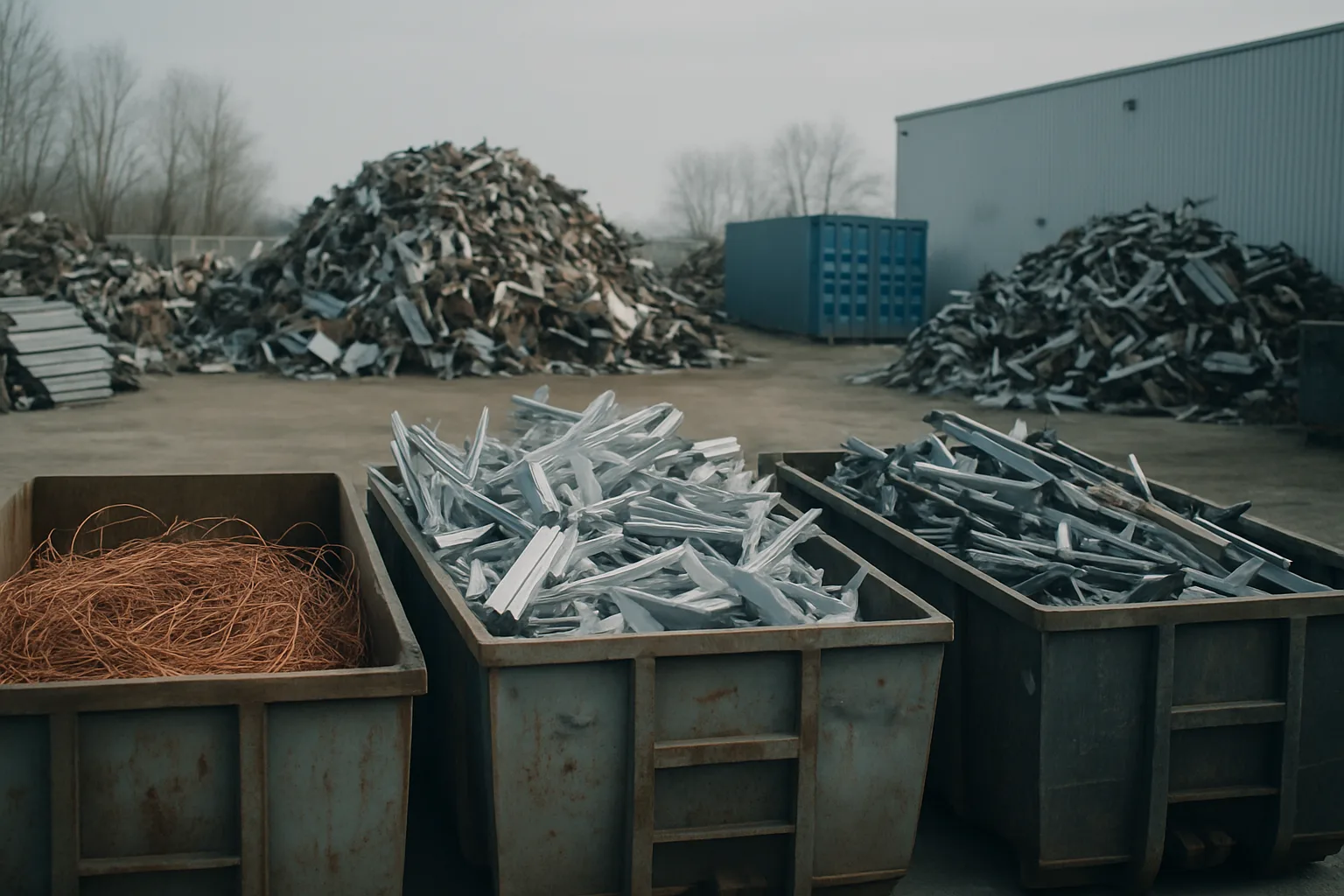
Most people show up to a scrap yard with a truck full of metal and zero idea what happens next. That's fine — everyone starts somewhere. But if you walk in knowing what to expect, you'll move faster, get treated more seriously, and likely walk out with more money in your pocket.
Whether you're looking to find a scrap yard near you in Canada or you've already got one picked out, this guide covers the full first-visit experience. We'll break it down step by step — from what to bring, to how materials get weighed and priced, to what separates a straightforward transaction from a frustrating one.
This week's roundup also touches on what's moving in the scrap market right now, so you have realistic expectations before you pull up to the scale.
---Before You Go: What to Bring When You Visit a Scrap Yard
Walking in unprepared wastes everyone's time. Most scrap yards in Canada — including facilities in the Barrie area — require valid government-issued ID before they'll buy anything from you. This is standard practice across Ontario and the rest of the country. It's not bureaucracy for the sake of it. Secondary metal dealers are required by law to log seller information to help combat metal theft.
Beyond ID, think about what you're bringing and how it's sorted. Unsorted mixed metal gets bought at the lowest price because the yard has to sort it themselves. Separate your ferrous from your non-ferrous before you arrive. Aluminum goes in one pile. Copper in another. Steel and iron in another. Even a rough sort can bump your payout noticeably.
Other things to have ready:
- Proof of ownership for any vehicles, engines, or catalytic converters — especially if you're bringing in auto parts
- A bill of sale or receipts if you're selling equipment or appliances stripped from a job site
- Cash or e-transfer preferences — know what the yard pays out with; not all facilities write cheques anymore
- A tarp or bins to separate materials in your truck or trailer before arrival
Call ahead if you're not sure. Most yards will tell you exactly what they're buying on a given day and whether they have any restrictions. Some facilities have specific intake days for certain materials, especially larger loads of non-ferrous like copper wire or aluminum sheet.
---How the Weighing and Pricing Process Actually Works
Pull up to the scale. That's usually step one. Most full-service scrap yards use a certified drive-on scale. You weigh in with your load, offload, then weigh out again. The difference is your net weight. Simple in theory — but here's where first-timers get caught off guard: the price you get is based on what the yard decides your material is worth that day.
Scrap metal prices fluctuate. Daily. Sometimes hourly for non-ferrous materials like copper and aluminum, which track closely with commodities markets. If you're coming in expecting a specific number you saw online — including scrap metal prices today from a general search — understand that yard prices are set by individual buyers based on their costs, current demand, and what they can move downstream. The number at the gate may differ from what you found on a website.
This is exactly why competition between buyers matters. When only one buyer sets the price in your area, you have no real leverage. Platforms like the SMASH Recycling auction platform exist precisely to address that problem — by putting your load in front of multiple vetted buyers, you get actual market feedback instead of one yard's best guess.
Here's a rough breakdown of what typically happens at the scale:
- Drive onto the inbound scale — your gross weight is recorded
- Offload your materials at the designated drop zone
- Yard staff sort or inspect your load (they may ask questions)
- Drive back over the outbound scale — tare weight is calculated
- You receive a ticket with your net weight and material breakdown
- Pricing is applied and you get paid at the window
For smaller loads — a trunk full of aluminum cans or a few copper pipes — you may skip the vehicle scale entirely and go straight to a platform or floor scale at the counter. Either way, watch the ticket carefully. Know what material category your metal got assigned. If you're unsure, ask. A good yard will explain it.
---What Scrap Yards Actually Buy — and What They Won't Touch
Not everything is welcome. First-timers sometimes show up with materials that look like scrap but are rejected at intake. Knowing the common refusals saves you a wasted trip.
Most scrap yards in Ontario and across Canada will buy:
- Ferrous metals: structural steel, cast iron, sheet metal, rebar, car bodies
- Non-ferrous: copper wire and pipe, aluminum extrusions and sheet, brass fittings, stainless steel
- Auto parts: catalytic converters (cats), alternators, starters, radiators, rims
- Appliances: washers, dryers, refrigerators (some require freon removal certification)
- Insulated wire: priced by recovery percentage after processing
Common rejections include:
- Hazardous materials — anything with asbestos, PCBs, or mercury switches still installed
- Refrigerants not properly evacuated — yards can face fines for improper handling
- Explosives or pressurized containers, including propane tanks that haven't been cut or certified safe
- Materials with no clear ownership documentation (especially vehicles and engines)
- Radioactive material — rare, but it shows up in certain industrial scrap
If you're dealing in auto salvage, the rules tighten further. Whether you're working with locate the closest Canadian scrap yard services or calling yards directly, ask specifically about their vehicle intake policies. Documentation requirements vary by province — Ontario has its own set of rules around end-of-life vehicle disposal that differ from what you'd encounter in Quebec.
---Metal Recycling Near Me Barrie: What the Local Market Looks Like in 2026
The Barrie market sits within a busy industrial and automotive corridor in central Ontario. That matters for scrap. There's consistent volume moving through the region — construction activity, automotive work, and manufacturing all feed the local scrap pipeline. Facilities in and around Barrie tend to handle a wide range of materials, from light gauge steel to non-ferrous industrial offcuts.
As of mid-2026, ferrous scrap markets across North America have been navigating a mixed environment. Steel demand has been uneven, with some downstream mills adjusting intake volumes quarter to quarter. Non-ferrous continues to be more active — copper in particular has held stronger, driven by infrastructure and electrification demand. Aluminum has been steady, with secondary aluminum buyers staying competitive on clean loads.
The takeaway for anyone doing metal recycling near me Barrie searches right now: conditions vary, and the yard quoting you a price today may not quote the same price next week. For smaller loads, timing matters less. For larger commercial loads — full truck loads of non-ferrous, engine cores, or catalytic converters — getting multiple bids is worth the effort. That's where SMASH adds real value: you're not locked into one buyer's number.
Want to dig deeper into how Canadian scrap pricing works and what drives yard rates in your region? Read Canadian scrap yard guides for practical breakdowns on pricing, materials, and what to expect in different provincial markets.
---First-Timer Etiquette: How to Get Taken Seriously at the Gate
Scrap yards are working environments. Forklifts move. Trucks back up. Nobody's waiting for you to figure out where to go. The faster you learn the rhythm of the yard, the better your experience will be — and the more likely staff are to take time with you on pricing questions.
A few things that go a long way:
- Follow the traffic flow. Most yards have a one-way system. Don't improvise.
- Stay in your vehicle until told otherwise. Safety is non-negotiable on a working yard floor.
- Don't lowball-haggle on small loads. If you want to negotiate, bring volume or have documentation that justifies a better rate.
- Ask questions at the right time. When you're on the scale or blocking a lane is not it. Ask at the window or before you pull in.
- Be honest about your material. If you painted over rust or mixed copper-clad aluminum into a copper pile, they will catch it. It damages your credibility for every future visit.
Yards remember their regulars. If you're planning to make this a consistent revenue stream — whether you're a contractor, a property manager, or a small demolition crew — building that relationship with your local facility pays off over time. And for loads big enough to warrant it, exploring auction-based selling through the SMASH Recycling auction platform gives you a documented, transparent alternative that some buyers and sellers now prefer over informal yard gate deals.
If you're in the Barrie area and want to see what's available locally, check out Barrie scrap metal services for a list of vetted facilities near you.
---Frequently Asked Questions
Q: Do I need an appointment to visit a scrap yard in Barrie?
Most scrap yards in the Barrie area operate on a walk-in basis during business hours. However, if you're bringing a large load — a full trailer, multiple vehicles, or bulk non-ferrous material — calling ahead is strongly recommended. Some facilities have specific intake procedures for larger volumes and may need to schedule you in.
Q: What ID do I need to sell scrap metal at a Canadian yard?
You'll need valid government-issued photo ID — a driver's licence is standard. Ontario's secondary metal dealers are required by provincial regulation to record seller identification before completing a transaction. If you're selling vehicle parts, catalytic converters, or anything with a serial number, additional documentation proving ownership may be required.
Q: How are scrap metal prices today determined at the yard level?
Yard pricing is set by individual buyers based on current commodity market conditions, their processing costs, and downstream demand from mills and smelters. Prices for non-ferrous metals like copper and aluminum can shift daily. Ferrous (steel and iron) tends to move more slowly but still tracks broader market conditions. Always call ahead or check with the yard directly for their current rates — online scrap price listings are a general reference, not a guarantee.
Q: Can I sell car parts or a whole vehicle on my first visit?
Yes, but come prepared. For whole vehicles, you'll typically need the vehicle title or bill of sale proving ownership. For individual parts — engines, transmissions, catalytic converters — documentation requirements vary by yard and by province. In Ontario, end-of-life vehicle regulations are in place, and many yards will ask for paperwork before processing a full car. Call the specific facility before loading up.
Q: Is it worth using an auction platform versus selling directly to a yard?
For small or one-off loads, a direct yard transaction is usually the simplest path. For larger, more valuable loads — bulk copper, a full skid of cats, commercial volumes of aluminum — competitive bidding through a platform like SMASH can help you understand what the actual market will pay, rather than accepting a single quote. More buyers seeing your load generally means better price discovery.
---Your first scrap yard visit doesn't have to be a guessing game. Come sorted, come documented, and come with realistic expectations on pricing. If you're ready to find a facility that fits your material and your location, find a scrap yard near you in Canada — the directory at scrap-yard-near-me.ca makes it easy to locate vetted options wherever you are in the country.
Stay current on scrap metal market conditions and industry news by following SMASH on LinkedIn: follow SMASH on LinkedIn for weekly market insights and updates from across the North American scrap and recycling industry.