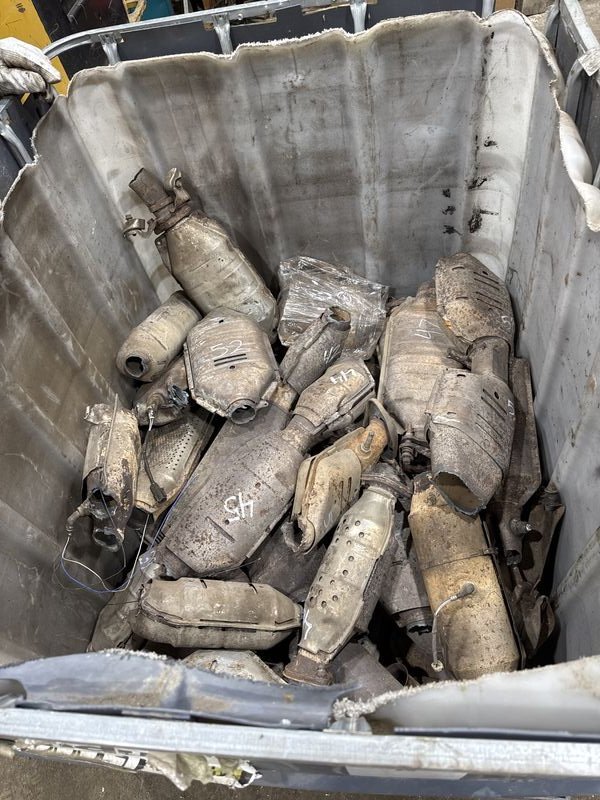
What's Actually Inside a Catalytic Converter — and Why Scrap Yards Care So Much
Most people know catalytic converters are worth something. Few know why. Crack one open and you'll find a ceramic or metallic substrate coated with platinum, palladium, and rhodium — three of the most valuable metals on the planet. A single converter can contain anywhere from 3 to 7 grams of these platinum group metals (PGMs), depending on the vehicle make, model, and year. That's why scrap yard prices Thunder Bay for cats can swing dramatically — and why understanding how yards process them matters before you walk in the door.
This week's roundup breaks down exactly how scrap yards handle catalytic converters and precious metals, what determines the price you get, and how platforms like SMASH are changing the game for sellers across Canada.
How Scrap Yards Actually Process Catalytic Converters
When you bring a cat to a scrap yard, the yard doesn't just weigh it and hand you cash. There's a process — and knowing it helps you understand why pricing varies so much from yard to yard.
Most Canadian scrap yards follow a similar workflow:
- Visual identification — The buyer identifies the converter by its serial number, OEM stamp, or physical appearance. Some yards use lookup databases to match the unit to a known PGM content range.
- Sorting and grading — Converters get sorted into categories: domestic (higher PGM content), foreign (typically lower), diesel, and aftermarket (lowest value). Not all cats are equal. A cat off a late-model Toyota Prius carries far more PGM content than one off a mid-sized sedan.
- Accumulation and shipping — Yards rarely process cats on-site. They accumulate units and ship bulk loads to specialized smelters and refiners — facilities that do the actual extraction of platinum, palladium, and rhodium.
- Assay and settlement — The refiner runs an assay (chemical analysis) of the material and settles with the yard based on actual PGM content. The yard then sets its buying price based on its expected return — minus their margin.
That last point is important. The price you see at the yard is always downstream of the refinery price. The yard is managing risk, logistics costs, and their own margin. That's why finding a scrap yard near you in Canada through a transparent platform makes a difference — not all yards offer the same value chain back to you.
What Drives Catalytic Converter Prices — and Why They Fluctuate
PGM prices move daily on global commodities markets. Rhodium in particular has historically been one of the most volatile metals traded anywhere. One week it spikes, the next it corrects. Palladium follows automotive production cycles closely — when EV adoption shifts demand, palladium prices feel it. Platinum trades differently again, with industrial and jewelry demand layered on top of auto catalyst demand.
For sellers in Thunder Bay or anywhere across Ontario, that volatility is real and immediate. A load of cats worth one price on Monday might settle differently by Friday. Here's what moves the number:
- Spot prices for platinum, palladium, and rhodium — tracked in USD per troy ounce on global markets
- The specific converter type — serial number and manufacturer determine PGM loading
- Market demand from refiners — refinery capacity and demand for incoming material affects what they pay yards
- Condition of the unit — cracked, flooded, or aftermarket cats fetch less
- Volume — yards often offer better pricing on bulk quantities
Disclaimer: Catalytic converter prices fluctuate daily based on precious metal spot prices. Always check current rates directly with your local yard or through a live pricing platform before selling.
If you're in Thunder Bay and want to benchmark what you're being offered, read Canadian scrap yard guides that break down how yards price different converter types across Ontario and beyond.
The Difference Between Selling Cats Locally vs. Online
Walk-in pricing at a local scrap yard is convenient, but it's a single data point. One buyer, one offer, no competition. That's the old way. It works — but it doesn't always reveal the true market value of your material.
Selling catalytic converters online — through a marketplace or auction platform — introduces competition. Multiple vetted buyers bid on your material. That competitive pressure tends to produce better price discovery than a single phone call to one yard. It also gives you documentation: photos, serial tracking, lot descriptions that buyers can evaluate before placing bids.
SMASH was built specifically for this model. Sellers list their cats, cores, or non-ferrous loads with photo documentation and serial tracking. Vetted buyers across North America compete. No subscription fees — SMASH earns only when sellers earn. That alignment matters. For Thunder Bay operators with a consistent volume of cats coming through, the difference between one buyer and five competing buyers adds up fast.
Platforms like Canada's B2B scrap recycling marketplace have made it practical for yards and volume sellers to access broader buyer networks without sacrificing documentation or accountability. BOLs, packing lists, photo records — it's all built into the process.
Precious Metals Beyond Catalytic Converters: What Else Scrap Yards Handle
Cats get the attention, but they're not the only source of precious metals moving through scrap yards. A well-run recycling operation in Ontario or anywhere across Canada tracks multiple PGM and precious metal streams:
- Electronic scrap (e-scrap) — circuit boards, CPUs, and connectors contain gold, silver, and palladium in recoverable quantities
- Dental scrap — gold and platinum alloys from crowns, bridges, and dental hardware
- Industrial catalysts — refinery and chemical plant catalysts contain platinum group metals and are processed similarly to auto cats
- Jewelry and silverware — most yards handle these, though precious metal dealers often pay more for clean, identifiable gold and silver
- Oxygen sensors and spark plugs — contain trace platinum; worth separating if volume is high enough
For most scrap yards, catalytic converters represent the highest-value, highest-volume PGM stream. But e-scrap is growing. As electronics density increases, the recoverable precious metal content per unit goes up too. Progressive yards are building separate processing streams for e-scrap rather than lumping it into general non-ferrous.
If you're running material in Thunder Bay scrap metal services, it's worth asking how your yard handles e-scrap separately — the difference in return versus general sorting can be meaningful.
Documentation, Anti-Theft Rules, and Why It Matters for Sellers in 2026
Catalytic converter theft remains a significant problem across Canada and the U.S. In response, provincial and federal regulations have tightened around how yards can purchase and document cats. Ontario is no exception. As of 2026, scrap yards in the province are required to maintain detailed purchase records for catalytic converters, including seller identification, vehicle VIN (where applicable), and photographic documentation.
This isn't just compliance overhead — it's protection for legitimate sellers too. A yard that documents properly is a yard that operates transparently. It also creates a cleaner audit trail if questions arise later about the origin of material. For volume sellers dealing with insurance salvage, fleet material, or auto recycling inventory, proper documentation protects your operation.
SMASH's inventory tool and VIN lookup function were built with exactly this in mind. Every load carries a documented paper trail — photos, serial tracking, seller records — before it ever goes to auction. Buyers bid with confidence. Sellers have proof of proper handling. That documentation layer is increasingly important in a regulatory environment that's only tightening.
Whether you're in Thunder Bay, across Ontario, or anywhere else in Canada, locate the closest Canadian scrap yard that takes documentation seriously. A yard with a clean process is a yard that will pay you fairly and keep you out of regulatory trouble.
Frequently Asked Questions
Q: What are scrap yard prices for catalytic converters in Thunder Bay right now?
Catalytic converter prices in Thunder Bay — like everywhere in Canada — move with global platinum, palladium, and rhodium spot prices. There's no single fixed rate. Prices vary by converter type, condition, and volume. Always contact your local yard directly or use a live pricing platform to get a current quote. Prices can shift significantly week to week.
Q: Can I sell catalytic converters online instead of going to a local junkyard near me in Thunder Bay?
Yes. Platforms like SMASH allow sellers to list catalytic converters and other scrap material through an online auction format, reaching vetted buyers across North America. This introduces competition that a single local yard quote doesn't provide. You'll need to document your material with photos and serial numbers — which is now standard practice anyway given Ontario's regulatory requirements.
Q: How do I know if a scrap yard is offering a fair price for my cats?
The best way to benchmark a yard's offer is to get multiple quotes. Check what serial-based pricing databases show for your specific converter type, and compare that against what the yard is offering. Using a competitive auction platform gives you real-time market feedback rather than relying on one buyer's posted rate.
Q: Do scrap yards in Ontario buy e-scrap and other precious metal-bearing material?
Many do, but not all handle e-scrap with the same level of sorting and value recovery as catalytic converters. Ask your yard specifically how they process circuit boards, CPUs, and connectors — some sort them into separate streams for higher returns, others blend them into general non-ferrous. Separate processing typically means better recovery and better pricing for sellers.
Q: What documentation do I need to sell catalytic converters to a scrap yard in Thunder Bay?
Ontario regulations require yards to collect government-issued ID and maintain purchase records for catalytic converter transactions. If the cats came off vehicles you own, having the VIN or title documentation helps establish legitimate origin and can streamline the transaction. Yards using platforms like SMASH also capture photo documentation and serial tracking as part of their standard process.
If you're dealing in catalytic converters, precious metals, or any scrap material across Canada, the best move is finding a yard that operates transparently and pays competitively. That starts with knowing your options. Find a trusted scrap yard near you in Canada — check locations, compare yards, and make sure the buyer you choose takes documentation as seriously as you do.
Stay sharp on market moves and industry news — follow SMASH on LinkedIn for weekly scrap metal market insights and updates from across the recycling industry.