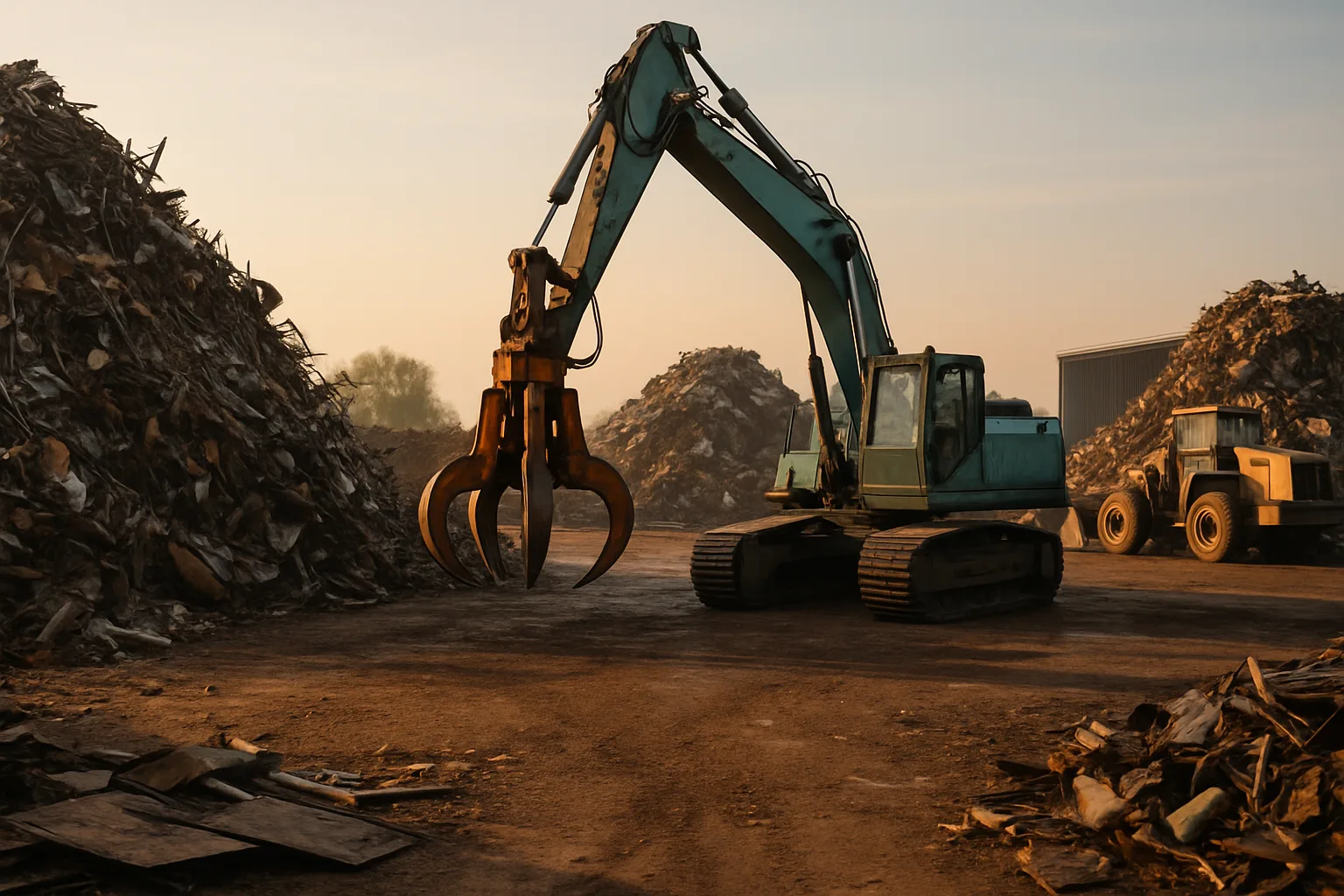
Most people assume the scrap yard down the street is the best option for selling metal. It's convenient, you've driven past it a hundred times, and it pays cash on the spot. But in 2026, that assumption is costing some sellers real money. The gap between what a local scrap yard in Brampton offers and what a competitive online buyer will pay isn't always what you'd expect — and understanding that gap is the difference between leaving money on the table and getting a fair deal.
This isn't about knocking local yards. Many are solid operations run by people who know metal. But "convenient" and "best price" aren't the same thing. Let's break down what's actually happening with pricing, transparency, and where online platforms fit into the picture.
---How Local Scrap Yard Pricing Actually Works
Walk into a local scrap yard — whether that's a scrap yard near me in Ontario or a facility out west near a scrap metal yard in Calgary — and the price you're offered comes from one source: that buyer's internal margin math. They buy low, process or resell, and profit on the spread. That's not a criticism. That's a business model. But it means you're always negotiating with a single interested party who has every incentive to pay less.
Local yards typically post board prices for common grades — copper, aluminum, steel, catalytic converters. But posted prices aren't always what you walk out with. Grade disputes, contamination deductions, moisture adjustments, and scale variations can all move that number down before you see a dollar. First-timers especially get caught off guard by this. You showed up expecting $0.85/lb on clean copper and left with $0.70/lb after deductions you didn't anticipate.
That doesn't make local yards dishonest. It makes them buyers in a market where information asymmetry works in their favor — unless you change the dynamic.
---What Online Buyers and Auction Platforms Actually Offer
Online scrap metal buyers have grown significantly in Canada over the past few years. Some operate as direct buyers with posted rates — essentially the same single-buyer model as a local yard, just with a pickup or shipping component. Others, like a scrap metal auction platform, work differently. Instead of one buyer setting your price, multiple vetted buyers compete for your load.
That competition matters. When three or four serious buyers are bidding on the same load of non-ferrous, the price discovery process is more transparent. You're not guessing what the market will pay — you're watching it in real time. SMASH Recycling — where verified buyers bid on your metal runs exactly this kind of model. No subscription fee. Buyers are vetted. And the seller sees competitive bids instead of a single take-it-or-leave-it number.
The trade-off? You typically need a documented load — photos, weights, grades, packing lists. That extra step filters out casual sellers but rewards anyone running a yard or handling volume. For a scrap dealer in Brampton processing a consistent flow of catalytic converters, cores, or non-ferrous loads, that documentation process often pays for itself.
---Find Scrap Yard Brampton: When Local Still Makes Sense
Local yards aren't going anywhere, and they shouldn't. For plenty of situations, driving to a local scrap yard in Brampton or anywhere else in Ontario is still the right call.
- Small loads: A single car battery, a few pounds of copper wire, a handful of aluminum cans. Online platforms are built for volume. A local yard handles these without friction.
- Cash in hand today: If you need same-day payment, a local yard delivers that. Online transactions involve processing time, even when they're faster than traditional wire transfers.
- Mixed or unsorted loads: Local yards accept everything. If you've got a truck full of mixed metal without grades sorted, most online buyers can't touch it cleanly.
- Ferrous drops: Shredder-grade steel and iron rarely benefits from online competition. The margins are thin and volume is the only lever. Local yards with their own shredders are usually the right destination.
- Relationship pricing: If you've been selling to the same yard for years and they know your loads are clean, you may already be getting near-market rates. Don't blow up a good relationship for marginal gains.
The key is knowing which situation you're in. A first-time seller with a mixed load should probably find a scrap yard near you in Canada and get comfortable with the basics. A yard operator moving consistent non-ferrous volume should be running competitive quotes, period.
---Can You Sell Scrap Metal for Cash Through Online Platforms?
Can you sell scrap metal for cash through an online buyer or auction platform? Yes — though the mechanics look different than a yard transaction. Most online buyers pay by EFT, cheque, or direct deposit. Some have faster payout windows than others. SMASH, for example, handles invoicing automatically after a deal closes, which removes the manual back-and-forth that slows traditional transactions down.
What you give up is the immediacy of cash-in-hand. What you potentially gain is a better-documented transaction, a clearer paper trail (useful for business accounting), and — in a competitive auction scenario — the result of actual market bidding rather than one buyer's margin calculation.
For businesses that need to track revenue by load, document sales for auditing, or prove fair market pricing to partners or shareholders, online platforms often create better records than a handwritten yard ticket.
And if you're running a scrap yard yourself and want to move specific grades to a wider pool of buyers — non-ferrous lots, catalytic converter loads, specialty metals — a platform that brings multiple buyers to the table is worth understanding. You can read Canadian scrap yard guides to get grounded on the basics before you commit to a new sales channel.
---The Price Gap: When Does It Actually Matter?
Here's the honest answer: the price difference between local and online isn't always dramatic. For common commodities with tight spreads — shredded steel, basic aluminum — you're unlikely to see a material gap. Local yards follow market indexes closely on high-volume grades.
The gap tends to widen on:
- Catalytic converters: PGM values vary wildly by make, model, and serial number. A yard that's guessing at assays versus a buyer who runs proper VIN lookup and serial tracking is a meaningful price difference on a load of 50+ units.
- High-grade non-ferrous: Clean copper, #1 and #2 grades, brass rod, insulated wire. Buyers with specific downstream customers pay premiums for documented, clean loads.
- Specialty and exotic metals: Stainless, inconel, titanium, and other alloys. Local yards often don't have the buyer relationships to price these competitively. The right online buyer can pay significantly more.
- Volume lots: A single pallet of copper might get a standard yard price. A well-documented, photographed, weighed lot of 2,000 lbs of clean copper attracts real buyer competition.
If you're in Brampton or anywhere across Ontario and you're moving commodity-grade ferrous a few times a month, the local yard is probably fine. If you're handling cats, specialty non-ferrous, or large-volume lots, you're leaving money on the table without competitive pricing.
---Scrap Yard Near Me Ontario: Combining Local and Online Strategically
The smartest operators don't choose between local yards and online platforms — they route loads strategically. Ferrous and mixed scrap goes to the local yard. Clean non-ferrous, cats, and specialty metals go through a competitive platform where documented loads attract real bids.
Platforms like SMASH make this easier by handling the documentation, invoicing, and buyer vetting so sellers aren't managing relationships with a dozen individual buyers manually. You list the load, buyers compete, you pick the best offer. The locate the closest Canadian scrap yard tool helps you identify what's available in your area for the loads that still make sense to drop off locally.
Whether you're selling a car in Brampton, clearing out a shop in Ontario, or running a yard and looking for better price discovery on specialty grades, the answer in 2026 isn't "local or online" — it's "which channel is right for this load." Get that routing right and you stop leaving money behind.
Ready to find the best option for your scrap? Find a trusted scrap yard near you in Canada — check locations and resources at scrap-yard-near-me.ca and see how competitive pricing actually works when buyers have to earn your business.
---Frequently Asked Questions
Q: How do I find a scrap yard in Brampton that pays fair prices?
Start by getting quotes from multiple buyers before committing to a drop. Local yards in Brampton and across Ontario post board prices, but the actual payout depends on grade and deductions. Comparing a local quote against an online platform gives you a real benchmark for what your load is worth.
Q: Is it better to use a local scrap yard or an online scrap metal buyer in Canada?
It depends on the load. Small, mixed, or same-day cash transactions work best at a local yard. Clean non-ferrous, catalytic converters, or volume loads often get better price discovery through a competitive online platform where multiple buyers bid. Many sellers use both channels depending on what they're moving.
Q: Can you sell scrap metal for cash in Canada, or do online buyers only pay by EFT?
Local scrap yards across Canada, including in Brampton and other Ontario cities, typically pay cash on the spot. Online buyers and auction platforms usually pay by EFT, direct deposit, or cheque. The payment method differs, but online platforms often offer better documentation and potentially more competitive pricing for the right grades.
Q: What metals are worth getting competitive online quotes for versus just dropping off locally?
Catalytic converters, clean copper (#1 and #2), brass, high-grade aluminum, and specialty alloys like stainless or titanium typically benefit the most from competitive bidding. Shredder steel, mixed iron, and small-volume loads are usually better suited for local yard drop-offs where the convenience factor outweighs the price gap.
Q: Does SMASH work for individual sellers, or is it only for scrap yards and dealers?
SMASH is built for businesses and volume sellers — scrap yards, dealers, and operations that process loads regularly. If you're an individual with a one-time small load, a local yard near you is the more practical starting point. For anyone moving consistent volume or specialty grades, SMASH's competitive auction model is worth exploring.
---Follow SMASH on LinkedIn for weekly scrap metal market insights, pricing trends, and industry updates across North America.
Disclaimer: Scrap metal prices fluctuate based on commodity markets, grade, volume, and buyer demand. All price references in this article are illustrative. Always verify current rates directly with buyers before making selling decisions.