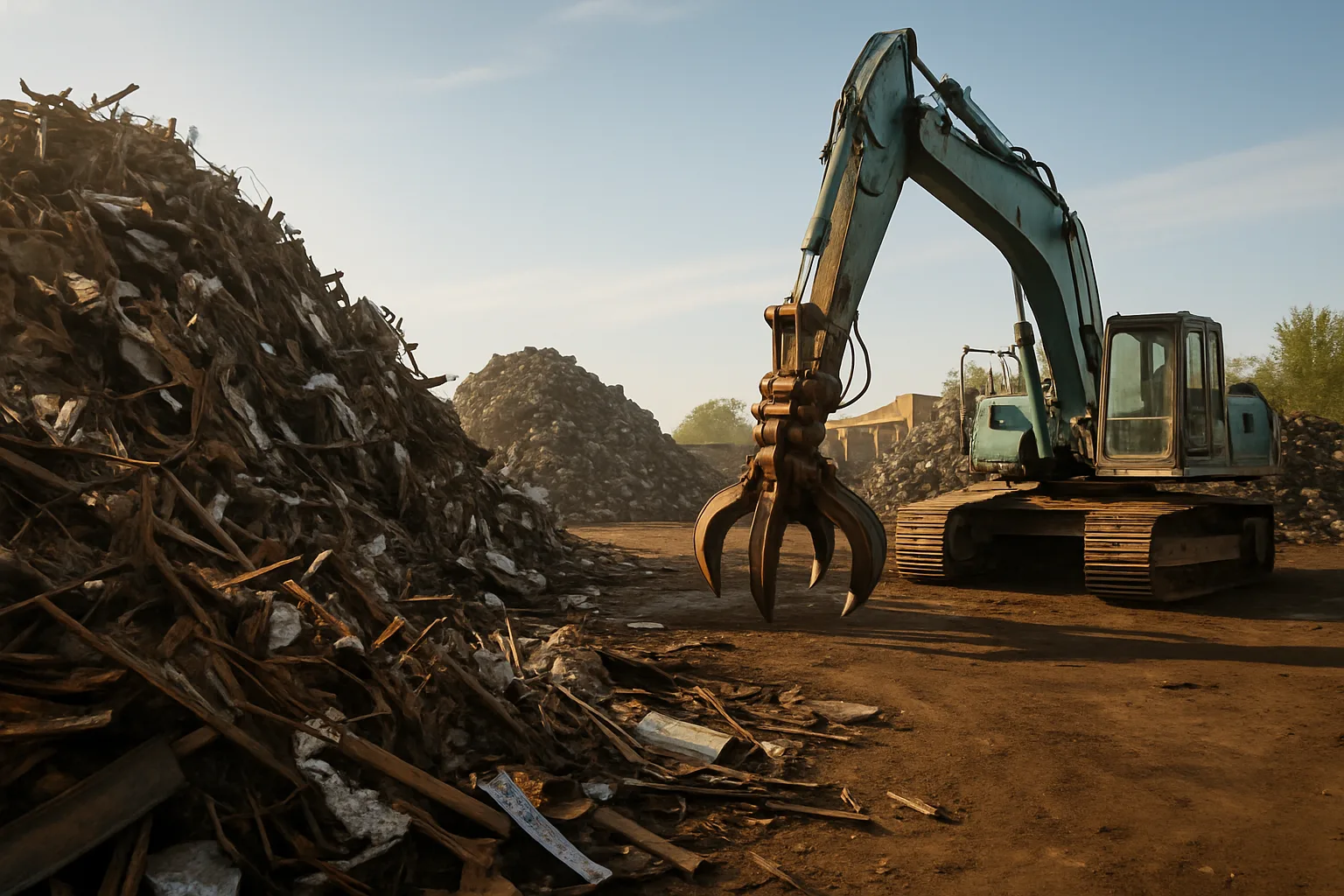
Most people show up at a scrap yard with a truck full of mixed junk and zero idea what will be accepted — and they're surprised when half of it gets turned away. If you're searching for metal recycling near me Markham or anywhere across Ontario, knowing what yards take (and what they won't touch) saves you a wasted trip, a soured relationship with your local buyer, and real money.
This guide breaks it down straight. What yards want. What they reject. Why it matters. And how to get the most out of every load you bring in.
What Scrap Yards Actually Want to Buy
Scrap yards are buyers, not dumping grounds. They accept materials they can process and resell — either to mills, smelters, or downstream buyers. If they can't sell it, they won't take it.
Here's what most yards actively accept:
- Ferrous metals — steel, iron, cast iron, structural steel, car bodies (drained of fluids)
- Non-ferrous metals — copper, aluminum, brass, stainless steel, zinc, lead, nickel
- Catalytic converters — cats are high-value because of the platinum group metals inside; expect documentation requirements
- Automotive cores — starters, alternators, radiators, A/C compressors
- Wire and cable — bare bright copper wire commands top dollar; insulated wire pays less
- Appliances — fridges, stoves, washing machines (some require Freon removal first)
- Electronics and e-waste — varies by yard; some specialize, most accept computers, motors, transformers
- Vehicles — end-of-life vehicles, with proof of ownership and title documentation
If you're in Markham and dealing with automotive recycling, non-ferrous metals, or mixed loads, your local yard will have a commodity price sheet. Ask for it. The difference between showing up informed and showing up guessing is often $50–$200 per load depending on volume and grade.
What Scrap Yards Will Not Accept — No Exceptions
This is where people lose time and trust. Showing up with rejected materials wastes everyone's day. Yards have hard rules around hazardous materials, liability, and environmental compliance — and these aren't negotiable.
Most scrap yards across find a scrap yard near you in Canada will turn away the following:
- Closed containers and pressurized vessels — propane tanks, compressed gas cylinders, aerosol cans. Explosion risk. Full stop.
- Radioactive materials — smoke detectors with intact Americium sources, certain medical or industrial equipment
- PCB-contaminated equipment — older transformers and capacitors may contain polychlorinated biphenyls, which require licensed disposal
- Asbestos-containing materials — wrapped insulation, pipe lagging, old floor tiles bonded to metal
- Ammunition and explosives — no yard in Ontario will accept live rounds, shells, or ordnance under any circumstances
- Vehicles without proof of ownership — Ontario regulations require documentation to prevent acceptance of stolen vehicles
- Sealed batteries (in most cases) — lithium-ion batteries are a growing fire hazard; many yards are refusing them or restricting what they accept
- Wet or contaminated loads — some yards reject loads with excessive oil, coolant, or chemical contamination
- Mixed debris loads — concrete, wood, plastic, and metal all bundled together; yards want clean metal, not renovation waste
The rules are tighter than they used to be. Environmental compliance in Ontario has increased scrutiny on what enters the scrap stream. If you're unsure about a specific item, call ahead. A two-minute phone call prevents a wasted round trip.
Understanding Metal Grades: What Is the Best Scrap Metal to Sell?
Not all metal pays the same. Grade, cleanliness, and form factor all affect what a yard will offer you. If you want to understand what is the best scrap metal to sell, here's the honest breakdown by value tier.
Top tier — non-ferrous metals:
- Bare bright copper — clean, stripped wire with no insulation. Highest price per pound of common scrap metals.
- Copper #1 — clean copper pipe and bus bar with no solder, paint, or fittings
- Copper #2 — slightly dirty copper, soldered fittings, old pipe
- Brass — faucets, valves, fittings — solid mid-range value
- Aluminum — extrusions, rims, cast, litho sheet — varies significantly by grade
Mid tier — high-volume ferrous and specialty:
- Catalytic converters (extremely variable — pricing tied to platinum, palladium, rhodium spot prices)
- Stainless steel
- Electric motors
- Automotive cores (alternators, starters)
Lower tier — ferrous bulk:
- Structural steel, shredder iron, car bodies
- Light iron, sheet iron
Separation matters. A mixed load of aluminum and steel won't pay aluminum prices — the yard will sort it and discount your return. Take the time to separate your grades before you arrive. It's one of the easiest ways to increase your payout.
You can read Canadian scrap yard guides to get a better sense of how specific commodities are graded and what to expect when you walk up to the scale.
Documentation Requirements: What Yards Need From You
Yards in Ontario are operating under increasing regulatory oversight — especially around high-theft commodities like copper, catalytic converters, and automotive parts. Expect to provide identification and documentation, particularly for:
- Government-issued photo ID — required by virtually every yard for any transaction above a threshold value
- Vehicle ownership or title — mandatory for end-of-life vehicle drop-offs
- Bill of Lading (BOL) — for commercial sellers moving loads by truck; details the material, weight, and origin
- Packing list — for mixed or multi-commodity loads, especially non-ferrous; a clear packing list speeds up processing and builds trust with the buyer
- Serial numbers or VINs — high-value components may require serial tracking; this protects you and the yard from liability
If you're a business — a demolition contractor, HVAC shop, auto repair facility, or property management company — maintaining clean documentation on every load protects you legally and commercially. It also builds a track record with buyers that can lead to better terms over time.
This is exactly where platforms like SMASH add real value. SMASH builds documentation into the selling process — photo documentation, serial tracking, VIN lookup, and packing lists are baked in. When buyers can see exactly what they're bidding on, you get better price discovery on every load. No guessing. No disputes after the fact.
How a Scrap Metal Auction Platform Changes the Game for Sellers
The traditional scrap selling experience goes like this: you call your one buyer, they give you a price, you take it or leave it. There's no visibility into whether that number is fair. There's no competition. You're guessing.
A scrap metal auction platform flips that dynamic. When multiple vetted buyers compete for your load, price discovery happens in real time. You see what the market actually wants to pay — not what one buyer decided to offer you on a slow Tuesday.
SMASH is built exactly for this. It's a B2B scrap metal auction platform connecting yards and commercial sellers with vetted buyers across North America. No subscription fees. SMASH only earns when the seller does. If you're a Markham-area yard or a commercial metal seller in Ontario, it's worth understanding what competitive bidding actually looks like for your loads.
For regular sellers — businesses generating consistent volumes of copper, aluminum, cores, or cats — find the best price for your scrap in Canada by putting your load in front of more than one buyer. More buyers means better price discovery. That's not a slogan. That's math.
Tips for Getting the Most Out of Your Scrap Yard Visit in Markham
Whether you're a first-timer clearing out a garage or a commercial operator managing regular loads, these practical steps will make your yard visits more efficient and more profitable.
- Call ahead or check online before you go. Confirm the yard accepts your specific materials. Don't assume.
- Separate your metals. Ferrous in one pile, non-ferrous in another. Copper grades separated from aluminum. Clean loads pay more.
- Remove non-metal components where possible. Stripping plastic housing, rubber seals, or attached wood from metal increases your payout.
- Drain fluids from vehicles and large components. Many yards in Ontario require this before accepting automotive scrap.
- Bring your ID. Every time. Don't be the person who drove 45 minutes to Markham only to be turned away at the scale.
- Ask about current pricing before you unload. Metal prices move daily. Know your number before the truck is empty.
- Get a weight ticket and receipt. Always. It's your record of the transaction.
If you're not sure which yard near you is the right fit for your material type, locate the closest Canadian scrap yard with the right capabilities for your load. Not every yard handles every commodity — matching your material to the right buyer saves time and maximizes your return.
The scrap industry rewards the informed seller. Know what you have. Know where to take it. And know that having more than one buyer look at your load is almost always better than relying on a single price quote.
If you're regularly generating metal waste in Markham or anywhere across Ontario, it's time to stop leaving money on the table with a single-call approach. Explore what a competitive, documented selling process looks like — and check locations at scrap-yard-near-me.ca to find a trusted scrap yard near you in Canada.
Prices for scrap metal fluctuate daily based on commodity markets. Always verify current rates directly with your local yard or buyer before completing a transaction.
Frequently Asked Questions
Q: What metals are most commonly accepted at scrap yards near me in Markham?
Most yards in and around Markham accept ferrous metals (steel, iron, car bodies) and non-ferrous metals (copper, aluminum, brass, stainless steel). Catalytic converters and automotive cores are also widely accepted, though documentation requirements are stricter for high-theft commodities. Call ahead to confirm specific grades and any preparation requirements.
Q: Can I bring a car to a metal recycling facility near me in Markham without a title?
No. Ontario regulations require proof of ownership to accept an end-of-life vehicle. Most yards will ask for your vehicle ownership document (green slip) or equivalent title paperwork. This protects you and the yard from liability related to stolen vehicles.
Q: What is the best scrap metal to sell for the highest payout?
Non-ferrous metals — particularly bare bright copper wire, copper #1, and brass — consistently pay the highest rates per pound. Catalytic converters can be extremely valuable but pricing is volatile and tied to platinum group metal spot prices. Separating your materials by grade before your visit will always improve your return.
Q: Why do scrap yards reject certain items like propane tanks or lithium batteries?
Safety and environmental compliance. Closed pressurized containers like propane tanks are an explosion risk during processing. Lithium-ion batteries are a documented fire hazard in scrap facilities. Yards operate under provincial environmental regulations and cannot accept materials that create liability or safety risks on their site.
Q: How does SMASH help me get a better price compared to calling a single scrap buyer?
SMASH is a scrap metal auction platform that puts your load in front of multiple vetted buyers simultaneously. Instead of taking one buyer's word for what your load is worth, you see competitive bids in real time. Better documentation — photos, packing lists, serial tracking — gives buyers more confidence to bid higher. There are no subscription fees; SMASH earns only when the seller does.
Stay current on scrap metal market trends and yard insights — follow SMASH on LinkedIn for regular industry updates and price discovery insights.
```