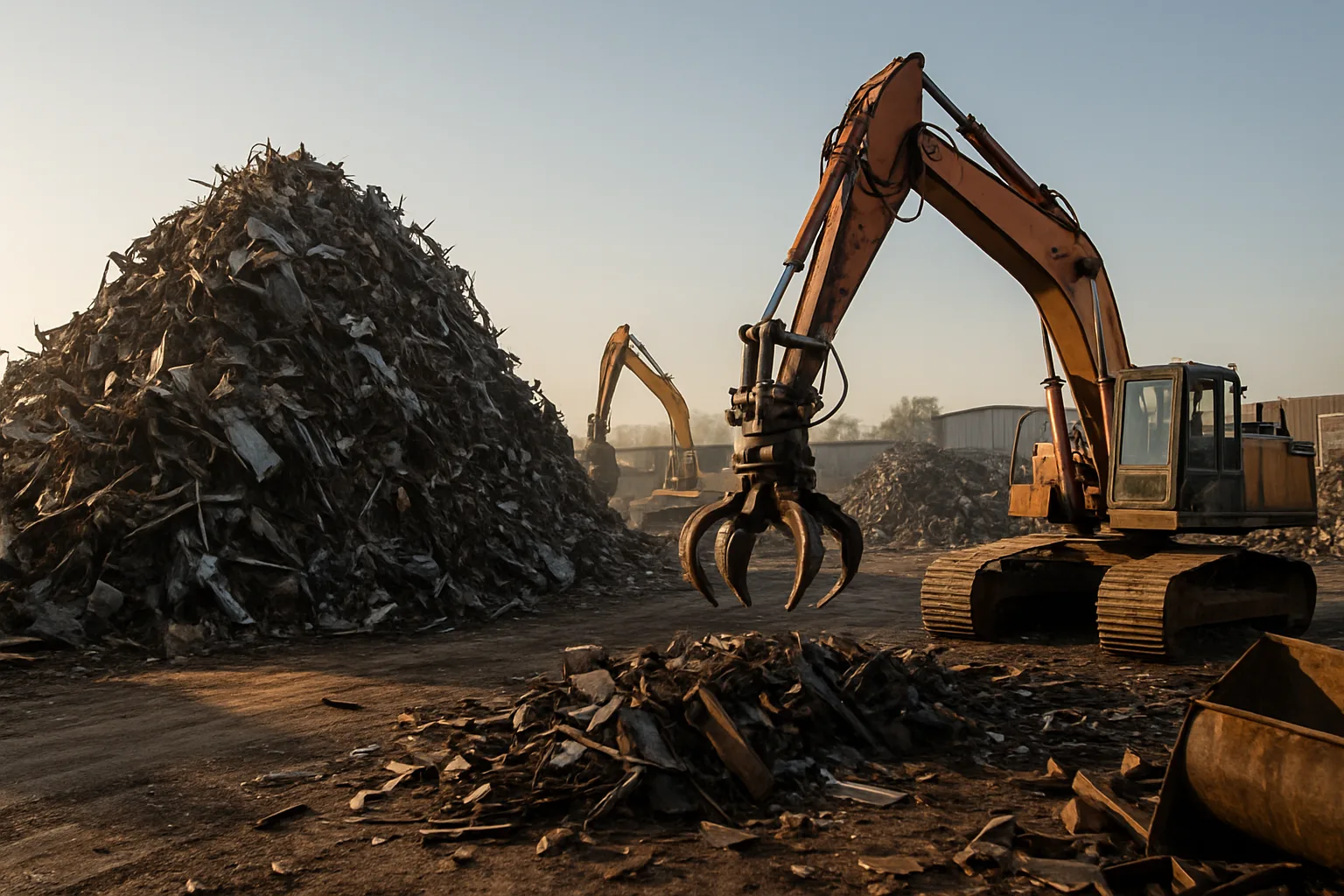
Most people use these three terms interchangeably. That's understandable — they all involve old metal, beat-up vehicles, and facilities that take stuff most people consider garbage. But if you drive up to the wrong type of yard with the wrong type of material, you're going to waste a trip. Knowing the difference saves you time, gets you paid faster, and connects you with the right buyer from the start. Whether you're in Chilliwack, somewhere else in British Columbia, or anywhere across Canada, this breakdown matters.
What Is a Junkyard — And What Does It Actually Accept?
A junkyard is primarily a storage and resale operation. The business model is simple: acquire large volumes of discarded goods — often vehicles, appliances, or general debris — and store them on-site. Some material gets resold as-is. The rest sits until it's stripped or crushed. Junkyards are less focused on metal grades and more focused on volume acquisition.
Most junkyards don't pay top dollar. They're not set up to sort, grade, or competitively price your material. They make margin on spread — buy low, sell whatever they can, crush the rest. If you show up with a mixed load of household metal or a beat-up appliance, a junkyard will likely take it. If you're expecting a strong price, you may be disappointed.
- Primarily accepts whole vehicles, large appliances, and general scrap
- Pricing is often flat-rate or negotiated on the spot
- May or may not sort material by metal type
- Limited transparency on how prices are set
- Often cash-based, low documentation
What Makes a Salvage Yard Different — Especially for Auto Parts
A salvage yard is more specialized. The core operation: acquire end-of-life or damaged vehicles, systematically strip usable parts, and resell those parts to repair shops, mechanics, and DIY vehicle owners. The metal left over after parts are pulled gets processed as scrap. But the primary revenue driver is the parts — not the raw metal.
If you're looking to sell a vehicle that still has working components — a good transmission, usable doors, functioning alternator — a salvage yard may offer more than a straight scrap deal because they can recover value from those parts. This is why auto salvage yards in major markets, whether in Ontario or British Columbia, often pay a premium over pure scrap weight on certain vehicle types.
On the flip side, if your vehicle is fully stripped, heavily rusted, or has no recoverable parts, a salvage yard may not be your best option. They'll treat it like scrap anyway — and some won't accept it at all unless it fits their intake criteria.
- Focuses on recovering and reselling usable auto parts
- Pays based on parts value, not just metal weight
- Typically accepts vehicles only (not loose metal loads)
- May require VIN documentation and title transfer
- Leftover hulks get processed as scrap after parts removal
What a Scrap Metal Yard Actually Does — And Why It Pays to Know
A scrap metal yard is a processing and trading operation. Their business is buying metal by grade, processing it (shredding, cutting, baling, sorting), and selling it to smelters, mills, and metal processors. The price you get is directly tied to the current market rate for that metal grade — copper, aluminum, steel, cast iron, stainless, catalytic converters, and so on.
A good scrap metal yard in Chilliwack or anywhere else in Canada will weigh your material accurately, sort it by grade, and pay you based on actual commodity prices. The more clearly you can separate and identify your material before you arrive, the better your outcome. Mixed loads get downgraded. Clean, sorted loads command better rates.
This is where transparency matters most — and where the old way of doing things starts to break down. One yard, one price, no competition. You either take what they offer or drive somewhere else. That's a slow, frustrating process that leaves money on the table for sellers who don't have time to shop around.
- Buys metal by weight and grade
- Handles ferrous and non-ferrous material
- Prices tied to live commodity markets
- Accepts loose loads, bales, shredded material, non-ferrous runs
- Best suited for commercial volumes, though many accept residential drop-offs
- Documentation (BOLs, packing lists, photo records) increasingly standard for larger loads
Local Scrap Yard Chilliwack: How to Know Which Facility You Actually Need
Here's a practical way to think about it. Ask yourself: what am I selling, and what do I want out of this transaction?
If you have a full load of mixed ferrous scrap — old steel beams, pipes, rebar, appliances — you want a local scrap yard in Chilliwack or the nearest processing facility. They'll weigh it, sort it if needed, and pay you on metal grade. If you have a wrecked vehicle with good parts still on it, a salvage yard may be worth a call first. If you have miscellaneous junk and don't care much about price, a junkyard will take it off your hands.
For commercial operations — recycling yards, demolition contractors, industrial facilities — the distinction gets even sharper. You're dealing in volume. The difference between one buyer offering a low price and three buyers competing for your load isn't a rounding error. It's real money. That's exactly the gap that platforms like the SMASH Recycling auction platform are built to close. Instead of calling one yard and hoping they're fair, you put your load in front of multiple vetted buyers and let competition do the work.
Why Transparency and Competition Matter More Than Ever in 2026
The scrap metal market in Canada has tightened considerably. Buyers are more selective. Prices shift faster. Facilities that used to offer walk-in pricing are now requiring appointments, documentation, and pre-sorting. That shift puts more pressure on sellers to understand what they have and where to take it.
The old phone-call-and-guess method doesn't work as well anymore. If you're running a yard or managing large commercial scrap volumes, you need price discovery — not just a quote from the one buyer you've always used. More buyers competing for your load means better price discovery. That's not a sales pitch. That's how markets work.
SMASH is built specifically for this. The platform connects sellers with vetted buyers, runs competitive auctions on scrap loads, handles auto-invoicing, and supports full inventory documentation — including photo records, serial tracking, and VIN lookup for automotive material. No subscription fees. SMASH only earns when the seller does. If you want to read Canadian scrap yard guides on how to prepare loads, document inventory, and get better outcomes, the resources are there.
Whether you're selling a single load of copper from a job site or moving regular volumes of mixed non-ferrous, knowing the difference between a junkyard, salvage yard, and scrap metal yard is step one. Step two is making sure you're getting competitive pricing — not just the first number someone throws at you.
How to Find the Right Type of Yard Near You in Canada
Not every facility near you will accept every type of material. Some scrap yards in smaller markets don't handle catalytic converters or cores. Some salvage yards only take vehicles manufactured within a certain window. Some junkyards have size restrictions on what they'll accept at the gate. Calling ahead is always worth the two minutes.
When you're ready to sell, start by identifying what you actually have. Separate ferrous from non-ferrous if you can. Pull out any catalytic converters, copper wire, or aluminum separately — mixed loads consistently get downgraded. Take photos. If you're dealing in volume, document everything before it leaves your yard.
To find a scrap yard near you in Canada that matches what you're selling, use a directory built for this — not a generic business listing that lumps junkyards and metal processors together as if they're the same thing. They're not. The right match between your material and the right facility is what gets you paid properly.
In Chilliwack and across the Fraser Valley, there are options for both residential drop-offs and commercial loads. Knowing whether you're headed to a junkyard, salvage yard, or scrap metal processor changes everything about how you prep, what you bring, and what you can reasonably expect to receive.
When you're ready to move material, locate the closest Canadian scrap yard for your material type — and if you're moving commercial volumes, consider whether a competitive auction format might get you more than a single phone call ever could.
---Frequently Asked Questions
Q: What's the main difference between a scrap yard and a salvage yard?
A scrap yard buys metal by weight and grade, processes it, and sells it to mills and smelters. A salvage yard focuses on recovering usable parts from vehicles before processing the leftover metal as scrap. If your vehicle has working parts, a salvage yard may pay more. If it's fully stripped or is just raw metal, a scrap yard is the right call.
Q: Is there a scrap metal yard in Chilliwack that accepts both vehicles and loose metal?
Some facilities in the Chilliwack area handle both automotive and industrial scrap, but not all. It's worth calling ahead to confirm what they accept, whether they require appointments, and how they handle documentation for larger loads. Preparing your material properly before you arrive — sorted, photographed, and labeled — will generally get you a better result.
Q: How do I get the best scrap metal prices near me in Canada?
Price discovery comes from competition. Calling a single yard and accepting the first quote is the old way. Sorting your material by grade, documenting it properly, and putting it in front of multiple vetted buyers — through a platform like SMASH — gives you a better baseline for what your load is actually worth. Prices fluctuate with commodity markets, so always check current rates before committing.
Q: Do junkyards and scrap yards pay the same rates?
Generally, no. Scrap yards pay based on current commodity market prices for specific metal grades. Junkyards tend to offer flat or negotiated rates with less transparency on how prices are set. For commercial volumes or high-value non-ferrous material, a scrap metal yard will typically pay more than a general junkyard.
Q: Can I use an online platform to sell scrap metal instead of going to a local yard?
For commercial volumes, yes. Platforms like SMASH connect sellers with vetted buyers across North America, run competitive auctions, and handle documentation digitally — including BOLs, packing lists, and photo records. For small residential loads, a local drop-off yard is usually the most practical option. For larger or recurring loads, an auction-based marketplace can deliver better price discovery than a single local quote.
---⚠️ Disclaimer: Scrap metal prices fluctuate based on commodity markets. Always check current rates directly with your local facility or platform before selling.
If you're sorting out where to take your material, don't guess — find a scrap yard near you in Canada that matches what you're selling and get a proper price for it.
Stay current on scrap metal market conditions and industry updates by following SMASH on LinkedIn — practical insights for yards and buyers across North America.