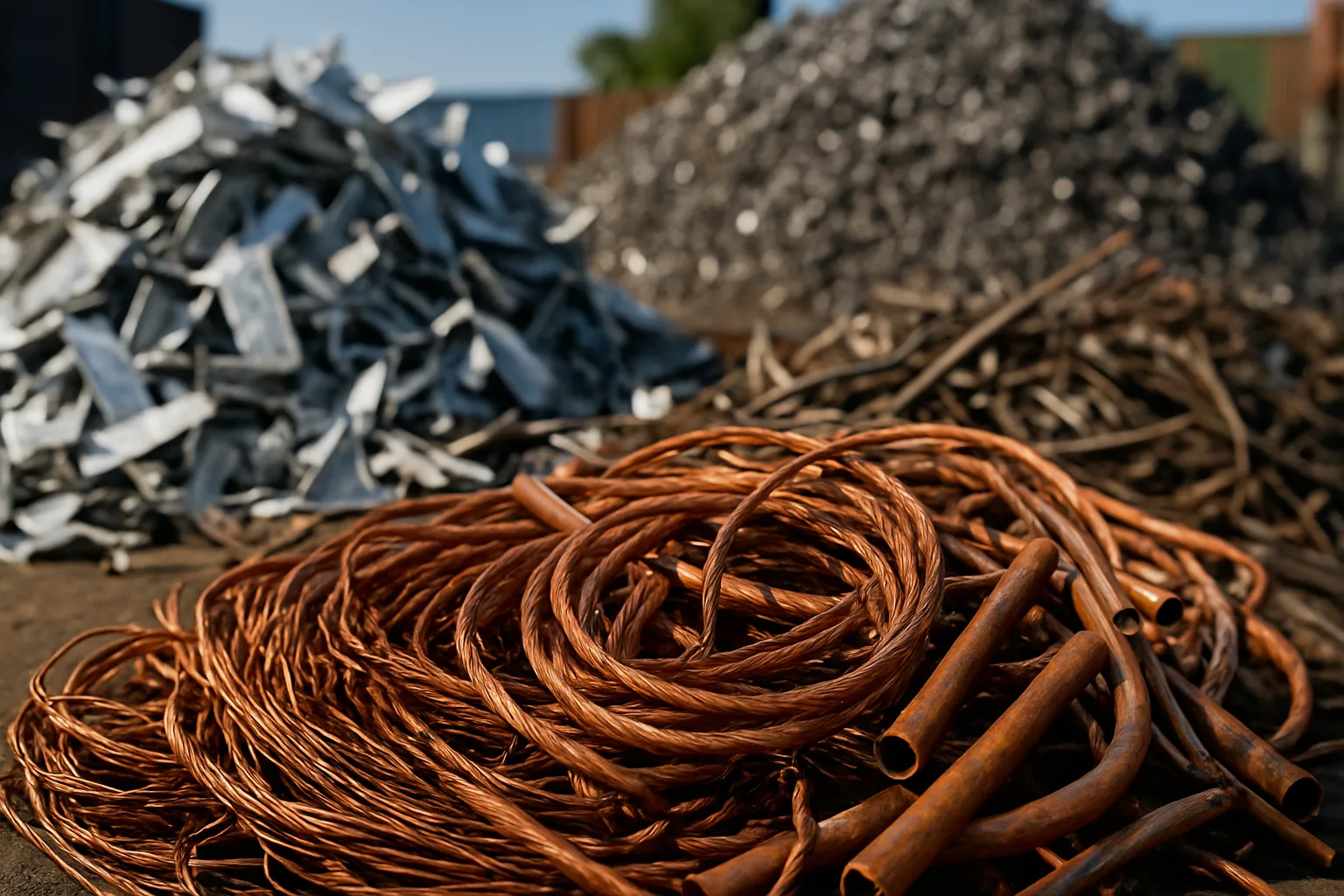
What Happens to Your Scrap Metal After You Drop It Off?
Most people drive through the gate, hand over their load, and walk away with a cheque. What happens in between — the weighing, the grading, the pricing — is a black box. At an auto recycling yard in Winnipeg, that process determines exactly what you get paid. Understanding it puts money back in your pocket.
This isn't complicated once you see it clearly. Yards use a straightforward system: weigh the material, classify it, apply a price per pound or per tonne, and cut you a number. The problem is most sellers don't know what drives each step — and that ignorance costs them.
How Scrap Yards Actually Weigh Your Metal
Every licensed scrap yard uses a certified scale — typically a drive-on truck scale or a floor scale for smaller loads. When you arrive with a vehicle, a full trailer, or a pile of copper stripped from a reno, your load gets weighed. That weight is the foundation of your payment. Nothing else happens without it.
For vehicles specifically, the process runs like this:
- You drive or tow your vehicle onto the scale. The gross weight is recorded.
- You pull off. The tare weight (your empty truck or trailer) is subtracted.
- The net weight of your scrap is calculated. That's what gets priced.
Scales at reputable yards are certified and inspected. If a yard can't show you the readout or won't give you a weight ticket, that's a red flag. A credible operation — whether you're talking about Winnipeg scrap metal services or a yard in Halifax — prints a ticket every time. Ask for it. Keep it.
One thing sellers get wrong: fluids add weight, but they don't add value. Coolant, oil, and fuel left in a vehicle get counted in the gross weight — but most yards will deduct for them or simply drain before final pricing. Don't game the scale. Experienced yard operators have seen every trick, and it'll just slow down your transaction.
How Yards Classify and Grade Your Scrap
Weight is only half the equation. Grade determines the price per unit of weight. Two loads that hit the same number on the scale can fetch very different payouts depending on what's in them.
Yards sort metal into categories that align with what smelters and processors want. For ferrous material (iron and steel), the main grades are:
- #1 Heavy Melting Steel (HMS) — thick, clean structural steel, plate, beams
- #2 HMS — thinner steel, mixed sizes, some light gauge
- Shredder scrap — whole vehicles, white goods, mixed iron
- Light iron — sheet metal, thin gauge, lower value per tonne
Non-ferrous metals — copper, aluminum, brass, stainless, lead — are graded separately and priced much higher per pound. At any best scrap yard in Winnipeg, the person at the scale is also eyeballing your load for non-ferrous contamination or upgrades. A load of steel with copper pipe mixed in gets separated. That copper prices out on its own line. You want that separation to happen — it pays better.
For auto cores specifically — catalytic converters, alternators, starters, A/C compressors — yards have their own pricing schedules. Cats are graded by type and serial number. If a yard is buying cats by visual inspection alone and won't give you a breakdown by serial, find a better buyer. Platforms like SMASH use serial tracking and photo documentation so sellers know exactly what they're moving and why it priced the way it did.
What Drives Scrap Metal Prices Today — and Why They Change
Scrap metal isn't a fixed-price commodity. Prices move daily based on global demand, regional supply, energy costs, and what mills and smelters are willing to pay. A yard in Manitoba prices its loads based on what it can resell them for — and that number shifts constantly.
The main drivers of scrap metal prices today:
- LME (London Metal Exchange) spot prices — copper, aluminum, and other non-ferrous metals track LME closely
- Domestic steel mill demand — HMS pricing follows what electric arc furnace mills are paying for feedstock
- Export demand — when overseas buyers are active, North American prices rise
- Regional logistics — freight costs from Winnipeg to processing hubs affect what local yards can offer
- Seasonal patterns — demolition and construction seasons shift supply, which shifts prices
None of this is a reason to panic. It's a reason to stop treating scrap like a fixed-rate transaction. If you're calling one buyer and accepting their number, you're not getting a price — you're getting their offer. That's a different thing. Comparing scrap metal bids from Canadian buyers through an auction format is how serious sellers find out what their load is actually worth on a given day.
Disclaimer: Metal prices fluctuate daily. Always check current rates before selling. Prices referenced in any guide are illustrative only and may not reflect current market conditions.
The Old Way vs. The SMASH Way — Why Transparency Wins
Here's how the old way works: you call your regular yard, they quote you a number, you load up and haul in. Maybe you got a fair price. Maybe you left money on the table. You'll never know, because you never had competition.
That's not a criticism of yard operators — it's just how single-buyer transactions work. The buyer has information. The seller doesn't. That information gap has a dollar value, and it comes out of your payout.
A scrap metal auction platform like SMASH flips that dynamic. Instead of one phone call to one buyer, your documented load — with weights, grades, photos, and specs — goes in front of vetted buyers who compete for it. More buyers means better price discovery. Competition can help reveal the market. You see what your load is worth to more than one party before you commit.
No subscription fees. SMASH only wins when the seller wins. For anyone moving regular volume out of Winnipeg or anywhere else in Canada, that's a structure worth understanding. Auto recyclers, demolition contractors, and busy yards that generate loads week over week are the exact sellers this model was built for. You can find a scrap yard near you in Canada to handle your immediate drop-off, and use SMASH to maximize returns on larger or recurring loads.
Practical Tips Before You Pull Into Any Scrap Yard
Preparation changes your payout. Whether you're heading to an auto recycling yard in Winnipeg or looking for a scrap yard near me in Manitoba, these steps apply everywhere:
- Separate your metals before you arrive. Copper mixed with steel prices out as steel. Keep non-ferrous in its own pile or bin.
- Remove fluids from vehicles. Not just to follow environmental rules — it prevents deductions and speeds up your transaction.
- Bring ID. Regulated yards across Canada require identification. Manitoba yards are no different. Don't show up without it.
- Know your serial numbers on cats. If you're selling converters, document them before you hand them over. Serial tracking protects your payout.
- Get a weight ticket. Always. It's your record of the transaction. If a dispute comes up later, it's your proof.
- Ask how the grade was determined. A good yard can explain why your steel came in as #2 instead of #1. If they can't explain it, ask again.
First-time sellers especially benefit from asking questions upfront. Yard staff are used to it. The goal isn't to be difficult — it's to understand what you're selling and why it's priced the way it is. That knowledge compounds over time. Experienced sellers get better prices because they know what to ask and when to push back.
If you're sourcing from multiple locations — say, a salvage operation across Winnipeg and into rural Manitoba — keeping detailed records by load makes it easier to spot which material categories are performing and which ones to renegotiate. You can also read Canadian scrap yard guides to stay current on what's moving and what's not in your region.
The bottom line: the yards that pay best aren't always the ones with the biggest sign on the highway. They're the ones with competitive pricing, transparent grading, and buyers who actually want your material. Find those, and you'll stop leaving money at the gate. Locate the closest Canadian scrap yard to start, then build from there.
Frequently Asked Questions
Q: How do I know if a scrap yard in Winnipeg is weighing my load accurately?
Ask for a printed weight ticket on every transaction. Certified scales at licensed yards are inspected regularly and must meet provincial standards. If a yard won't show you the scale readout or refuses to print a ticket, take your load elsewhere.
Q: Why did my scrap grade lower than I expected at an auto recycling yard in Winnipeg?
Grade depends on material quality, thickness, cleanliness, and what the downstream processor accepts. Mixed loads, contaminated steel, or material with significant rust or coatings often grade lower. Ask the yard to walk you through the grading criteria — most reputable operations will explain it.
Q: Does it matter which auto recycling yard I use in Winnipeg, or are prices roughly the same?
Prices vary between yards based on their buyer relationships, overhead, and what they're actively looking for. Calling two or three yards before committing — or using a platform like SMASH to get competitive bids — can make a measurable difference on larger loads.
Q: How often do scrap metal prices change in Manitoba?
Ferrous prices can shift week to week. Non-ferrous metals like copper and aluminum can move daily based on commodity markets. Always ask for a current quote rather than relying on a number you heard last month.
Q: What do I need to bring when selling scrap at a yard in Manitoba?
Bring valid government-issued ID — it's required by law at regulated facilities across the province. If you're selling a vehicle, bring the ownership documents or title. For catalytic converters, having serial numbers documented in advance protects you and speeds up the transaction.
Ready to stop guessing what your scrap is worth? Find a trusted scrap yard near you in Canada and start every transaction knowing exactly what you're selling and why.
Follow SMASH on LinkedIn for industry updates, market insights, and practical advice for scrap sellers across North America.