Junkyard, Salvage Yard, or Scrap Yard — Do You Actually Know the Difference?
Most people use these three terms like they're the same thing. They're not. And if you show up at the wrong type of facility with a trunk full of copper pipe or a blown engine, you're going to waste a trip — and probably leave money on the table. If you're looking for an auto recycling yard in Lethbridge, knowing which type of yard handles what can save you real time and frustration.
Here's the breakdown. Plain language, no fluff.
What Is a Junkyard? (And Why the Name Is Misleading)
The word "junkyard" gets thrown around loosely, but in the recycling industry, it typically refers to a facility that stores end-of-life vehicles, appliances, and machinery — often without a heavy focus on resale or systematic dismantling. Think of it as a holding yard. Vehicles sit. Parts may or may not be catalogued. The operation tends to be more informal.
If you've ever wandered through rows of rusting cars in a field, pulling your own parts with a wrench, you've been to a junkyard. Some people searching for junkyard near me Canada are actually looking for this pull-a-part style experience — and that's fine. Just know what you're walking into. You're usually doing the labour yourself, and pricing can be inconsistent.
- Informal inventory management (or none at all)
- You pull your own parts in many cases
- Lower prices on parts, but more effort required
- Less likely to give you cash for whole vehicles or loose metal
- May not accept all materials
What Is a Salvage Yard? (The Organized Middle Ground)
A salvage yard is a step up in terms of organization and intent. These facilities are actively in the business of recovering value from end-of-life vehicles and equipment. Vehicles get assessed, dismantled methodically, and usable parts get catalogued and resold. A good salvage yard knows exactly what's on the lot.
Salvage yards are where most serious auto recycling happens. If you're selling a vehicle in Lethbridge that still has working parts — a decent transmission, a low-mileage engine, intact body panels — a salvage yard may offer you more than a straight scrap payout, because they can recover parts value before the remainder goes to metal. The best facilities will do a VIN lookup on your vehicle before quoting you, so they understand exactly what they're buying.
Here's what separates salvage yards from junkyards:
- Organized inventory — parts are catalogued, often searchable online
- Professional dismantling — fluids are drained properly, environmental compliance matters
- Documented transactions — you'll get paperwork, which matters for your title and liability
- Assessed vehicle pricing — they pay based on what they can recover, not just scrap weight
If your goal is to sell a complete vehicle or get the most value out of a car that still has useful components, a licensed salvage yard is typically your best starting point. For Albertans, this is also the type of facility that will properly deregister your vehicle and handle the paperwork correctly under provincial rules.
What Is a Scrap Yard? (Where Metal Becomes Money)
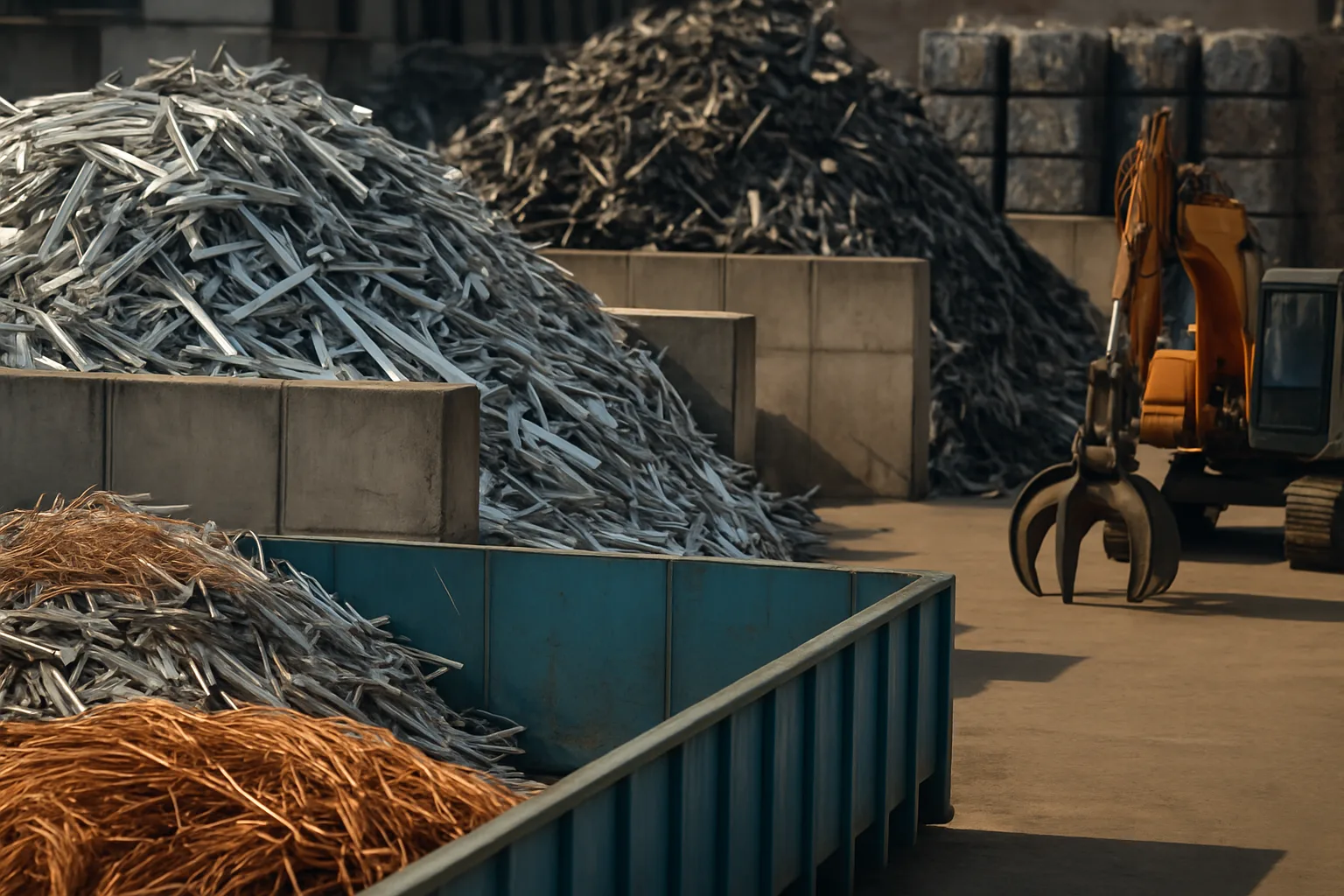
A scrap yard — sometimes called a scrap metal yard or metal recycling facility — is focused on commodity metal. Not parts. Not whole cars for resale. Metal by weight, metal by grade, metal by market price.
Scrap yards buy ferrous metals (steel, iron) and non-ferrous metals (copper, aluminum, brass, stainless) and sell them to smelters and mills. If you're bringing in a load of copper wire, an aluminum radiator, a pile of cast iron, or a bundle of catalytic converters (cats), a scrap yard is your destination. They deal in volume, and their pricing is tied directly to commodity markets — which fluctuate daily.
What scrap yards care about:
- Metal grade and cleanliness (bare bright copper pays more than insulated wire)
- Weight — they have certified scales on-site
- Documentation — especially for regulated materials like cats and cores
- Contamination — mixed or dirty loads get downgraded
If you're a contractor hauling non-ferrous scrap, a yard operator moving end-of-life equipment, or a business generating regular metal waste, a scrap yard is where you go. You can also sell scrap metal online through platforms like smashrecycling.ca, which connects sellers with vetted buyers through a competitive auction format — so you're not just taking the first number a single buyer quotes you.
How to Know Which One You Actually Need in Lethbridge
For anyone in southern Alberta trying to decide where to take their material, the answer usually comes down to what you have and what condition it's in. Here's a simple decision framework:
You need a junkyard if: You're looking to buy used parts cheap, you're okay doing the work yourself, and you want to browse a lot without a lot of structure.
You need a salvage yard if: You have a whole vehicle with usable parts, you want someone to handle dismantling professionally, or you need documentation for a title transfer. When you're looking for an auto recycling yard in Lethbridge, a licensed salvage yard handles the full process — from vehicle pickup to paperwork.
You need a scrap yard if: You're selling metal by weight. Period. Copper, aluminum, steel, cats, radiators, old HVAC equipment — this is commodity territory. Find a facility that has transparent pricing, a certified scale, and documented transactions. If you want to go beyond your local option and test the broader market, platforms like SMASH let you put your load in front of multiple vetted buyers rather than settling for one quote from one yard. That's the difference between guessing your price and discovering it.
Not sure which type of facility is closest to you? You can find a scrap yard near you in Canada and get pointed in the right direction without cold-calling yards that may not handle your material.
The Overlap — And Why It Matters for Metal Recycling in Alberta
Here's where it gets practical: many modern facilities operate as a hybrid. A licensed auto recycler in Alberta might function as both a salvage yard and a scrap yard. They'll take your whole vehicle, strip the valuable parts, and then crush and bale the remainder for metal. You get one transaction, they capture maximum value from the unit.
For metal recycling in Alberta, this hybrid model has become increasingly common — especially as provincial environmental standards have tightened around fluid handling, refrigerant recovery, and documentation. A yard that calls itself an "auto recycler" is usually operating under stricter compliance than an old-school junkyard. That's not a minor detail. It affects your liability when you sell a vehicle, and it affects whether the transaction is properly documented if questions come up later.
The best yards — whether they call themselves salvage, scrap, or recycling — will give you a clear paper trail. Bill of lading, weight ticket, itemized receipt. If a facility can't produce that, keep looking. To locate the closest Canadian scrap yard that meets these standards, use a directory that pre-screens facilities rather than relying on a random search result.
Don't Leave Money Behind: The Case for Competitive Pricing on Your Scrap
One of the most common mistakes sellers make — whether they're dropping off a car at an auto recycling yard in Lethbridge or hauling a load of non-ferrous to a scrap metal yard — is accepting the first number they hear. One yard, one call, one price. That's not price discovery. That's guessing.
The scrap market is a commodity market. Prices are real, they move, and multiple buyers means better outcomes. That's the entire premise behind auction-based platforms. When you sell scrap metal online through a vetted platform, you're putting your load or your vehicle in front of competition. Buyers bid. You see the spread. You make an informed decision.
SMASH operates exactly this way — no subscription, no upfront cost, and they only earn when the seller does. For loads with solid documentation (photos, weights, serial tracking for cats and cores), the process is straightforward. You can read Canadian scrap yard guides to get up to speed on how to prepare your load or vehicle for sale before you reach out to any buyer.
If you're ready to stop guessing and start getting real numbers, checking out Lethbridge scrap metal services is a solid first step for anyone in the region.
The bottom line: terminology matters, but execution matters more. Know what you have, know who handles it, and don't settle for one opinion on what it's worth. Whether you're selling a beater truck, a pile of copper bus bar, or a full container of catalytic converters, there's a right facility and a right process for the job.
Frequently Asked Questions
Q: What's the difference between a salvage yard and an auto recycling yard in Lethbridge?
They're often the same thing — the term "auto recycling yard" reflects the modern, compliance-focused version of what used to be called a salvage yard. Licensed auto recyclers in Lethbridge and across Alberta are required to properly drain fluids, document transactions, and handle vehicle deregistration. If a facility calls itself an auto recycler, expect a more structured and regulated process than an informal junkyard.
Q: Can I sell a vehicle without a title at a scrap or salvage yard in Alberta?
Most licensed facilities in Alberta require proof of ownership before purchasing a vehicle. A title or registration document is standard. If you've lost your title, contact Alberta registries to get a replacement before approaching any yard — it protects you legally and makes the transaction clean for both sides.
Q: How do I find the best scrap yard in Lethbridge for my material?
The best scrap yard for your material depends on what you have. For whole vehicles with usable parts, look for a licensed auto recycler. For bulk non-ferrous metal, find a scrap yard with a certified scale and transparent commodity pricing. Compare at least two quotes before committing, and consider listing higher-value loads on a platform like SMASH to reach more buyers.
Q: What is "scrap yard open today near me" — how do I check hours quickly?
Most yards post their hours online, but they can vary significantly — especially around statutory holidays. Before hauling a load, call ahead or check their listing on a directory like scrap-yard-near-me.ca, which keeps facility information current. Showing up at a closed gate with a full truck is a frustrating and avoidable mistake.
Q: Can I sell scrap metal online instead of driving to a yard?
Yes — platforms like SMASH let you list loads and connect with vetted buyers without being locked into one local option. This works especially well for larger loads of non-ferrous metal, catalytic converters, or auto cores where documentation and competitive pricing matter most. You still need to arrange pickup or drop-off logistics, but the pricing conversation happens online with multiple buyers, not just one.
Whether you're clearing out a garage in Lethbridge, scrapping a fleet vehicle, or hauling industrial non-ferrous, the right facility makes all the difference. You don't have to settle for the first yard you find or the first number you hear. Find a trusted scrap yard near you in Canada — check locations at scrap-yard-near-me.ca and get your material to the right buyer.
Stay sharp on scrap metal market trends and industry updates — follow SMASH on LinkedIn for insights that keep you ahead of the market.