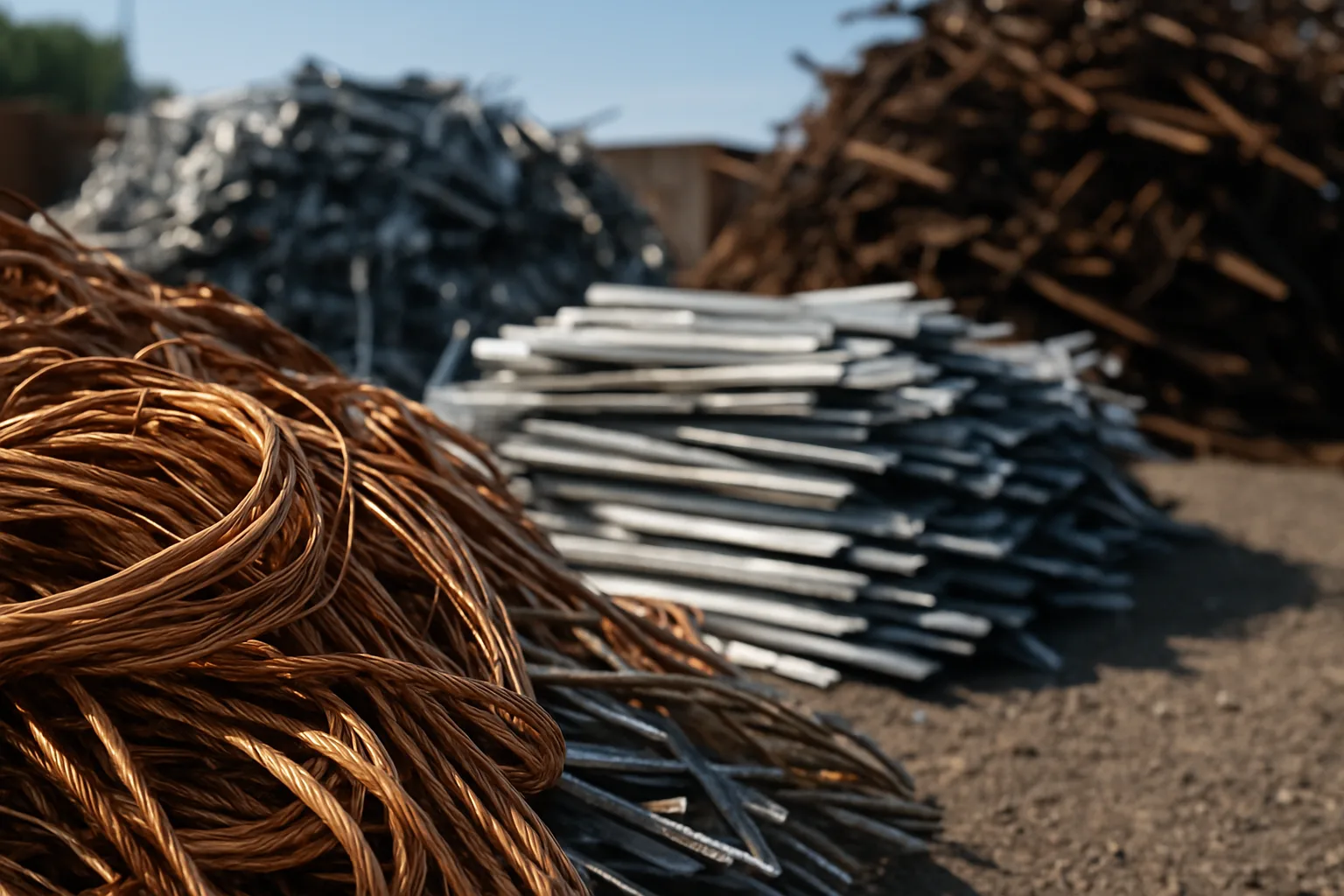
Most people drop off a load, get paid, and drive away without thinking twice about what happens next. But understanding where your metal actually goes — and how it moves through the supply chain — can change how you sell it. It can help you pick a better buyer, negotiate smarter, and stop leaving money on the table. If you're looking for the best scrap yard Lethbridge has to offer, knowing how yards operate gives you real leverage.
This isn't just trivia. The journey your scrap takes after it leaves your hands affects the price you're offered today. Yards that have strong downstream connections, vetted buyers, and transparent inventory systems can move metal faster — and that efficiency often translates back to the seller. Here's how it all works.
---Step One: Sorting, Grading, and Scrap Metal Inventory Management
The moment your load hits the scale, the yard starts working. Staff sort incoming material by grade and type — copper from aluminum, clean from contaminated, #1 from #2. This isn't just organization. It determines the value the yard can extract downstream, and it directly impacts the offer you received at the gate.
Yards that invest in proper scrap metal inventory management track every load with documentation: weight tickets, metal grades, source records, and increasingly, photo documentation. Platforms like SMASH support this kind of structured inventory tracking, which matters more than most sellers realize. When a buyer on the other end can see exactly what they're bidding on — clear photos, verified weights, accurate grade descriptions — they bid with more confidence. That confidence shows up in the number they offer.
Poorly documented yards do the opposite. They dump everything together, lose track of grades, and end up negotiating from a weak position with processors. That cost gets pushed back to you, the original seller, in the form of lower offers at the gate.
- Ferrous metals (steel, iron) get baled or shredded for mill consumption
- Non-ferrous metals (copper, aluminum, brass, stainless) are sorted by alloy and grade
- Catalytic converters (cats) go through serial tracking and PGM assay processes
- Cores and components may be remanufactured or broken down for raw material
- Contaminated or mixed loads get downgraded — costing the seller before they even know it
The cleaner and more accurately described your load is when it arrives, the better position the yard is in — and the better offer you're likely to receive in the first place.
---How Yards Sell What They Buy: The Old Way vs. the SMASH Way
Here's where most sellers have no idea what's happening behind the scenes. After sorting, the yard needs to move that material to a processor, mill, smelter, or secondary market buyer. Historically, this meant a phone call to one or two known contacts. The yard takes whatever number they're given. No competition. No transparency. That single-buyer model has defined the scrap industry for decades.
The problem? A yard locked into one buyer relationship doesn't know if they're getting the market rate. Neither does the seller who brought the load in. Price discovery in that model is essentially guesswork. The mill or processor has all the information advantage.
That's exactly what platforms like SMASH scrap metal auction are built to fix. SMASH connects yards with vetted buyers across North America who compete for loads in a structured auction format. When multiple buyers see the same documented inventory and submit competing bids, the market reveals itself. More buyers means better price discovery. The yard wins. And because yards that use SMASH operate with tighter margins and stronger downstream returns, their gate prices tend to reflect that.
No subscription fees. SMASH only wins when the seller wins. That alignment matters.
---Processing and the Metal's Physical Journey
Once a buyer acquires the material through auction or direct sale, the metal enters the next stage of its physical life. Ferrous scrap — think steel beams, car bodies, appliances — typically moves to a shredder facility if it hasn't been processed already. Shredded steel gets consolidated into loads that meet electric arc furnace (EAF) specifications, then shipped to mini-mills where it's melted down and cast into new steel billets, rebar, or sheet.
In Alberta and across Western Canada, a significant portion of ferrous scrap feeds regional processors before heading to mills in the U.S. Pacific Northwest, the Midwest, or offshore export markets. Lethbridge, positioned along key southern Alberta transport corridors, sits in a logical collection zone for material flowing both east and west. Understanding this geography helps explain why yards in the region price the way they do — freight costs are real, and they factor into every offer.
Non-ferrous metals take a different path. Copper goes to smelters or wire choppers. Aluminum gets sorted by alloy — not all aluminum is equal, and automotive sheet, extrusions, and cast alloys command different prices at the secondary smelter level. Brass and bronze move to specialty foundries. Stainless steel has its own downstream based on nickel content and grade.
Catalytic converters (cats) follow a separate, tightly tracked process. They move to a handful of specialized processors in North America who recover platinum, palladium, and rhodium (PGMs). Serial tracking and photo documentation on cats aren't optional in 2026 — they're regulatory and operational requirements that legitimate yards enforce. If a yard near you isn't documenting cats properly, that's a red flag worth taking seriously.
---Regulation, Traceability, and Why Documentation Now Matters More Than Ever
The scrap metal industry across Canada has faced increasing regulatory scrutiny over the past several years, and 2026 is no exception. Anti-theft regulations, bill of lading (BOL) requirements, and provincial identification rules for sellers have all tightened. Alberta has implemented stricter requirements around seller identification for certain metal categories — particularly copper wire, catalytic converters, and other high-theft commodities.
For sellers, this means you need to be prepared. Bring valid ID. Expect the yard to document your transaction. If you're bringing in a vehicle or a load with a title or ownership document, have those ready. Yards that skip these steps aren't doing you a favour — they're operating in a grey zone that can create problems for everyone downstream.
For yards, traceability is no longer optional. BOLs, packing lists, photo documentation, and serial tracking aren't bureaucratic overhead — they're the foundation of a defensible, compliant operation. Buyers on platforms like SMASH expect this documentation as a baseline. It's what allows them to bid with confidence, and it's what protects both parties if a dispute or audit arises.
If you're trying to find a scrap yard near you in Canada that operates to this standard, ask directly: Do you document incoming loads? Do you require seller ID? Do you issue weight tickets? Any legitimate yard will answer yes to all three without hesitation.
---What This Means If You're Selling Scrap in Lethbridge
Lethbridge has a working mix of industrial, agricultural, and residential scrap generation. Farm equipment, construction steel, automotive cores, non-ferrous from industrial sites — it's a diverse material base. The Lethbridge scrap metal services available in the area reflect that mix, with yards set up to handle everything from a single car battery to multi-tonne industrial loads.
When you're evaluating where to bring your material in Lethbridge, the process described above is your filter. Does the yard sort and grade properly? Do they document inventory? Do they have access to multiple buyers, or are they locked into one relationship that limits their leverage — and yours?
A yard with strong downstream connections and proper inventory practices will price your material more accurately than one operating blind. That's not a guarantee of a higher price — metal markets fluctuate daily and no one can promise outcomes — but it does mean you're more likely to get a number that reflects actual market conditions rather than one buyer's take-it-or-leave-it offer.
You can also read Canadian scrap yard guides to understand pricing by metal type, what documentation to bring, and how to prepare your load before you arrive. A bit of preparation before you pull up to the gate is worth more than most people think.
For sellers who want to go further — particularly commercial sellers moving regular volumes — exploring options beyond the local gate price is worth your time. Locate the closest Canadian scrap yard to start, then understand how competitive buying works and whether there's a better channel for your specific material type. Platforms designed around auction-based price discovery exist for exactly this reason.
---The Bottom Line: Your Scrap Has a Long Life After the Yard
Your metal doesn't retire when you drop it off. It gets sorted, documented, moved through a buyer network, processed at a facility, and ultimately reborn as new industrial material. That chain is long, and every link in it either adds value or loses it. The best scrap yards in Lethbridge — and across Alberta — are the ones that operate with enough transparency and market access to make that chain work efficiently for everyone in it, including you.
Understanding this process won't make you an expert overnight. But it will help you ask the right questions, spot the red flags, and make smarter decisions about where and how you sell. If you're ready to find a trusted scrap yard near you in Canada, scrap-yard-near-me.ca is built exactly for that — helping you connect with facilities that operate the right way, with the documentation and market access your metal deserves.
---Frequently Asked Questions
Q: What is the best scrap yard in Lethbridge for selling mixed metal loads?
The best scrap yard in Lethbridge for mixed loads is one that sorts and grades material accurately, documents transactions with weight tickets and photo evidence, and has access to multiple downstream buyers. Ask any yard you're considering whether they use structured inventory systems and how they determine their gate prices. Yards connected to competitive buyer networks tend to offer more accurate pricing.
Q: How long does it take for my scrap metal to be processed after I sell it?
It varies by material type and the yard's inventory cycle. Yards typically consolidate material into loads before moving it to processors — this can take days to weeks depending on volume. Ferrous scrap destined for mills in Alberta or the U.S. may move quickly when demand is high. Non-ferrous and specialty materials like cats may sit longer while the yard builds a full shipment worth moving.
Q: Do I need ID to sell scrap metal at a yard near me in Lethbridge?
Yes. Alberta regulations require scrap yards to record seller identification for regulated metal categories, including copper, catalytic converters, and certain other high-value non-ferrous materials. Bring a valid government-issued photo ID. Any yard that doesn't ask for ID on these materials is not operating in compliance.
Q: Does the scrap metal auction process affect what I'm paid at the gate?
Indirectly, yes. Yards that use competitive auction platforms to sell their consolidated loads — like SMASH — have stronger price discovery downstream. That means they have a clearer picture of what their inventory is actually worth, which tends to produce more accurate gate pricing. A yard locked into a single buyer relationship has less information to work with, and that uncertainty often flows back to the seller.
Q: What metals are worth the most at a scrap yard near me in Lethbridge right now?
Non-ferrous metals consistently outperform ferrous on a per-pound or per-kilogram basis. Copper, aluminum alloys, and catalytic converters (for their platinum group metals) typically carry the highest value. Exact prices fluctuate daily based on global commodity markets — always check current rates before bringing in a load, and don't rely on prices quoted more than a day or two old.
Disclaimer: Scrap metal prices fluctuate constantly based on global commodity markets, regional demand, and material grade. All price references in this article are general in nature. Always confirm current rates directly with your local yard before selling. ---Stay current on scrap metal market trends and industry news by following SMASH on LinkedIn — practical updates for yards and sellers across North America, without the noise.