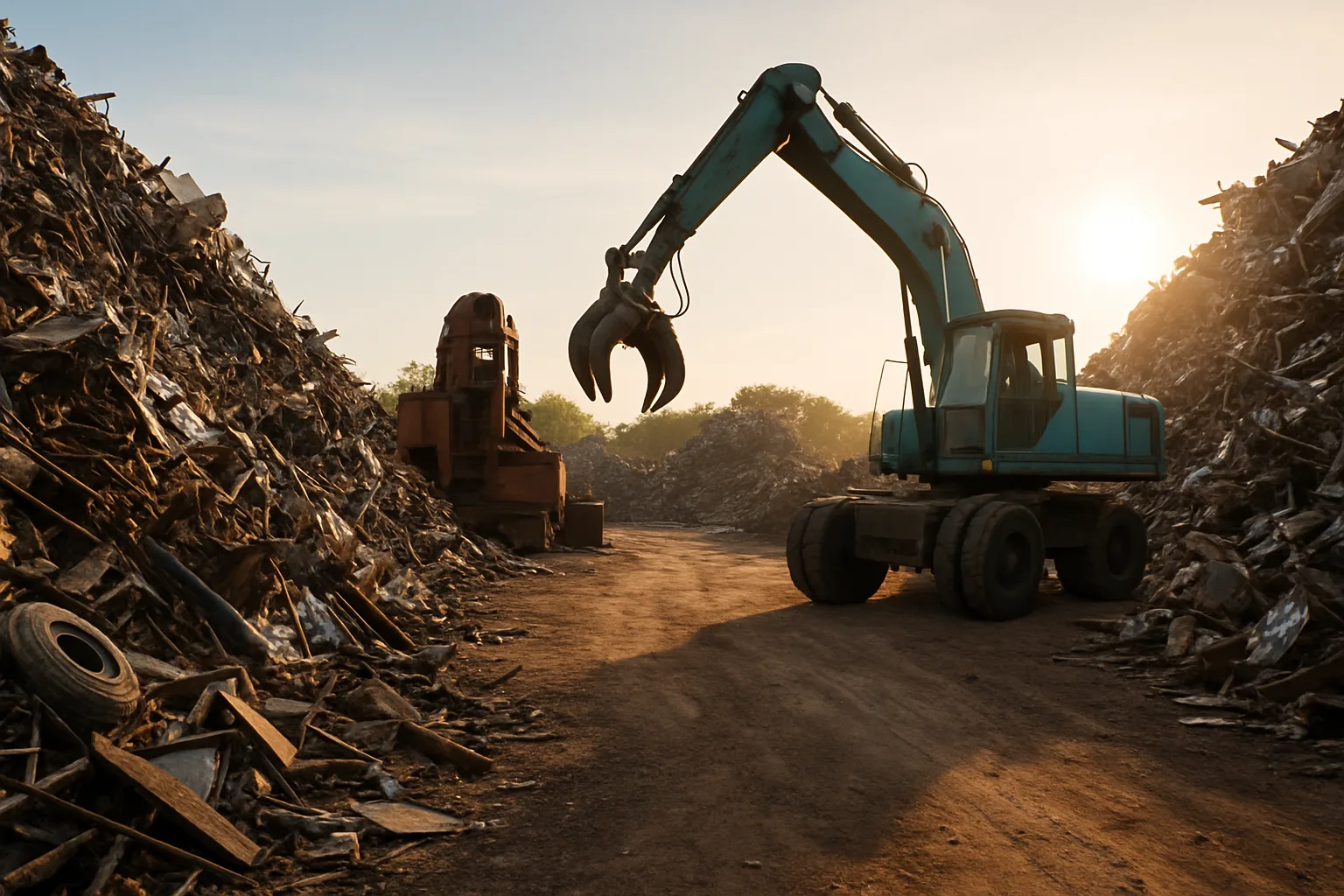
From Your Hands to the Mill: What Actually Happens to Scrap Metal After the Yard Buys It
Most people drop off a load of copper pipe, an old engine block, or a pile of catalytic converters — and that's where their mental picture stops. The yard weighed it, paid you, and now it's gone. But what happens next? Understanding the full chain makes you a smarter seller. It helps you understand why prices move, why documentation matters, and why some yards pay more than others. If you're searching for a scrap yard near me Corner Brook, knowing what the yard does with your metal puts you in a better position to negotiate and choose the right buyer.
Step One: Sorting and Grading at the Scrap Metal Yard
The moment your metal hits the yard, sorting begins. Not all metal is created equal — and the yard knows it. A pile of mixed copper might contain bare bright wire, insulated cable, and #2 copper all tangled together. A scrap metal yard in Corner Brook or anywhere else in Newfoundland and Labrador will grade your material before it goes anywhere. Cleaner, purer grades command higher prices down the line, so the yard has every incentive to sort accurately.
This is why preparation matters on your end. The more separated and clean your loads are when you arrive, the less downgrading the yard needs to do. Ferrous metals (iron, steel) get separated from non-ferrous metals (copper, aluminum, brass, stainless). Electronics go to e-waste streams. Catalytic converters — a major category we'll come back to — get pulled out for specialized processing. Grading isn't guesswork. Yards use references, specs, and buyer requirements to classify every category correctly.
- Bare bright copper — cleanest grade, highest value per pound
- #1 copper — unalloyed, uncoated, thicker than 16 gauge
- #2 copper — painted, coated, or thinner wire
- Insulated copper wire — graded by copper recovery percentage
- Prepared steel — cut to mill-ready lengths
- Shredder feed — mixed ferrous, sent to a shredder operation
The grade your metal receives directly affects the price you get. That's not arbitrary — it reflects what the next buyer in the chain will actually pay for it.
Step Two: Processing, Baling, and Moving Volume
Once sorted, the yard prepares the metal for resale to processors or mills. Ferrous scrap gets baled, shredded, or torched into manageable pieces. Non-ferrous material gets baled or drummed. The goal is density — more weight per cubic foot means lower shipping costs per ton. A scrap metal yard Corner Brook operation, like any yard in a more remote region of Canada, is especially sensitive to logistics costs. Moving metal across Newfoundland and Labrador to port facilities or processing centres costs real money, and those costs get built into what the yard can offer you at the scale.
Shredders are the backbone of ferrous processing. A large shredder can process thousands of tons of mixed steel and iron per day — turning car bodies, appliances, and structural steel into fist-sized chunks called shredded scrap or "shred." Shred is a commodity that steel mills buy directly. Copper gets melted down or sent as baled wire to smelters. Aluminum gets sorted by alloy type — cast vs. extrusion vs. sheet — because different alloys serve different manufacturing purposes.
The Catalytic Converter Auction — Why Cats Are Treated Differently
Catalytic converters deserve their own explanation. If you've ever been surprised by how a yard prices cats differently than other metal, here's why: cats don't follow standard metal pricing. They contain platinum group metals (PGMs) — platinum, palladium, and rhodium — in tiny but extremely valuable concentrations. The value isn't in the steel shell. It's in the ceramic substrate inside.
Yards don't smelt cats themselves. They accumulate them and sell in volume to specialized processors who assay the PGM content and pay based on actual recovery. That's why a catalytic converter auction format makes a significant difference. When a yard — or a platform like SMASH Recycling — where verified buyers bid on your metal — puts a cat load up for competitive bidding, multiple licensed processors compete on price. That competition can reveal the real market value of the PGMs inside, rather than relying on a single buyer's quote.
For sellers in Corner Brook or anywhere else in Canada, this matters. If your yard is selling your cats in a competitive auction environment rather than a quiet bilateral deal, more of that PGM value flows back to you. Ask your yard how they sell their cats. The answer tells you a lot about whether you're getting fair market value.
How Metal Prices Flow Back to You — Scrap Yard Near Me Copper Prices Explained
Here's the part most sellers don't fully understand: the price a scrap yard offers you is tied directly to what their buyers are paying them. A yard isn't just setting a number from thin air. They're working backward from the mill price or processor price, subtracting their margin, freight costs, processing costs, and risk — and that's your price. When you search scrap yard near me copper prices, you're really looking for the end of a long pricing chain.
Copper prices, for example, track global commodity markets. The London Metal Exchange (LME) sets the reference price that flows through to North American buyers, processors, and eventually yard-level pricing. When LME copper is strong, your copper pipe is worth more. When it drops, yards adjust quickly. This isn't manipulation — it's market reality.
What changes the equation is competition. A yard with one regular buyer has limited leverage. A yard that uses an auction platform or works with multiple vetted buyers can push against that pricing chain. That's exactly what SMASH is built for — more buyers bidding means better price discovery for the yard, and that can translate into better payouts for you as the supplier.
For general scrap metal price guidance and how platforms like SMASH work in practice, you can read Canadian scrap yard guides on our blog for up-to-date educational content.
Disclaimer: Scrap metal prices fluctuate daily based on global commodity markets. Always check current rates with your local yard before making decisions.
The Documentation Trail — Why It Matters More Than You Think
Here's something most casual sellers ignore: the paper trail that follows your metal through the chain is more important than ever in 2026. Regulatory pressure on catalytic converter theft, copper theft, and scrap fraud has tightened requirements across Canadian provinces. Newfoundland and Labrador, like other provinces, has moved toward stricter seller ID and documentation requirements at licensed scrap facilities.
But documentation isn't just about compliance. It's about value. When a processor buys a load of cats or copper from a yard, documentation — photos, serial numbers, VIN lookups on cores, packing lists — gives them confidence in what they're buying. More confidence means better bids. This is why yards that use platforms with built-in photo documentation, serial tracking, and VIN lookup capabilities can often achieve stronger returns on their inventories.
When you sell to a reputable yard, your documentation protects you too. A proper receipt, accurate weight slip, and grade classification means you have a record if there's ever a dispute. Never walk away from a yard without paperwork. That applies whether you're selling a truckload of copper wire or a single catalytic converter.
How to Choose the Right Scrap Yard and Make Sure Your Metal Moves Properly
Not every yard has the same reach, buyer network, or transparency. If you're in Corner Brook and searching for a scrap yard near me Newfoundland and Labrador, your geographic reality is that metal has to travel to get to processing centres or port facilities. That means the yard's logistics relationships matter — a yard with established freight and processing partnerships can move material more efficiently than one working on the spot market every time.
Here's what to ask when evaluating a yard:
- How do you sell your cats? — Are they going to a single buyer or a competitive auction?
- What grades do you accept? — A yard that handles more categories means more convenience for you.
- Do you provide weight tickets and receipts? — Non-negotiable. Walk away if they don't.
- How do your prices compare to current LME or market reference? — A good yard can explain the spread.
- Are you licensed and insured? — In Newfoundland and Labrador, legitimate facilities carry the appropriate credentials.
If you're a yard owner or operator reading this, the other side of that equation is equally important. Platforms like SMASH let you list your inventory — whether that's non-ferrous loads, cats, or cores — and let vetted buyers across North America compete for it. No subscription fees. You only pay when a deal closes. That's a different model than cold-calling one buyer and hoping the price is fair.
Whether you're a first-time seller in Corner Brook or a commercial operation looking to find a scrap yard near you in Canada, understanding the full lifecycle of your metal makes you a more informed participant in the market. And if you're a yard looking to improve what you get for your inventory, it's worth exploring what competitive bidding can do for price discovery.
Start with the basics: know your metal, choose a licensed yard, get your paperwork, and ask how your material gets sold down the chain. Ready to find a trusted facility? Locate the closest Canadian scrap yard and get your metal moving today.
Frequently Asked Questions
Q: What does a scrap yard in Corner Brook actually do with the metal I sell them?
Your metal gets sorted by grade and type, then baled, shredded, or packaged for sale to processors and mills. Non-ferrous metals like copper and aluminum go to smelters or specialty processors. Ferrous steel typically goes to a shredder operation, then to a steel mill. Catalytic converters are sold to PGM processors who recover the platinum, palladium, and rhodium inside.
Q: Why do scrap metal prices change so often at my local yard?
Scrap metal prices track global commodity markets — especially the London Metal Exchange for non-ferrous metals like copper and aluminum. When global demand shifts or supply changes, yard prices follow within days. Your local yard in Corner Brook isn't setting prices arbitrarily — they're working from the same market signals as buyers in Toronto or Chicago. Always check current rates before you haul a load.
Q: Are catalytic converters worth more if they're sold at auction rather than to a single buyer?
Potentially yes. When multiple vetted processors compete for a cat load through a competitive auction format, the market determines the price rather than a single buyer's quote. Platforms like SMASH facilitate this kind of competitive bidding, which can lead to better price discovery for the yard — and better payouts flowing back to the original seller.
Q: What documentation should I expect when I sell metal to a scrap yard near me in Newfoundland and Labrador?
At minimum, you should receive a weight ticket showing the grade, weight, and per-unit price, plus a payment receipt. Many yards also require valid government-issued ID for sellers, especially for regulated categories like catalytic converters and copper. Keep all documentation. It protects you legally and gives you a record of every transaction.
Q: Can I sell scrap metal directly to buyers without going through a yard?
In most cases, individual sellers deal through licensed scrap yards rather than directly with mills or processors — those facilities buy in bulk and have minimum volume requirements most individuals can't meet. However, if you're a yard or commercial recycler with significant volume, platforms like SMASH let you list inventory directly for vetted buyers to bid on, cutting out the middleman for larger commercial loads.
Stay current on the scrap metal market — follow SMASH on LinkedIn for industry updates, pricing insights, and Canadian recycling news.