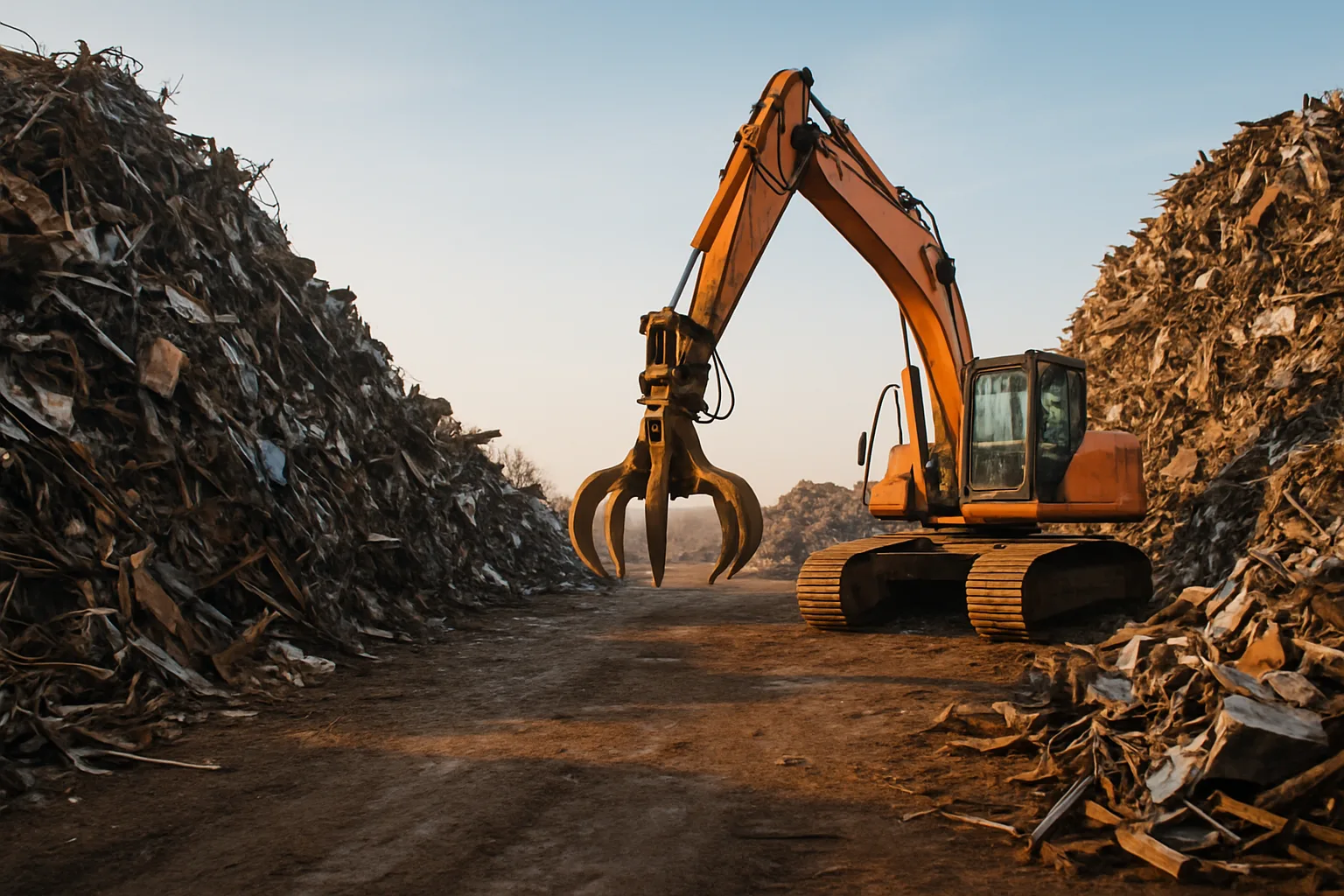
Canada throws away billions of dollars worth of recoverable metal every year. Not because it has no value — because it never makes it to the right buyer. If you're sitting on scrap in Fort McMurray and wondering whether recycling it actually matters beyond a cash payout, the answer is yes. Significantly. The circular economy depends on yards like the ones you'll find a scrap yard near you in Canada — and understanding how that system works helps you make smarter decisions about what you're selling and who you're selling it to.
This guide breaks down the real role scrap yards play in keeping metal in circulation, why Fort McMurray is a particularly active market for industrial and automotive scrap, and how platforms like SMASH are changing how yards and sellers connect with buyers across the country.
---What the Circular Economy Actually Means for Scrap Metal
The circular economy isn't a buzzword. It's a supply chain reality. Virgin metal production — mining, smelting, refining — is energy-intensive and expensive. Recycled metal skips most of that process. Recycling aluminum, for example, uses a fraction of the energy required to produce it from raw ore. Steel from recycled scrap feeds electric arc furnaces that run cleaner and faster than traditional blast furnaces.
Scrap yards are the collection point for that entire system. They aggregate metal from households, auto wreckers, industrial sites, and demolition crews. They sort, grade, and prepare loads for smelters and mills. Without yards doing that work, the circular loop breaks. Raw material demand climbs. Energy consumption goes up. Costs get passed down the chain to manufacturers — and eventually to consumers.
- Ferrous metals (steel, iron) get recycled into structural steel, rebar, and automotive parts
- Non-ferrous metals (copper, aluminum, brass, stainless) cycle back into electrical systems, packaging, and industrial equipment
- Catalytic converters and cores recover platinum group metals used in new catalysts and electronics
- End-of-life vehicles yield steel, aluminum, copper wiring, and fluids — all recoverable through proper processing
Every load that moves through a scrap yard is a step in that loop. The better the documentation, the cleaner the sort, and the more competitive the sale — the stronger the whole system runs.
---Why Fort McMurray Generates So Much Industrial and Automotive Scrap
Fort McMurray isn't a typical Canadian city when it comes to scrap volume. The oil sands operations surrounding the region generate substantial industrial metal waste — worn equipment, decommissioned pipe, structural steel from facility upgrades, and heavy machinery components. That's on top of the normal residential and automotive scrap stream that any city its size would produce.
The industrial base here means there's a consistent supply of high-value non-ferrous material that many scrap yards in smaller markets never see. Copper, stainless steel, and specialty alloys turn up regularly as industrial maintenance cycles run their course. That creates real opportunity — both for sellers who know what they have, and for buyers who want reliable access to clean, high-grade material.
Alberta's regulatory environment also encourages proper metal disposal. Improper dumping of industrial metals carries real consequences. Recycling through a licensed yard isn't just the right move for the circular economy — in many cases, it's the legally required one. If you're managing scrap from a worksite or facility in Fort McMurray, working with a yard that documents the transaction properly protects you.
---What to Expect From a Scrap Yard Near Me in Fort McMurray
If you're new to selling scrap — or you've done it before but felt like you were guessing — here's what a solid transaction looks like. A reputable yard in Fort McMurray will weigh your material accurately, grade it by type and condition, and give you a price based on current market rates. They should be able to tell you what commodity category your metal falls into and why.
What separates a good yard from a frustrating one is transparency. You want to know the weight, the grade, and the price per unit before you agree to the sale. Ask for a packing list or receipt. Keep records, especially for larger loads. If you're selling regularly — from a demo project, an estate cleanout, or ongoing industrial work — documentation matters for your own accounting too.
Here's what you should typically bring and expect:
- Valid government-issued ID — required by most yards for loads above a minimum threshold
- A clear separation of materials — mixed loads get lower prices; sorted loads get better rates
- Vehicle documentation if scrapping a car or truck — title or ownership papers depending on Alberta regulations
- Photos of high-value items — catalytic converters, copper wire, cores — documentation protects both parties
- Realistic expectations on price — scrap metal prices today fluctuate with global commodity markets, so check current rates before you go
To locate the closest Canadian scrap yard to where you are right now, use a directory that shows current hours and accepted materials — not just a generic address listing.
---How SMASH Connects Fort McMurray Sellers to Competitive Buyers
The old way of selling scrap is one phone call, one buyer, one price. You take it or you don't. That's not price discovery — that's guessing. The market rate for copper or aluminum or catalytic converters isn't a secret, but when you only call one buyer, you have no idea if you're leaving money on the table.
SMASH is a scrap metal auction platform that changes that dynamic. Instead of one call to one yard, your load goes in front of multiple vetted buyers competing for it. That competition does what competition always does — it pushes pricing toward the real market value. More buyers means better price discovery. Documented inventory gives buyers more confidence, which means stronger bids.
For sellers in Fort McMurray moving industrial scrap, end-of-life vehicles, or large non-ferrous loads, the SMASH platform offers tools that match the complexity of the transaction:
- Inventory documentation with photo support and serial tracking
- VIN lookup for automotive loads
- Auto-invoicing once a sale closes
- Vetted buyer network — no dealing with unverified buyers or slow payment
- No subscription fees — SMASH only wins when the seller wins
You can compare scrap metal bids from Canadian buyers and see what competition actually does to your final price. It's a different experience than a cold call to a single yard.
---Understanding Scrap Metal Prices Today: What Drives the Numbers
One of the most common frustrations in scrap is showing up to a yard expecting a number you saw online — and leaving with something different. That gap isn't necessarily dishonesty. Scrap metal prices today are tied to global commodity markets, exchange rates, and local supply-and-demand conditions that shift constantly. What copper was worth last Tuesday isn't necessarily what it's worth this Tuesday.
A few factors that move your actual payout:
- Grade and contamination — clean copper wire versus insulated wire versus mixed copper all price differently
- Volume — larger loads often negotiate better per-unit rates than small drop-offs
- Buyer competition — a single buyer quotes what works for them; multiple buyers competing quotes what the market will bear
- Transportation logistics — remote markets sometimes see lower net prices because buyers factor in shipping costs
- Market timing — industrial demand cycles and currency movements affect non-ferrous prices especially
For anyone selling regularly, tracking trends and checking rates before each transaction pays off. Read Canadian scrap yard guides to stay current on what's moving markets and how to position your loads for better outcomes.
Disclaimer: Scrap metal prices fluctuate based on global commodity markets, local demand, and material grade. Always verify current rates directly with your yard or buyer before completing a transaction.
---Making the Circular Economy Work for You in Fort McMurray
Recycling scrap isn't charity. It's commerce. The circular economy works because everyone in the chain — the seller, the yard, the buyer, the smelter — gets something out of it. Your job as the seller is to make sure you're getting fair value for what you bring to the table.
That means sorting your material before you drop it off. It means knowing the rough commodity category for what you have. It means not accepting the first number offered without understanding what the market looks like. And it means working with buyers and platforms that document transactions properly, so there's no dispute about weight, grade, or payment.
Fort McMurray's scrap market is active and well-supplied. The industrial base here creates real volume, and real volume attracts real buyers. If you're selling scrap in this market — whether it's a single load of aluminum or an ongoing stream of industrial material — you have leverage. Use it.
Ready to stop guessing and start selling? Find a trusted scrap yard near you in Canada — check locations at scrap-yard-near-me.ca and see what your market actually looks like.
---Frequently Asked Questions
Q: What is the best scrap yard in Fort McMurray for industrial metal?
The best scrap yard for industrial metal in Fort McMurray is one that handles large volumes, provides accurate grading, and documents transactions properly. For sellers moving significant loads of non-ferrous or specialty metals, using a platform like SMASH alongside a local yard ensures you're seeing competitive bids rather than a single take-it-or-leave-it quote.
Q: How do I find a scrap yard near me open now in Fort McMurray?
Use an up-to-date directory like scrap-yard-near-me.ca that shows current hours of operation alongside location data. Hours change seasonally and around holidays, so a real-time listing is more reliable than a static Google entry that may not be current.
Q: What are scrap metal prices today in Fort McMurray?
Scrap metal prices fluctuate daily based on global commodity markets and local demand. Copper, aluminum, and catalytic converter prices in Fort McMurray will track broadly with North American market rates but can vary by grade and buyer. Always check with your yard or a buyer platform like SMASH before committing to a sale.
Q: Do I need paperwork to scrap a vehicle in Alberta?
Yes. In Alberta, scrapping a vehicle typically requires proof of ownership — your title or registration — and valid government-issued ID. Requirements can vary by yard, so confirm before you show up. Platforms that include VIN lookup and documentation tools, like SMASH, streamline this process for automotive loads.
Q: Is it worth sorting my scrap before going to a yard near me?
Yes — consistently. Mixed loads get discounted because the yard has to do the sorting work. Showing up with copper separated from aluminum, and clean wire separated from insulated wire, puts more money in your pocket. It also speeds up the transaction at the yard.
---Follow SMASH on LinkedIn for industry updates, scrap metal market insights, and practical guides for sellers and buyers across Canada.