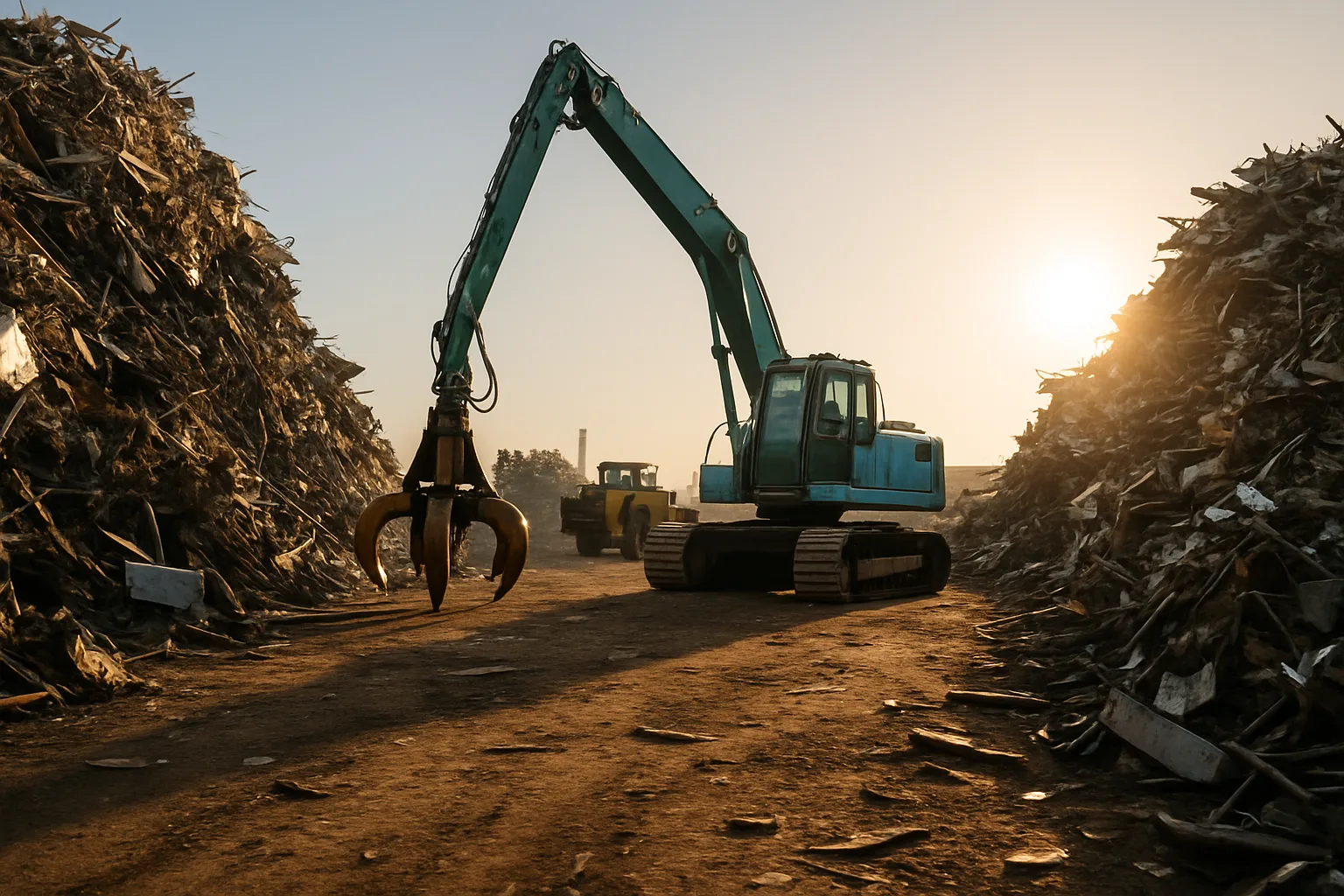
Most people searching for metal recycling near me Calgary don't realize they have a choice — and that choice can cost them time, money, or both. Full-service and self-service scrap yards operate completely differently. Knowing which one fits your situation before you show up can mean the difference between a smooth transaction and a wasted afternoon.
This isn't a theoretical comparison. It's a practical breakdown for Calgary and Alberta residents who are ready to move metal — whether that's a few old car parts sitting in the garage or a full vehicle you want off the property.
What Full-Service Scrap Yards Actually Do
Full-service yards handle the work for you. You pull up, they assess what you've brought, and staff physically handles the unloading, sorting, and processing. If you're scrapping a vehicle, a full-service yard typically handles the draining of fluids and dismantling on their end — you hand over the keys and walk away with a cheque or e-transfer.
This model suits people who don't have tools, don't have time, or are dealing with heavy materials they can't safely manage alone. A full pallet of mixed steel, a non-running car, or a commercial load of non-ferrous off-cuts — these all make more sense at a full-service facility. The tradeoff is usually price. Because the yard is absorbing labour costs, the per-pound rate they offer may reflect that.
- Staff handles unloading and sorting
- Works well for vehicles, large loads, or mixed material
- Payment typically processed same day
- Lower per-pound payout to offset labour overhead
- May require appointment for large or whole-vehicle drop-offs
What Self-Service Yards Are Really Like
Self-service yards — sometimes called U-Pull-It or pick-your-part operations — flip the model. You pay a small entry fee, walk into a lot full of vehicles or sorted material, pull the parts you want with your own tools, and pay by the piece or by weight on your way out. The yard provides the inventory. You provide the elbow grease.
This makes more sense if you're a buyer rather than a seller — someone looking for a used alternator, a specific catalytic converter, or a door panel for a vehicle you're repairing. The prices are significantly lower than a dealer or auto parts store because you're doing the labour. If you're selling, though, self-service yards aren't usually the right move. They're structured for buyers picking parts, not sellers dropping loads.
- Entry fee typically required (often $2–$5 CAD)
- Bring your own tools — most yards won't lend them
- Pricing by part or by weight at exit
- Best suited for buyers, not sellers with loads to offload
- Great for sourcing affordable OEM parts for repairs
Which Model Works Better for Selling Scrap Metal in Calgary?
If your goal is to sell scrap metal and get paid, full-service yards are almost always the right call in Calgary. The self-service model isn't designed to receive your material — it's designed to disperse existing inventory to buyers. Showing up at a U-Pull yard with a truck bed of copper wire or a pile of aluminum rims will likely get you turned away or redirected.
Calgary has a solid concentration of full-service Calgary scrap metal services that accept a wide range of materials — steel, aluminum, copper, brass, catalytic converters, cars, and appliances. Many are set up to handle both residential drop-offs and commercial accounts. If you're a contractor, a shop, or a yard operator with regular volume, a full-service facility with a commercial account will typically offer better rates and faster turnaround than a one-off visit.
One thing to check before you go: does the yard weigh material before or after sorting? Some yards separate your load by metal type first, then weigh each fraction. Others weigh everything together and apply a blended rate. The difference can be meaningful, especially on mixed loads with a high copper or aluminum content mixed in with steel.
How Pricing Works — and Why Transparency Matters
Here's where many sellers leave money on the table. Scrap metal prices fluctuate based on commodity markets, regional demand, and individual yard margins. A yard quoting you a price over the phone isn't locked in until they've actually weighed and graded your material. That surprise at the scale is common — and avoidable with the right preparation.
Documented inventory changes the dynamic. When you arrive with a clear list of what you have — weights, material types, photos — buyers have more confidence in your load and less reason to discount it for uncertainty. Platforms like smashrecycling.ca are built exactly for this: you document your load, list it for vetted buyers to bid on, and let competition reveal the actual market price. That's not guesswork — that's price discovery.
For Calgary and Alberta sellers who move volume regularly — whether it's auto parts, industrial non-ferrous, or cores — getting multiple buyers to compete for your load beats calling one yard and accepting their number. More buyers means better price discovery. That's not a marketing slogan. It's basic economics.
Platforms that let you sell scrap metal online are also closing the geographic gap. If you're in a part of Alberta where full-service yard options are limited or pricing feels stale, listing through a competitive auction platform means your material reaches buyers across the region — not just whoever answers the phone locally.
What to Bring to a Full-Service Scrap Yard
Whether you're a first-timer or just switching yards, showing up prepared makes a real difference. Calgary yards have different intake requirements, so confirming before arrival saves a wasted trip.
- Government-issued ID — Required at virtually every licensed scrap yard in Alberta. This is a regulatory requirement, not just a yard policy.
- Vehicle title or bill of sale (for cars) — If you're scrapping a whole vehicle, you'll need proof of ownership. Some yards also require a signed transfer of ownership form.
- Sorted loads where possible — Separating copper from steel from aluminum before you arrive can earn you better rates. Mixed loads get averaged down.
- Photos of high-value items — Catalytic converters, insulated wire, and specific alloys benefit from documentation, especially if you're comparing offers from multiple buyers.
- A realistic weight estimate — Don't rely on guesses. If you've weighed your material at a local scale before arriving, you walk in informed.
If you're dealing with a scrap metal buyer near me Calgary for the first time, don't be afraid to ask how they handle pricing adjustments at the scale. Reputable yards will explain their process clearly. Ones that get evasive about it are worth a second thought.
SMASH Makes It Easier to Find the Right Buyer
Most sellers don't lack material — they lack access to enough buyers. That's the actual problem. One yard, one price, take it or leave it. That's been the default for decades across Canada.
SMASH changes that structure. List your load — whether it's a pallet of catalytic converters, a batch of insulated copper, or a load of aluminum extrusion — and let vetted buyers compete for it. The platform handles photo documentation, VIN lookup for automotive cores, serial tracking where applicable, and auto-invoicing when the deal closes. No subscription fees. SMASH only wins when you win.
For sellers in Calgary, Alberta, and across the country, the combination of local yard access and a competitive online platform gives you real leverage. Use the yard for same-day cash on smaller loads. Use the auction platform when the volume justifies getting the market to weigh in.
To find a scrap yard near you in Canada and compare your options, start with what's closest and understand their model. Then decide whether the load you're moving deserves a walk-in or a competitive listing.
If you want to locate the closest Canadian scrap yard or explore how online platforms are changing the pricing game, read Canadian scrap yard guides to get the full picture before your next drop-off.
Ready to move metal? Whether you're dropping a load in Calgary this week or looking to get competitive bids on a larger haul, there's a better approach than calling one buyer and hoping the number is fair. Start by finding the right option for your situation — and let the market do the rest.
Frequently Asked Questions
Q: What's the difference between a full-service and self-service scrap yard near me in Calgary?
A full-service yard accepts your material and handles sorting, unloading, and processing — you show up and get paid. A self-service (U-Pull) yard is designed for buyers who want to pull their own parts from existing inventory. If you're selling scrap metal, full-service is almost always the right choice in Calgary.
Q: Do I need ID to sell scrap metal in Alberta?
Yes. Alberta regulations require scrap yards to collect government-issued identification from sellers. This applies to virtually every licensed facility in Calgary and across the province. Bring a valid driver's licence or provincial ID with you.
Q: How do scrap metal prices get set at Calgary yards?
Prices are based on commodity market rates, material grade, and the individual yard's margins. They fluctuate — sometimes daily. Sorting your material before you arrive and knowing your approximate weights puts you in a stronger position when you hit the scale. Disclaimer: scrap metal prices change frequently; always confirm current rates directly with the buyer or platform before finalizing any transaction.
Q: Can I sell scrap metal online instead of going to a yard?
Yes. Platforms like SMASH allow you to list documented loads for vetted buyers to bid on competitively. This works especially well for higher-value or higher-volume material — catalytic converters, non-ferrous loads, and automotive cores — where getting multiple buyers to compete can meaningfully improve your price discovery compared to a single yard quote.
Q: What metals do full-service scrap yards in Calgary typically accept?
Most full-service facilities accept ferrous metals (steel, iron), non-ferrous metals (copper, aluminum, brass, stainless), catalytic converters, insulated wire, appliances, and whole vehicles. Always call ahead to confirm whether the yard accepts your specific material type and whether an appointment is required for large loads.
Follow SMASH on LinkedIn for industry updates, scrap metal market insights, and news relevant to yards and buyers across North America.