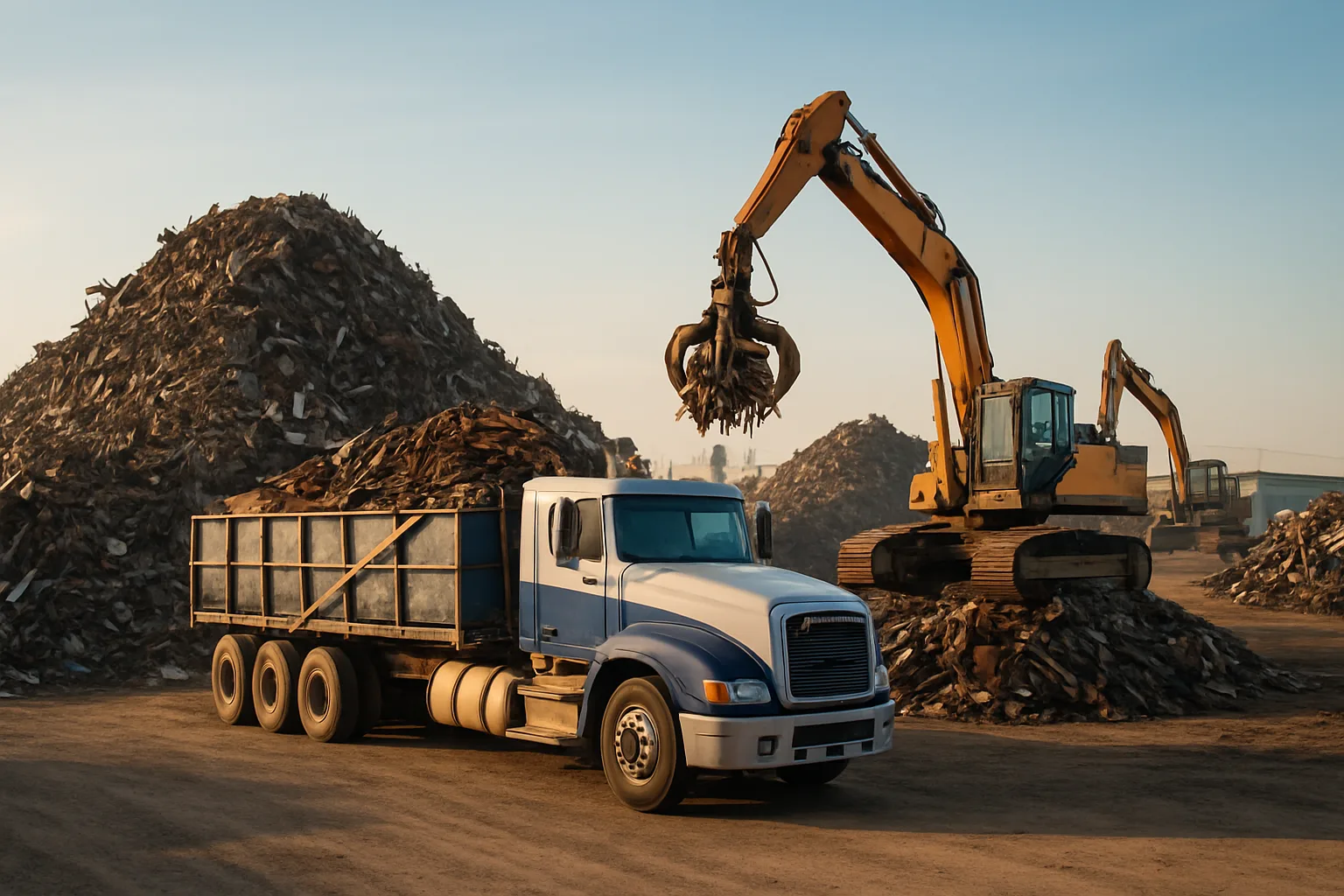
Why Safe Transport Is the Step Most Scrappers Skip — and Regret
You've sorted your load. You know what you're hauling. You've already searched scrap yard near me Guelph and picked your drop-off spot. But here's where things go sideways for a lot of people: the drive over. Loose metal in a pickup bed, unsecured pipe shifting on the highway, or an overloaded trailer that pulls wrong around a corner — these aren't rare. They happen every week on Ontario roads, and they put other drivers at risk.
Safe transport isn't just about protecting yourself. It's a legal requirement in Ontario, and yards can — and do — turn away loads that arrive unsecured or improperly documented. Getting this right keeps you on the road, keeps your load intact, and gets you paid faster.
This guide covers everything from loading basics to vehicle limits to what to do when your load is mixed. Whether you're hauling a truck bed of copper pipe or a trailer stacked with demolition steel, the principles are the same.
Know Your Vehicle Limits Before You Load a Single Piece
This is the step most people skip. They load until the truck squats, then figure out if they're legal. That's backwards. Scrap metal is dense. A modest-looking pile of cast iron or heavy steel can easily exceed what your half-ton was built to carry.
Every pickup truck has a published payload rating — it's in your owner's manual and often on a sticker inside the driver's door jamb. That rating includes the weight of passengers, fuel, and cargo combined. A standard half-ton pickup typically has a payload rating between 1,500 and 2,000 lbs. A full ton of structural steel will end that conversation quickly. Trailers have their own gross vehicle weight ratings (GVWR) and tongue weight limits. Ignoring them doesn't just damage your vehicle — it makes your load illegal to transport on Ontario roads.
- Half-ton pickup: Suitable for lighter non-ferrous loads, small quantities of prepared steel, or consumer appliances. Know your payload rating.
- Three-quarter or one-ton truck: Better for heavier loads, but still has limits. Check before you stack.
- Trailer setup: Match the trailer's GVWR to the load. Distribute weight low and evenly.
- Commercial hauling: If you're moving commercial volumes regularly, you're in commercial vehicle territory. Ontario's MTO has weight and licensing rules that apply.
When in doubt, split the load into two trips. It costs you time, but it doesn't cost you a roadside fine, a damaged truck, or worse.
Loading Techniques That Keep Your Load Secure — and the Road Safe
Scrap metal is not forgiving cargo. Sharp edges, odd shapes, and heavy concentration points make it uniquely dangerous if it shifts or comes loose in transit. A piece of rebar that slides off a truck bed on the highway is a deadly projectile. Ontario's Highway Traffic Act is explicit: loads must be secured so no part of the load can fall, shift, or leak during transport.
Here's how to load smart:
- Heavy at the bottom, lighter on top. Low center of gravity keeps your vehicle stable, especially on turns. Dense ferrous material — cast iron, heavy plate — goes down first.
- Distribute weight front-to-back. On a pickup, keep the load biased slightly forward in the bed, not piled at the tailgate. On a trailer, 60% of the weight should sit ahead of the trailer axle.
- Use tie-down straps — properly rated ones. Each strap has a working load limit (WLL). Add up the weight of your load and make sure your total strap WLL exceeds it. Ratchet straps beat bungee cords every time.
- Cover sharp or protruding pieces. Pipe, rebar, angle iron — anything that sticks up or out needs to be contained or flagged. A red flag is required in Ontario if your load extends more than 1.5 metres beyond the rear of the vehicle.
- Use tarps for loose or light material. Shredded aluminum, small copper pieces, and wire scraps can become airborne. Net or tarp them.
- Check your load after the first 15 minutes of driving. Straps can settle. Stop, retighten, and carry on.
If you're hauling mixed loads — say, copper alongside heavy steel — separate and protect your non-ferrous material. Contamination from grease, paint, or dirt can reduce your payout. Most yards grade what they see, and a dirty load of copper pipe buried under oily steel tells a bad story at the scale.
What to Bring to the Scrap Metal Yard in Guelph
Showing up prepared makes the whole transaction faster. Yards in Guelph — and across Ontario — have documentation requirements that have tightened significantly in 2026 as regulatory scrutiny on secondary metals has increased. Don't show up and figure it out at the gate.
Here's what to have ready:
- Government-issued photo ID. Required by most yards for any metal sale. No exceptions on regulated materials.
- Vehicle ownership or registration. If you're selling vehicle parts, catalytic converters, or scrapping a whole car, the yard will want proof the vehicle is legally yours to sell.
- Bill of lading (BOL) or packing list for commercial loads. If you're moving a commercial quantity of metal — even as a small contractor — documentation protects you and speeds up the intake process.
- Photos of your load before you leave. If there's any dispute about condition, quantity, or contamination, photos taken at origin protect you.
- Serial numbers for applicable items. Yards handling regulated items like catalytic converters increasingly require serial tracking. Know this before you haul.
If you're not sure what the Guelph scrap metal services at your target yard require, call ahead. Five minutes on the phone saves a wasted trip. You can also find a scrap yard near you in Canada and check operating hours, accepted materials, and intake requirements before you leave your driveway.
How a Scrap Metal Auction Platform Changes What Your Load Is Worth
Here's the part most people hauling loads to a local yard don't think about: the yard you pull into makes you an offer. You can take it or leave it. Most people take it, because they don't have a line on another buyer and they've already made the drive.
That's the old way. One buyer, one number, no leverage.
Platforms like the SMASH Recycling auction platform flip that model. Instead of calling one buyer and hoping the number is fair, your load goes to a network of vetted buyers who compete for it. Competition creates price discovery. More buyers means better visibility into what your material is actually worth in the current market.
SMASH supports photo documentation, serial tracking, and proper load documentation — exactly the kind of inventory detail that gives buyers confidence and helps sellers get stronger offers. If you're moving commercial volumes out of Guelph or anywhere in Ontario, that documentation layer matters. It's not just about getting paid — it's about getting paid accurately for what you actually have.
SMASH works on a no-subscription model. No monthly fee to access vetted buyers. The platform wins when the seller wins. That's the alignment that's been missing from most scrap transactions for decades. Read Canadian scrap yard guides to learn more about how to prepare your load and maximize your payout before you pull in the gate.
Ontario Road Rules for Hauling Scrap — What You Need to Know in 2026
Ontario's transport regulations for loads haven't gotten more relaxed. If anything, enforcement on load securement has tightened as commercial and private haulers share increasingly congested routes. Here's what applies to most scrappers hauling loads to a yard:
- Load securement: Ontario Regulation 363/04 under the Highway Traffic Act sets out specific load securement requirements. Material must be contained, secured, or covered so it cannot fall, leak, or shift.
- Overweight loads: Exceeding your vehicle or trailer's gross weight rating is an offence and a safety risk. Fines scale with how far over the limit you are.
- Flag requirements: Any load extending beyond the rear of the vehicle requires a red flag or light, depending on time of day. Night hauling has additional lighting requirements.
- Commercial vehicle rules: If you're hauling for commercial purposes — even occasionally — you may be subject to CVOR (Commercial Vehicle Operator's Registration) requirements. Know where you sit.
The practical takeaway: don't haul what you can't secure. Split the load. Make two trips. The fine for a load violation on an Ontario highway is not worth the saved fuel of doing it all in one run. And if your load causes an accident, the liability picture is far worse than an MTO inspection.
If you're based in Guelph or surrounding Wellington County, remember that Highway 6, the 401 corridor, and Stone Road all see regular commercial traffic enforcement. Stay compliant.
Ready to locate the closest Canadian scrap yard and plan your route? Do the vehicle check, secure your load, bring your paperwork, and drive like you've got a thousand dollars of copper in the back — because you might.
Frequently Asked Questions
Q: How do I find a scrap yard near me in Guelph that's open today?
The fastest way is to check scrap-yard-near-me.ca for current hours and locations in and around Guelph. Hours vary by facility and day — always call ahead or check online before making the drive, especially on weekends or holidays.
Q: What documents do I need to sell scrap metal at a Guelph yard?
Most yards in Ontario require a government-issued photo ID for any metal sale. If you're selling vehicle parts, catalytic converters, or a full vehicle, you'll also need to show ownership documentation. Commercial loads may require a bill of lading or packing list. Call your target yard ahead of time to confirm their specific requirements.
Q: Can I haul a mixed load of ferrous and non-ferrous scrap in the same trip?
Yes, but keep non-ferrous material separated and protected. Contamination from oil, grease, or ferrous material can downgrade your non-ferrous payout. Use separate containers or tarps to keep copper, aluminum, and brass clean and distinct from heavy steel or iron.
Q: What happens if my load is overweight for my vehicle?
Exceeding your vehicle's payload rating is both a safety hazard and a legal offence under Ontario's Highway Traffic Act. Fines scale with severity, and an overloaded vehicle handles poorly — especially during hard braking. Split heavy loads across multiple trips or rent a trailer rated for the weight.
Q: Is it worth using a scrap metal auction platform instead of going directly to a yard?
For larger or higher-value loads, absolutely worth considering. Platforms like SMASH connect sellers to multiple vetted buyers who compete for your material — which can reveal a stronger market price than a single yard offer. For small, occasional loads, a local yard may be the most convenient option. For regular commercial volumes, a competitive auction format gives you consistent price discovery and documented transactions.
Whether you're clearing a renovation site in Guelph, scrapping fleet vehicles, or selling a truck bed of copper pipe, doing the transport right matters — for your safety, your payout, and your peace of mind. Take the extra ten minutes to secure the load properly, bring your paperwork, and know what your material is worth before you pull up to the gate. When you're ready to move, find a trusted scrap yard near you in Canada at scrap-yard-near-me.ca — locations, hours, and what to expect, all in one place.
Stay up to date on scrap metal market conditions and industry news by following SMASH on LinkedIn — practical insights for yards, haulers, and buyers across North America.
```