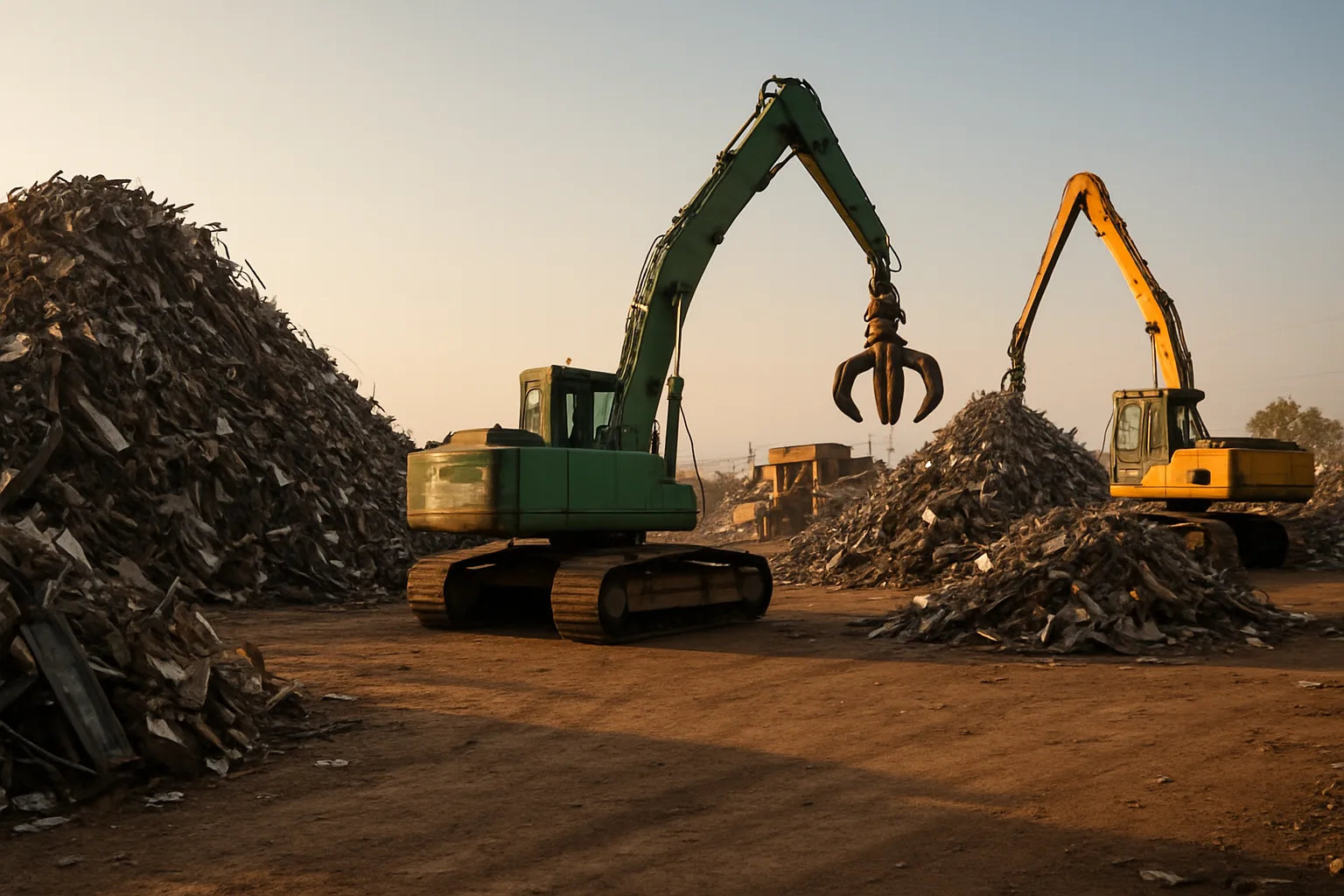
Most people drop off a load of copper pipe or a dead appliance at a scrap yard and never think about it again. But here's what's actually interesting: that metal you just sold doesn't stay local. It moves through a global supply chain before it ever becomes something new. Understanding that journey tells you a lot about why scrap metal prices shift, why some yards pay more than others, and how platforms like SMASH are changing the way sellers connect with buyers who actually compete for your load.
If you're searching for the best scrap yard Guelph has to offer, knowing what happens downstream gives you leverage. You'll ask better questions, document your loads better, and ultimately make smarter decisions about where you sell.
---Step One: The Yard Sorts, Grades, and Aggregates Your Metal
When you drive through the gate and unload your scrap, the yard's job has just begun. Your material gets sorted by grade and type — copper wire isn't the same as bare bright copper, and sheet aluminum isn't the same as cast aluminum. These distinctions matter enormously because each grade commands a different price from the processors and mills downstream.
Most scrap yards in Ontario aren't end destinations for the metal. They're aggregators. They collect individual loads from sellers like you, sort and consolidate that material into larger, more uniform lots, and then sell those lots in bulk to processors, smelters, and brokers who need consistent volume. A single drum of mixed copper you brought in might eventually become part of a 20-tonne lot shipped to a processor in Hamilton or overseas.
- Ferrous metals (steel, iron) typically go to steel mills for re-melting and rolling into new structural steel, rebar, or sheet metal.
- Non-ferrous metals (copper, aluminum, brass, stainless) go to secondary smelters who refine and re-cast them into new alloys or ingots.
- Catalytic converters and cores go to specialized processors who extract platinum group metals through chemical or pyrometallurgical processes.
- E-waste and mixed loads go through further sorting — sometimes mechanically, sometimes by hand — before the component metals are separated.
The grade your material is assigned at the yard directly affects what the yard can charge the next buyer in the chain. That's why photo documentation and accurate description of your load matters. Yards that receive well-documented, clearly graded material can confidently bid it to more buyers — and that competition benefits everyone.
---How Scrap Yards Sell What They Buy — And Why It Affects Scrap Metal Prices Today
Once the yard has aggregated enough material into a sellable lot, they need a buyer. Traditionally, that meant phone calls to a handful of known contacts — brokers and mills the yard has worked with for years. One or two bids. A handshake. Done. The problem with that model is obvious: you never know if you left money on the table because you never asked anyone else.
That's exactly the gap that the SMASH scrap metal auction platform was built to close. Instead of calling two buyers and hoping for a fair price, yards can list their aggregated lots — complete with photos, weights, grades, packing lists, and BOLs — and let vetted buyers compete in a transparent auction format. More competition means better price discovery. The market reveals itself instead of being guessed at.
This shift matters for scrap metal prices today in a real and practical way. When a yard in Guelph can reach buyers across North America rather than just a regional broker, the competitive pressure on pricing goes up. That improved return at the yard level can — and often does — trickle back to improve what yards pay individual sellers like you.
No subscription fees on SMASH. The platform only wins when the seller wins. That alignment is intentional.
---The Processing Stage: Where Your Scrap Metal Becomes Raw Material Again
After the yard sells its aggregated lot, the material moves to a processor or smelter. This is where the actual transformation happens. A steel shredder can process an entire car into fist-sized fragments of clean steel in under a minute. A copper smelter melts down wire, tubing, and sheet copper and pours it into 99.9% pure copper cathode or rod that manufacturers can use directly.
The processing stage is energy-intensive and capital-heavy. That's why processors need volume and consistency — they can't afford to feed a $50-million smelter with inconsistent, poorly graded material. This is why the documentation your yard collects when you sell matters more than most sellers realize. When a yard lists a lot on an auction platform like SMASH with verified weights, serial tracking on cores, and clean photo documentation, processors trust that material more. Higher trust means more competitive bids.
Here's what processing actually looks like for common scrap types:
- Copper and brass: Shredded or baled, melted in a reverberatory furnace, refined to high-purity ingots or rod. Often re-enters North American manufacturing within weeks.
- Aluminum: Separated by alloy type, melted in a rotary or reverberatory furnace, cast into ingots or billets for rolling mills and die casters.
- Steel and iron: Shredded and sorted magnetically, fed into electric arc furnaces (EAF) at steel mills. EAF steel production uses significantly less energy than virgin ore smelting.
- Catalytic converters (cats): Assayed for PGM content (platinum, palladium, rhodium), then processed chemically to extract those metals. The ceramic substrate is disposed of separately.
After processing, these refined metals re-enter the manufacturing supply chain. That copper rod becomes electrical wiring. That aluminum ingot becomes automotive components. Your old radiator in Guelph, Ontario eventually becomes part of something new, somewhere on the continent.
---Why Transparency in the Scrap Chain Matters for Sellers in Guelph
Here's the part most sellers never connect: the more transparent and well-documented your load is when it enters the chain, the more value it can generate all the way down the line. A yard that knows exactly what it has — grade, weight, condition — can sell it with confidence. Buyers bid higher on certainty. That confidence starts with you.
When you bring a load to a yard that uses modern inventory tools, VIN lookup for vehicles, and photo documentation practices, you're not just making their job easier. You're participating in a system that produces better prices at every stage. Compare that to dropping an unsorted pile of mixed metal in a yard that eyeballs the grade and calls one broker. The difference in what that material eventually earns — and what percentage of it comes back to you — can be significant.
If you're looking for Guelph scrap metal services that take documentation seriously, ask the yard directly: how do you grade and track my material? What does your buyer network look like? A yard that can answer those questions clearly is operating at a higher level. That translates to better confidence in pricing and a more reliable transaction for you.
You can also find a scrap yard near you in Canada that meets these standards — a yard that treats your load like a business asset, not a mystery pile.
---The Environmental Side: Why Recycling Your Scrap Actually Matters
Beyond price and process, there's a real environmental argument for understanding this chain. Scrap metal recycling displaces virgin ore mining — one of the most land-intensive and energy-consuming industrial activities on the planet. Every tonne of recycled aluminum saves roughly 95% of the energy required to produce the same tonne from bauxite ore. Steel from EAF recycling produces a fraction of the CO₂ compared to blast furnace production from iron ore.
Ontario's manufacturing base depends on secondary metal supply. Local processors, automotive suppliers, and construction material producers all draw from the regional scrap stream. When you sell your metal locally — in Guelph or anywhere else in Ontario — you're feeding a regional supply chain that has real economic and environmental value. That's not marketing copy. That's how the material economy works.
Platforms like SMASH reinforce this by creating competitive markets for aggregated scrap lots, which in turn incentivizes yards to collect more material, pay better for it, and process it more carefully. You can read Canadian scrap yard guides to learn more about how the local recycling ecosystem operates and how to get the most out of it.
Want to know where your scrap gets the most competitive treatment? Find the best price for your scrap in Canada through a platform built for transparent, auction-driven price discovery — no guessing, no single-buyer handshakes.
---How to Make Sure You're Getting a Fair Deal Before You Walk Out the Gate
Now that you understand the downstream journey, here's how to protect yourself on the front end. The yard's offer to you reflects what they think they can get from the next buyer. If they're only calling one buyer, their ceiling is lower. If they're listing on a competitive auction platform, their ceiling is higher — and they have room to pay you more.
Before you sell, do this:
- Separate your metals. Mixed loads get priced at the lowest-grade material in the pile. Separating copper from aluminum from steel is worth real money.
- Know your grades. Bare bright copper, #1 copper, and #2 copper are not the same price. Ask the yard how they're grading your material and why.
- Document your load. Photos, weights, and descriptions give you a record and help the yard market the material accurately downstream.
- Ask about the buyer network. A yard connected to competitive buyers through platforms like SMASH has more pricing leverage than a yard making two phone calls.
- Check pricing context. Scrap metal prices fluctuate with global commodity markets. Don't expect a static price — but do expect a fair one relative to current market conditions.
If you want to locate the closest Canadian scrap yard that meets these standards, start there. The right yard treats your load seriously because they know what it's worth downstream.
---Frequently Asked Questions
Q: What happens to my scrap metal after I sell it to a yard in Guelph?
The yard sorts and grades your material, then aggregates it into larger lots. Those lots are sold to processors, brokers, or mills — often through competitive channels. The metal is then smelted or refined and re-enters manufacturing as secondary raw material.
Q: Why do scrap metal prices change so often?
Scrap metal is a globally traded commodity. Prices shift based on demand from steel mills and smelters, energy costs, currency exchange rates, and broader manufacturing activity. What you see quoted at a yard today reflects those upstream market forces. Always check current rates before you sell — prices fluctuate and no quoted price is guaranteed into the future.
Q: How do I find the best scrap yard Guelph has available?
Look for yards that grade your material clearly, document loads properly, and have access to competitive buyer networks. A yard connected to platforms like SMASH — where multiple vetted buyers compete for lots — has stronger pricing leverage than one operating on a single-buyer handshake model.
Q: Does it matter if I separate my metals before bringing them to the yard?
Yes — significantly. Separated, graded material gets priced on its own merits. Mixed loads typically get priced at the lowest-grade metal in the pile. Taking 30 minutes to separate copper from aluminum from steel before you arrive can meaningfully increase your payout.
Q: Can platforms like SMASH help individual sellers, or is it just for large yards?
SMASH operates at the yard and buyer level — connecting scrap yards to vetted buyers through a transparent auction format. As an individual seller, the benefit comes indirectly: yards that use competitive platforms have better pricing and can pass more of that value back to their suppliers. Sell to yards that take price discovery seriously.
---The scrap metal chain is longer and more connected than most people realize. Your load in Guelph, Ontario eventually becomes raw material that feeds real manufacturing — and the better documented and graded it is when it enters the chain, the more value it generates. SMASH was built to make that chain more transparent, more competitive, and more honest at every stage. If you're ready to sell with confidence, find a trusted scrap yard near you in Canada — check locations at scrap-yard-near-me.ca and connect with a yard that takes your load seriously.
Stay ahead of the scrap metal market — follow SMASH on LinkedIn for industry updates, pricing insights, and news from across the North American recycling sector.