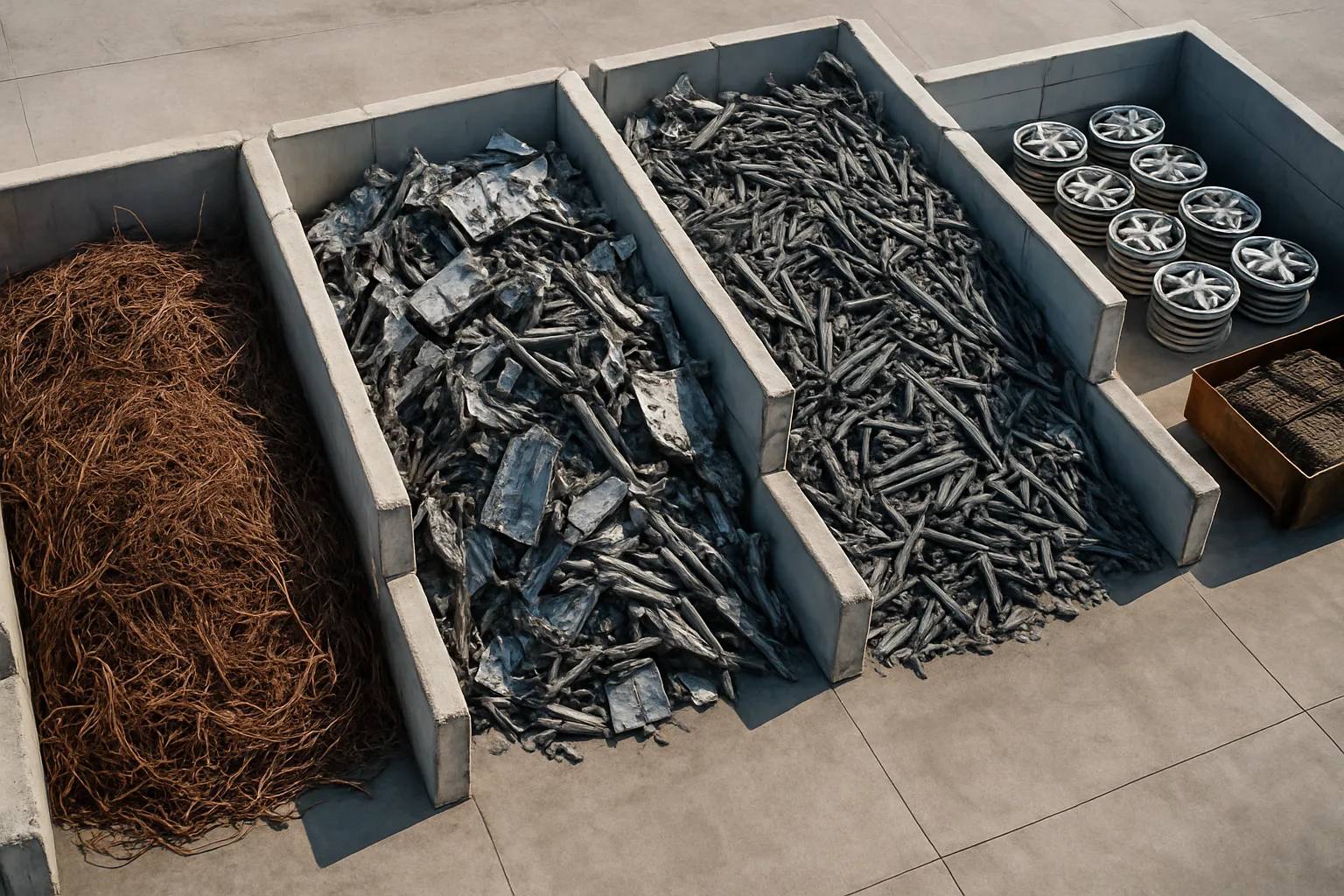
Showed up at an auto recycling yard in Guelph with a truckload of mixed material, only to get turned away at the gate? It happens more than you'd think. Scrap yards have clear rules about what they accept — and strict reasons for what they refuse. Knowing the difference before you load up your truck saves time, fuel, and frustration.
This guide breaks down exactly what most scrap yards will take, what they'll reject, and why those rules exist. Whether you're clearing out a garage, scrapping a vehicle, or running a commercial operation, this is the information you need before you pull up to the scale.
---What Most Auto Recycling Yards and Scrap Facilities Accept
The short answer: most yards want clean, identifiable metal and recyclable vehicles. The longer answer involves a lot of nuance based on the type of yard, their equipment, and current commodity demand. Here's what typically gets waved through the gate.
Ferrous Metals
Ferrous metals — anything that sticks to a magnet — make up the bulk of most loads. This includes:
- Steel and iron (beams, pipes, sheet metal, structural steel)
- Cast iron (engine blocks, machine parts, radiators)
- Sheet metal (car body panels, roofing, appliance casings)
- Old machinery (farm equipment, industrial equipment, motors)
Ferrous material is priced by the ton at most facilities. Lighter, mixed iron loads generally pay less per pound than heavy, clean steel. Know your material before you go — it affects your payout directly.
Non-Ferrous Metals
Non-ferrous material is where the real money is. These metals don't rust, conduct electricity well, and hold high recycled value. Common non-ferrous materials accepted include:
- Copper — bare bright, insulated wire, bus bars, plumbing pipe
- Aluminum — wheels, extrusions, cans, radiators, cast and sheet
- Brass — valves, fittings, shells, plumbing fixtures
- Stainless steel — food grade, industrial grade, sheet and pipe
- Lead — wheel weights, batteries, cable sheathing
- Zinc and nickel alloys
Grading matters here. Copper wire bundled with insulation pays differently than bare bright copper. Aluminum with paint or attachments grades lower than clean extrusion. Sorting your load before you arrive always improves your return.
End-of-Life Vehicles
Most Guelph scrap metal services and auto recycling facilities accept end-of-life vehicles — cars, trucks, vans, SUVs, and light commercial vehicles. What they pay depends on:
- The current steel price per ton
- The weight and condition of the vehicle
- Whether the vehicle has been de-registered and fluids drained
- Whether valuable parts (catalytic converters, engines, transmissions) are still attached
In Ontario, you'll typically need to surrender your vehicle ownership (title) to the yard when scrapping a registered vehicle. Some yards handle the de-registration process on your behalf — confirm this before you go.
Catalytic Converters and Cores
Catalytic converters are one of the most in-demand items at an auto recycling yard. They contain platinum, palladium, and rhodium — precious metals that hold significant value. Most yards will accept cats, either still mounted to a vehicle or as loose cores.
That said, regulations around catalytic converter sales have tightened significantly across Ontario and across Canada. As of 2026, many yards require government-issued ID for cat sales and log serial numbers. Some facilities run VIN lookups to verify the converter's origin. If you're bringing in cats, expect documentation requirements — this is standard industry practice now, not an exception.
---What Scrap Yards in Guelph and Ontario Will Refuse
Here's where a lot of sellers run into trouble. Yards turn away material for a few consistent reasons: environmental risk, liability, regulatory requirements, or lack of processing capability. Showing up with rejected material wastes everyone's time.
Hazardous Materials
Any material classified as hazardous waste under Ontario Environmental Protection Act rules won't be accepted at a standard scrap facility. This includes:
- PCB-containing transformers or capacitors
- Asbestos-containing materials
- Mercury switches (found in older vehicles and appliances)
- Contaminated soil or sludge mixed with metal
- Radioactive materials of any kind
Some of these materials require specialized waste processors — not a general scrap yard. If you're not sure what you have, don't guess. Ask before you haul.
Sealed or Pressurized Containers
Propane tanks, compressed gas cylinders, and aerosol cans that are not certified empty and punctured are a hard no. These can explode during processing and cause serious injury. Most yards will accept properly depressurized tanks that have been certified empty, but call ahead and confirm the yard's exact policy.
Electronic Waste
Televisions, monitors, computers, and most consumer electronics are not accepted at standard scrap yards. These items contain hazardous components — lead solder, cadmium, beryllium — that require e-waste certified processors. Ontario has specific e-waste recycling programs for these materials. Check with your local municipality for drop-off locations.
Unidentifiable or Mixed Loads with High Contamination
Yards need to grade and price material accurately. Loads that are heavily mixed with concrete, wood, plastics, or trash either get rejected outright or get assessed a heavy deduction for processing time. If your metal is buried in debris, expect pushback or a very low offer.
Stolen Property
Scrap yards are legally required to verify the source of material — particularly regulated items like catalytic converters, copper wire, and aluminum. Ontario's regulations require dealers to maintain records of transactions, verify seller identity, and in some cases hold material for inspection periods. Suspected stolen property gets refused and reported. No exceptions.
---How Proper Documentation Helps You Get Paid Faster
Walk into any reputable scrap yard with the right paperwork and your transaction moves fast. Walk in without it and you may find yourself waiting — or turned away. Here's what to bring:
- Government-issued photo ID — required at most yards for any significant transaction
- Vehicle ownership/title — required when scrapping a registered vehicle
- Bill of lading (BOL) or packing list — essential for commercial loads; helps price your material faster
- Business registration or GST number — if you're selling as a business, some yards require this for invoice processing
Commercial sellers — whether you run a recycling operation, a demolition company, or a manufacturing facility with metal offcuts — deal with significantly higher volume. Documentation isn't just about compliance; it's about moving product efficiently. Platforms like SMASH Recycling — where verified buyers bid on your metal have built documentation and photo requirements directly into their auction process, which means buyers get more confidence in what they're bidding on and sellers get better price discovery.
---Selling Scrap Metal Online vs. Driving to the Yard
The traditional model: load your truck, drive to the yard, wait in line, take whatever one buyer offers you. If you're hauling a small load of mixed iron, that process might make sense. For larger, higher-value loads, it's worth asking whether you're leaving money on the table.
This is especially true for non-ferrous material — copper, aluminum, catalytic converters, cores — where prices vary significantly between buyers. Competition drives better pricing. One buyer gives you one number. Multiple vetted buyers bidding against each other gives you a market price.
That's the core idea behind SMASH Recycling — where verified buyers bid on your metal. Instead of cold-calling around or accepting whatever the first yard offers, you document your load, list it, and let buyers compete. No subscription fees. You only pay when you sell. More buyers means better price discovery — that's not a pitch, that's math.
If you're a yard operator or a high-volume seller looking to sell scrap metal online, platforms like SMASH make the process more transparent and more competitive than the one-call model ever was. To understand more about how Canadian sellers are approaching this, read Canadian scrap yard guides covering markets, pricing strategies, and what buyers actually want to see in a load.
---Tips for Getting the Best Experience at a Scrap Yard Open Today or on Sunday
Hours vary significantly between facilities. If you're looking for scrap yards open today on Sunday, call ahead — not every yard runs seven days a week, and holiday schedules can change without much notice. Here are a few practical tips to make your visit run smoothly:
- Call ahead. Confirm hours, accepted materials, and current ID requirements before you load the truck.
- Sort your load. Mixed material pays mixed rates. Separated material pays grade-specific rates. Sorting takes time but it pays off.
- Arrive early. Most yards are busiest mid-morning. Arriving close to open or just after gets you faster service.
- Know your weight estimate. Guessing wildly off on weight can cause issues at the scale, especially for large loads.
- Photograph your load before drop-off. For high-value non-ferrous or catalytic converters, having a photo record protects you and speeds up any disputes.
Whether you're using a best scrap yard Guelph facility directly or exploring online options, preparation makes the transaction faster and cleaner for everyone involved. If you're in the region and need to find a scrap yard near you in Canada, start with your location and material type — not every yard handles every commodity.
---Metal Recycling in Ontario: What's Changing in 2026
Scrap metal recycling in Ontario continues to operate under increased regulatory scrutiny in 2026. Catalytic converter documentation requirements have become more consistent across the province. Yard operators are holding transactions longer on regulated items, running more thorough ID checks, and in some cases submitting transaction data to law enforcement databases.
For legitimate sellers, this creates minor friction — a few extra steps, a bit more paperwork. For the industry as a whole, it's a necessary adjustment. Theft-related disruption to the supply chain hurts everyone: yards, buyers, and honest sellers who show up with clean material.
In Guelph and across metal recycling Ontario operations, the shift toward better documentation and photo-verified loads is accelerating. Buyers are demanding more confidence in what they're purchasing, especially for high-value non-ferrous loads. Sellers who can provide clear photos, weights, and origin documentation are moving material faster and attracting more competitive bids.
If you're new to scrapping or trying to locate the closest Canadian scrap yard to start selling, building good documentation habits from the start puts you ahead of sellers who are still doing things the old way.
Disclaimer: Scrap metal prices fluctuate based on global commodity markets, local demand, and material grade. Always confirm current rates directly with your yard or buyer before hauling. Prices referenced in any guide are for general context only and may not reflect current market conditions.
---Frequently Asked Questions
Q: What do I need to bring to an auto recycling yard in Guelph to sell my vehicle?
You'll need government-issued photo ID and the vehicle's ownership (title) document. The yard will typically de-register the plate on your behalf or direct you to complete the process with the Ontario Ministry of Transportation. Confirm the exact requirements when you call ahead — some yards handle more of the paperwork than others.
Q: Can I sell catalytic converters at a scrap yard in Ontario without ID?
In most cases, no. As of 2026, the majority of scrap yards across Ontario require government-issued ID for catalytic converter transactions. Many facilities also log serial numbers and may run VIN checks. These requirements exist to comply with provincial regulations around regulated metals.
Q: What is the best way to find out what a scrap yard accepts before I drive there?
Call the yard directly before you load up. Ask specifically about your material type, whether you need ID, current hours, and any restrictions on mixed loads. You can also use resources like scrap-yard-near-me.ca to find Canadian facilities and get location-specific information before you head out.
Q: Are there scrap yards open on Sunday near Guelph?
Some facilities operate on Sundays, but hours are shorter and not every yard runs seven days a week. Always call ahead to confirm Sunday availability — particularly around holidays, when schedules can change without much notice online.
Q: What happens if I bring material a scrap yard won't accept?
The yard will refuse the load at the gate or at the scale. You'll need to haul it back out — which is why calling ahead matters. Hazardous materials, pressurized containers, and e-waste all require specialized processors, not a general scrap facility. Don't guess; ask first.
---Knowing what scrap yards accept — and what they won't — is the difference between a smooth transaction and a wasted trip. Whether you're scrapping a vehicle, selling a non-ferrous load, or clearing out a facility, preparation is everything. If you're ready to find a trusted facility near you, find a scrap yard near you in Canada and get started with the right information in hand.
Stay current on scrap metal market trends and industry updates by following SMASH on LinkedIn — practical insights for yards, sellers, and buyers across North America.