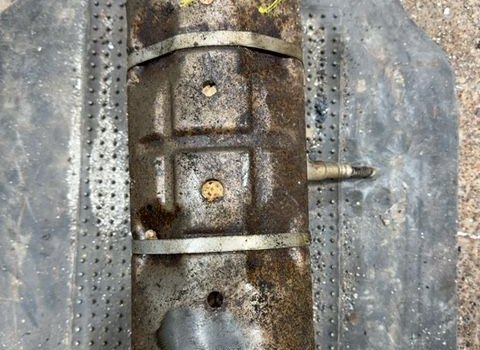
Your catalytic converter could be worth more than you think — but only if you sell it to someone who actually knows what's inside it.
Catalytic converters sit at the intersection of two industries: auto salvage and precious metal refining. The ceramic or metalite substrate inside every cat contains platinum, palladium, and rhodium — metals that trade on global commodity markets and swing in price based on supply, industrial demand, and mining output. If you walk into the wrong yard with a load of cats, you might walk out with half what they're worth. If you're in Laval or anywhere across Quebec, knowing how yards handle catalytic converters before you show up matters.
This is a market report and a practical guide. We'll cover how scrap yards process cats in 2026, what drives precious metal values, and how platforms like SMASH help you get competitive bids for your scrap in Canada instead of guessing at a price with one buyer.
What's Actually Inside a Catalytic Converter
The shell is steel. That part is worth almost nothing on its own. What drives the value of a catalytic converter is what's inside — a substrate coated with platinum group metals (PGMs): platinum, palladium, and rhodium. These metals act as catalysts in the emissions control process, burning off hydrocarbons and reducing pollution. After years of heat cycles and exhaust exposure, they're still recoverable.
The loading — meaning how much PGM is on the substrate — varies significantly by vehicle make, model, year, and engine type. A large-displacement truck engine runs a bigger converter than a compact sedan. Diesel cats have different PGM profiles than gasoline units. Hybrid vehicles often run cleaner engines and can carry different loading than their gas counterparts. This is why two cats that look identical on the outside can have very different values.
In 2026, PGM prices remain volatile. Palladium and rhodium in particular have seen dramatic swings over the past several years, tied to supply disruptions from major mining regions and shifting demand from the automotive sector as electric vehicles gradually change the emissions control landscape. That volatility makes accurate identification critical — which is why serious yards and B2B scrap metal marketplaces lean heavily on serial number databases and assay data.
How Scrap Yards Identify and Price Catalytic Converters
Not all yards handle cats the same way. At the most basic level, some yards pay a flat rate by unit or by weight — a rough estimate that doesn't account for PGM loading. This approach is fast but rarely accurate, and it usually benefits the buyer more than the seller.
More sophisticated operations use serial number lookup tools. Each OEM catalytic converter has a serial or part number stamped on the shell. That number ties back to a database that estimates the PGM content based on manufacturer specs and assay data from previously processed units. If you're a shop, dismantler, or yard bringing in volume, using a yard or platform that actually runs serial lookups is the difference between leaving money on the table and getting paid accurately.
The highest level of accuracy comes from actual lab assay — sending the material to a precious metal refinery for sampling and analysis. This is typically done with large lots. The refinery crushes and blends the substrate, takes representative samples, and assays for PGM content. Settlement follows the actual metal recovered, minus refining fees and terms. If you're moving a significant volume of cats, understanding refinery terms matters as much as the spot price.
When you find a scrap yard near you in Canada that handles catalytic converters professionally, ask directly: do they use serial number lookup, do they weigh and grade by type, and what's their pricing basis? A yard that can't answer those questions clearly isn't set up for cats — they're guessing, and you'll pay for it.
The Precious Metal Price Problem: Why One Quote Isn't Enough
Platinum, palladium, and rhodium don't have a fixed price. They trade daily, and the spread between a low offer and a fair offer can be significant, especially when precious metal prices are moving. A yard that quotes you a price today based on last week's spot data — or worse, a fixed "per unit" price that ignores current markets — is not giving you a real number.
This is exactly the problem a B2B scrap metal marketplace like SMASH is designed to solve. Instead of calling one buyer and accepting their quote, you put your documented inventory in front of multiple vetted buyers. Competition does what it always does — it narrows the gap between what a buyer wants to pay and what the market actually supports.
For catalytic converter loads specifically, documentation matters enormously to buyer confidence. That means:
- Serial numbers recorded for each unit
- Photos of the substrate condition
- Weight per category or grade
- Count per type (small foreign, large domestic, diesel, foil-type, etc.)
- Chain of custody documentation if required by provincial regulations
A well-documented load attracts stronger bids. Buyers can underwrite the risk more accurately when they know what they're buying. That's not a theory — it's how procurement works at the professional level.
Catalytic Converter Regulations in Quebec and Across Canada in 2026
Catalytic converter theft has driven regulatory changes across North America. In Quebec and across Canada more broadly, 2026 rules around the purchase and documentation of used catalytic converters continue to tighten. Yards operating in Laval and throughout the province are subject to provincial and municipal requirements around seller identification, record-keeping, and in some cases, mandatory holding periods before resale or processing.
If you're a shop, dismantler, or fleet operator selling cats legitimately, this is to your advantage. Regulated yards operating within the rules create a paper trail that protects sellers as much as buyers. When you locate the closest Canadian scrap yard handling cats in your area, verify they're compliant with current provincial requirements. A yard that skips documentation to move faster is a liability, not a convenience.
Auto salvage yards in New Brunswick, Ontario, Alberta, and British Columbia face similar documentation requirements, though specifics vary by province. Regardless of where you operate, the direction of regulation is clear: documentation is mandatory, not optional. Build that into your process now.
Finding the Right Buyer for Your Cats in Laval and Quebec
If you're in Laval or anywhere across Quebec, your options for selling catalytic converters break down into a few categories: local scrap yards, specialty cat buyers, and B2B auction platforms. Each has tradeoffs.
Local scrap yards are convenient and handle mixed loads. Not all of them have the systems to price cats accurately. Some outsource to a cat specialist anyway, which means you're giving up margin for the convenience of a single drop.
Specialty cat buyers focus exclusively on PGMs and typically have better pricing systems. The tradeoff is they usually want volume — a handful of units may not qualify for their best terms.
B2B platforms like SMASH bring competition to the transaction. Your documented load goes to vetted buyers across North America, and you get bids rather than a single quote. For shops, dismantlers, or yards moving consistent volume, this model tends to produce better price discovery. No subscription fees. SMASH only earns when a transaction closes — which means the platform has a direct interest in getting you a strong result.
If you're newer to this process or want to understand what's available before committing to a sale, read Canadian scrap yard guides that break down the full range of options by material type and region.
What to Expect from the Market in Late 2026
PGM markets in late 2026 continue to reflect a transition period for the automotive sector. Gasoline-powered vehicles still dominate the fleet in Canada, which keeps demand for catalytic converters — and the PGMs inside them — meaningful in the near term. As EV adoption grows over the next decade, the long-term demand curve for automotive PGMs will shift, but that transition is gradual.
In the near term, watch palladium and rhodium more than platinum. Palladium remains heavily tied to gasoline engine production. Rhodium remains the most volatile of the three by percentage and can move sharply on relatively thin supply news. If you're holding significant cat inventory, understand that timing the market precisely is not realistic — but staying informed about PGM movements helps you avoid selling into a trough when you can wait.
Use platforms that show real-time pricing logic, not static per-unit lists. Know what your cats are before you sell them. Document everything. And get more than one offer.
Disclaimer: Precious metal and scrap metal prices fluctuate daily based on commodity markets, supply and demand, and regional factors. All pricing references in this article are general guidance only. Check current rates directly with buyers before making any selling decisions.
If you're ready to find a buyer who actually knows what your cats are worth, start by finding a qualified yard or using a platform built for competitive pricing. Find a trusted scrap yard near you in Canada — check locations at scrap-yard-near-me.ca.
Frequently Asked Questions
Q: How do I find a scrap yard in Laval that buys catalytic converters?
Search for yards in Laval that specifically list catalytic converters or non-ferrous auto parts as accepted materials. Call ahead and ask whether they use serial number lookup or price by weight and type — that tells you quickly whether they're set up for cats or just guessing at a number. For higher volumes, a B2B platform like SMASH gets your load in front of multiple qualified buyers across Canada.
Q: What affects the price I get for a catalytic converter at a scrap yard?
The primary factors are the PGM loading of the specific unit (tied to make, model, and engine), current spot prices for platinum, palladium, and rhodium, the condition of the substrate, and the buyer's refining terms or margin. A yard using serial number databases and current market data will give you a more accurate offer than one pricing by unit or rough weight alone.
Q: Are there regulations in Quebec about selling used catalytic converters to scrap yards?
Yes. Quebec yards are subject to provincial and municipal rules around seller identification, record-keeping, and in some cases holding periods for used cats before they can be resold or processed. This applies to legitimate sellers as well and is designed to combat theft. Work only with yards that follow these requirements — documentation protects you as much as the buyer.
Q: What's the difference between selling cats to a local yard versus a B2B scrap metal marketplace?
A local yard gives you one offer, often same-day, which is convenient but limits price discovery. A B2B scrap metal marketplace like SMASH puts your documented inventory in front of multiple vetted buyers, creating competition that tends to produce a more accurate market price. For high volumes of cats where the PGM value is significant, the difference in outcome can be meaningful.
Q: Can auto salvage yards in New Brunswick or other provinces buy catalytic converters from Quebec sellers?
In most cases, buyers and sellers across Canadian provinces can transact — but transportation costs, provincial documentation requirements, and buyer terms affect whether it makes sense. Platforms built for cross-regional B2B scrap transactions handle much of this complexity. If you're moving volume, getting bids from outside your immediate region through a vetted platform often surfaces buyers you wouldn't find through a local search alone.
Stay current on precious metal markets and scrap industry news — follow SMASH on LinkedIn at linkedin.com/company/scrap-metal-auction-sales-hub for regular industry updates and market insights.