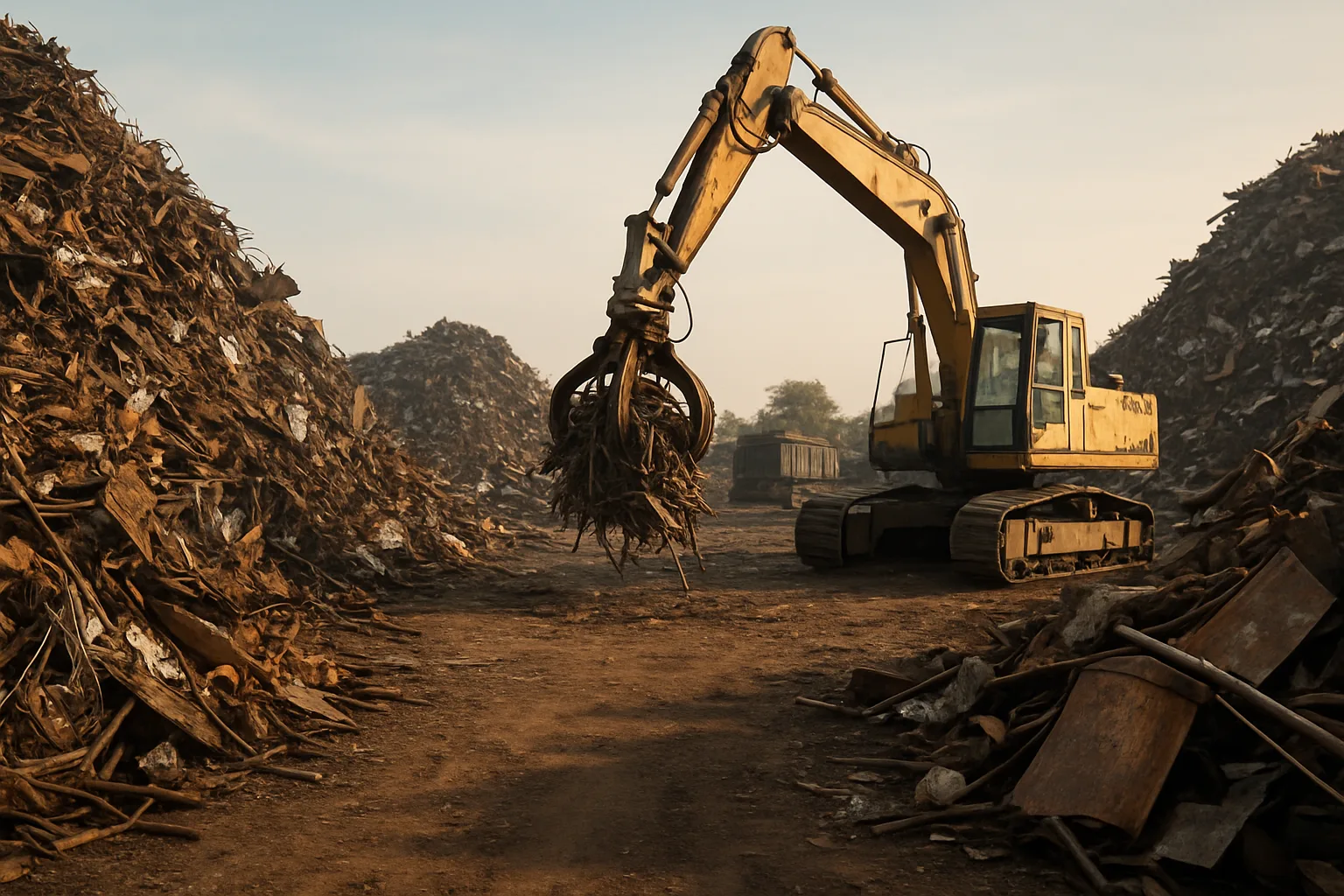
Local Scrap Yards vs. Online Buyers: Where Do You Actually Get Paid More?
Most people selling scrap metal assume their local yard is the best option — it's close, it's familiar, and the guy behind the counter knows your name. But familiarity isn't the same as a fair price. If you're hauling copper, catalytic converters, or a load of mixed non-ferrous to a scrap yard in Yorkton or anywhere else in Saskatchewan, you might be leaving real money on the table without even knowing it.
This isn't about bashing local yards. Most of them do honest work. The real question is: how do you know what your load is actually worth if you're only talking to one buyer? You don't. And that's the problem this article unpacks — along with how the gap between local scrap yard prices and competitive online offers has become something serious sellers pay attention to in 2026.
How Local Scrap Yard Pricing Actually Works
Walk into almost any local scrap yard and the pricing process follows a familiar pattern. A buyer glances at your material, maybe checks a board on the wall, and gives you a number. That number is usually based on their internal margin, what they paid yesterday, and what they think they can move the metal for. It's not necessarily dishonest — it's just a business operating on single-buyer logic.
Local yards carry real overhead: staff, equipment, insurance, property costs. They need margin to operate. That margin often comes directly off your payout. In tighter commodity markets, that spread can get wider. In hot markets, you might do okay walking in cold. But "might" is a rough way to run your scrap operation if you're selling regularly.
- No price transparency: Most local yards don't post live rates. You only know what they tell you in the moment.
- Single-buyer dynamic: One buyer, one offer. Take it or haul your load somewhere else.
- Variable quality assessment: How your material gets graded depends on the individual doing the grading that day.
- No competitive pressure: Without multiple buyers, there's no incentive for the yard to sharpen their offer.
None of this is unique to Yorkton. It's how the traditional scrap business has run across North America for decades. The system works — but it works better for buyers than sellers.
What Online Buyers and Auction Platforms Actually Offer
The shift toward online scrap metal buying platforms has changed the math for a growing number of recyclers and yard operators. Instead of one buyer making an offer, you can put your load in front of multiple vetted buyers who compete for it. That competition is what drives better price discovery.
Platforms like the SMASH Recycling auction platform work by letting sellers document their inventory — weights, grades, photos, serial numbers where relevant — and push it to a pool of qualified buyers. Those buyers bid. You see the results. No guessing, no phone tag, no wondering if you should have called someone else first.
For sellers moving catalytic converters, copper, aluminum, or high-grade non-ferrous material, documented inventory isn't just paperwork — it gives buyers the confidence to bid higher. When a buyer can verify what they're purchasing before committing, they're more willing to put up a stronger number. That's the core mechanic: more information plus more buyers equals better price discovery.
This matters whether you're running a small operation in rural Saskatchewan or managing volume out of a mid-sized city. The geography doesn't change the logic — more competition reveals the market.
Scrap Metal Prices Today: Why the Gap Between Local and Online Can Vary Widely
Scrap metal prices fluctuate with global commodity markets. Copper, aluminum, steel, and catalytic converter PGMs all move on their own cycles, influenced by manufacturing demand, trade policy, and recycling supply chains. In 2026, that volatility hasn't gone away — if anything, market swings have made price transparency more valuable, not less.
The gap between what a local yard offers and what an online auction might produce isn't fixed. It depends on the material, the market, the day, and how many qualified buyers are actively looking for what you have. Some sellers find the difference is marginal on commodity steel. Others find meaningful upside on high-value non-ferrous loads — especially when buyers in larger markets like Calgary or beyond are competing for material they can't source locally.
A few factors that affect how wide the gap might be:
- Material grade: Higher-value materials (bare bright copper, catalytic converters, insulated wire) tend to see more competitive spread because more buyers want them.
- Documentation quality: Well-photographed, accurately graded loads attract more confident bids.
- Buyer pool: A vetted network of active buyers produces more competition than a cold call to two or three regional yards.
- Market timing: Hot commodity markets compress the gap. Soft markets make competitive bidding more valuable because local yards tighten margins.
Disclaimer: Scrap metal prices fluctuate daily based on commodity markets. Always verify current rates before selling. Nothing in this article constitutes a price guarantee.
Should You Still Use a Local Scrap Yard Near You in Yorkton?
Yes — and this isn't a dismissal of local yards. If you're dropping off a small load of mixed steel, a dead appliance, or scrap aluminum from a weekend project, driving to a Yorkton scrap metal services location makes complete sense. The convenience is real. Transaction costs (your time, your fuel) matter on smaller loads. Not everything needs to go to auction.
But the calculus changes when you're moving volume. If you're a shop generating regular non-ferrous material, a recycling yard processing cats, or a business sitting on a significant load of copper or aluminum, a single walk-in offer is a weak benchmark. You're essentially pricing your inventory with one data point. That's not a market — it's a guess.
The smartest operators don't pick one channel and stick to it out of habit. They use local yards for what they're good at — fast transactions, mixed material, low-value commodity loads — and they use competitive platforms for high-value material where the spread between a weak offer and a strong one is worth the extra step.
If you're in Saskatchewan and want to understand how your local options compare to what a broader buyer pool might offer, platforms like SMASH make it practical to find out without committing to anything upfront. No subscription fees. You only engage when there's a deal to be done.
How to Get Better Scrap Metal Prices Regardless of Where You Sell
Whether you're working with a local yard or testing an online auction platform, a few practices consistently lead to better outcomes. These aren't complicated — they're just habits most casual sellers skip.
- Sort your material before you sell. Mixed loads get priced on the lowest-grade item in the pile. Sorting takes time but it changes how buyers assess value.
- Document what you have. Photos, weights, and accurate grades give buyers — local or online — the confidence to offer more. Uncertainty in the buyer's mind costs you money.
- Know the commodity context. You don't need to be a trader, but knowing whether copper is up or down this week tells you whether to push for more or move quickly.
- Get more than one number. Even if you ultimately sell locally, calling two yards in your area gives you a reference point. A competitive auction does this automatically.
- Understand your transport costs. A higher price that costs you three hours and a tank of diesel might not net better. Factor logistics into the decision.
If you want to find a scrap yard near you in Canada that fits your material and your volume, the first step is knowing your options — not just the closest one.
Making the Right Call for Your Scrap Operation
The honest answer is that local yards and online auction platforms aren't opposites — they're tools. The right one depends on what you're selling, how much you have, and how much the price difference matters to your bottom line. A retired homeowner clearing a garage doesn't need the same approach as a Saskatchewan recycling yard moving a weekly load of non-ferrous.
What's changed in 2026 is that sellers have real options. Online platforms have become more accessible, buyer networks have expanded, and documentation tools have made it easier to put a load in front of multiple qualified buyers without a logistics headache. That didn't exist at scale a decade ago. It does now.
If you've always sold to one buyer because that's how it's always been done, it's worth asking whether the market actually agrees with the price you've been getting. Competition has a way of answering that question clearly. You can read Canadian scrap yard guides to dig deeper into how different materials are priced and what to expect from the selling process.
When you're ready to see what your material is worth across a broader buyer pool, or if you just want to locate the closest Canadian scrap yard and get a baseline offer, both starting points are valid. The key is making an informed decision — not just a convenient one. Find a trusted scrap yard near you in Canada and make sure you're working with the right one for your material at scrap-yard-near-me.ca.
Frequently Asked Questions
Q: How do I know if my local scrap yard in Yorkton is offering a fair price?
The most direct way is to get a second opinion. Call another yard in the region, check published commodity indexes for reference, or use a competitive auction platform to see what multiple buyers are willing to pay. One offer is a starting point, not a market.
Q: What materials get the biggest price difference between local yards and online auctions?
High-value non-ferrous materials — bare bright copper, catalytic converters, insulated wire, and certain aluminum grades — tend to see the most competitive spread. Commodity steel and mixed loads usually have thinner differences because margins are already tight and buyer interest is lower per unit.
Q: Are online scrap metal auction platforms available for sellers in Saskatchewan?
Yes. Platforms like SMASH serve sellers across North America, including Saskatchewan. You document your inventory, put it in front of vetted buyers, and let the bidding process work. There are no subscription fees — you only pay when a deal closes.
Q: How do scrap metal prices today compare to what local yards post on their boards?
Local yard boards often lag real commodity markets by a day or more, and they already include the yard's margin baked in. Checking spot prices for copper, aluminum, or steel through a commodity index gives you a raw market reference. What you actually receive is always lower than spot — the question is how much lower. Prices fluctuate daily; always verify current rates before selling.
Q: What should I bring when selling scrap metal at a yard near me in Yorkton?
Bring a valid government-issued photo ID — most Canadian scrap yards require it by law for metal purchases. If you're selling catalytic converters, having documentation of where they came from (vehicle records, BOLs) speeds up the process and can help you get a better offer. Sort your material beforehand if possible — it almost always leads to a better price per kilogram.
Stay current on scrap metal market trends and industry news — follow SMASH on LinkedIn for regular updates on pricing, platform features, and what's moving in the North American recycling market.