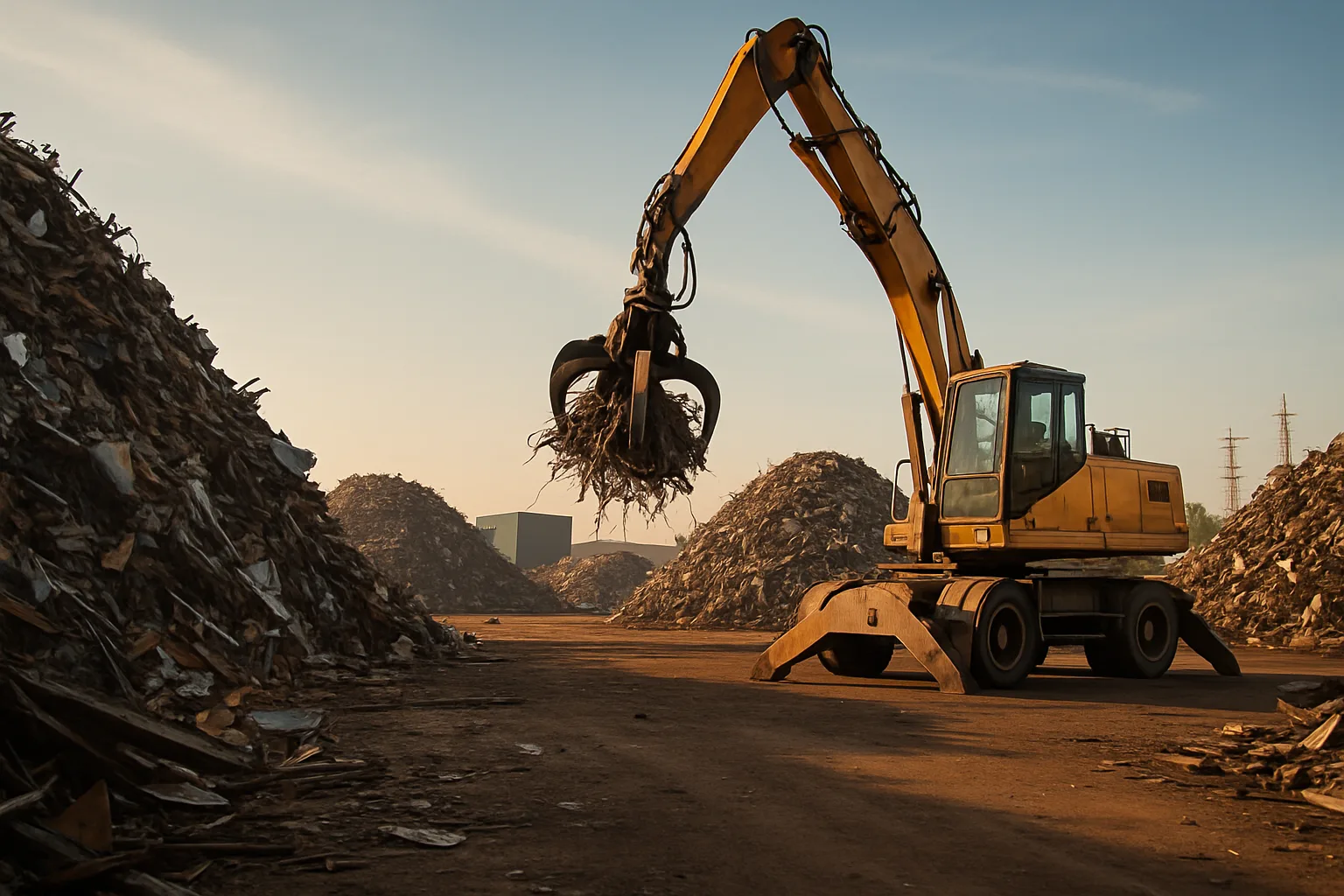
Most people still picture a scrap yard the same way: a guy behind a chain-link fence, a clipboard, and a price he pulls out of thin air. That image is outdated. The scrap metal industry is changing faster than most people realize — and if you're still calling one buyer and taking whatever they offer, you're leaving real money on the table.
For yard operators, independent sellers, and businesses in Oshawa and across Ontario, understanding how technology is reshaping this space isn't just interesting — it's practical. It affects how much you get paid, how fast you get paid, and how confident you can be that the deal is fair.
This is what the shift looks like on the ground, and how platforms like SMASH are driving it.
---The Old Way of Selling Scrap — And Why It's Broken
Here's how scrap metal selling worked for decades. You load up your truck. You call your one buyer — maybe the same guy your father called. He gives you a number. You either take it or you don't. If you don't know the market, you have zero leverage.
That model has two serious problems. First, it relies entirely on a personal relationship with a single buyer. Second, it gives that buyer all the information while you operate in the dark. You don't know if the number he quoted is fair, low, or flat-out opportunistic.
For anyone running a local scrap yard in Oshawa or trying to find a scrap yard near you in Canada that offers real transparency, that one-buyer dynamic is the core frustration. Technology is dismantling it — slowly, but decisively.
---How Digital Tools Are Creating Real Price Discovery for Scrap Metal Sellers
Price discovery is the process of finding what something is actually worth in the open market. Stock traders have had it for a century. Scrap metal sellers are finally getting it now — thanks to digital auction platforms and inventory documentation tools.
When you list a load on a competitive auction platform, multiple vetted buyers see the same inventory at the same time. They bid against each other. That competition is what reveals the market. One buyer quoting you in private can't do that — competition can help reveal the market in ways that a single phone call never will.
More buyers means better price discovery. It's not complicated. And for sellers in Ontario trying to move non-ferrous loads, catalytic converter cores, or bulk ferrous tonnage, the difference between one bid and several competing bids can be significant. If you want to understand what's available through Oshawa scrap metal services, the technology backing those transactions matters as much as the location.
What "Documented Inventory" Actually Changes
Documented inventory gives buyers more confidence. That's not just a platitude — it directly affects bidding behavior. When a buyer can see clear photos, weights, serial numbers, and packing lists before they bid, they don't need to pad their offer with a risk buffer. They know what they're buying.
Modern platforms use photo documentation, serial tracking, and VIN lookup tools to build that record before a load ever hits the auction. Sellers who use these tools don't just get more bids — they get more accurate bids, because buyers aren't guessing at what's in the load.
---What a Scrap Metal Auction Platform Actually Looks Like in Practice
Forget what you think you know about online auctions. A scrap metal auction platform built for the industry doesn't look like eBay. It's purpose-built for loads, yards, and commercial buyers — not individual collectors.
Here's what a modern platform handles end to end:
- Inventory documentation: Photos, weights, material grades, packing lists, and VIN or serial lookups for vehicles and cores.
- Vetted buyer network: Buyers are pre-screened. You're not selling to an unknown. You know who's in the room before the bidding starts.
- Competitive bidding: Multiple buyers see the same load simultaneously. They compete. You benefit from that competition.
- Auto-invoicing: Once the auction closes, the paperwork generates automatically. No chasing down BOLs or writing invoices by hand.
- No subscription fees: Platforms like SMASH don't charge you monthly. They only win when you win — the fee structure aligns incentives.
That last point matters. A platform that only earns when a sale closes has every reason to help you get the best outcome. That's a very different dynamic than paying a flat monthly fee regardless of results.
If you want to compare scrap metal bids from Canadian buyers, this is the infrastructure that makes it possible.
---Technology on the Ground: What's Changing at the Yard Level in Ontario
It's not just online auctions. The technology shift is happening inside scrap yards too — in how they track, sort, and document materials before anything goes to market.
Yards that used to rely on paper logs and verbal records are moving to digital inventory systems. This matters for a few reasons:
- Accuracy at the scale: Digital weighing and logging reduces errors. A load that used to be estimated at roughly 4,000 lbs now gets documented precisely — and that precision shows up in what buyers are willing to pay.
- Regulatory compliance: Ontario has tightened regulations around scrap metal transactions — including requirements for seller identification and transaction records. Digital systems make compliance easier and defensible.
- Faster turnaround: When documentation is digital from intake to sale, the time between dropping a load and getting paid shrinks significantly.
For a local scrap yard in Oshawa, adopting these tools isn't just about being modern — it's about staying competitive as buyer expectations shift. Buyers increasingly expect documented loads. Yards that can't provide that documentation are going to lose ground to yards that can.
If you're trying to locate the closest Canadian scrap yard that operates with this level of professionalism, the gap between technology-forward yards and old-school operations is becoming more visible every month.
---Why SMASH Is Built Specifically for This Industry Shift
SMASH isn't a general-purpose software company that wandered into scrap. It's built around the specific problems scrap metal sellers face — single-buyer dependency, opaque pricing, manual paperwork, and the time it takes to move a load from yard to payment.
The platform handles the full transaction cycle: inventory documentation through the inventory tool and VIN lookup, competitive auctions with vetted buyers, auto-invoicing once a deal closes, and no subscription fees. You don't pay to be on the platform — the model only works if your load sells.
For sellers in Oshawa looking to move loads competitively — whether that's non-ferrous material, catalytic converter cores, or ferrous tonnage — SMASH connects you to buyers who are actively looking for what you have. That's a different experience than cold-calling a buyer who may or may not be buying this week.
The SMASH approach is direct: documented inventory, competitive bidding, and full transparency on who's buying and at what price. No guessing. No hoping your single buyer is in a good mood. Want to read Canadian scrap yard guides that break down how to get the most from your loads? The difference between the old model and the SMASH model is the difference between hope and data.
---What This Means If You're Selling Scrap Metal in Oshawa Right Now
The technology shift isn't coming — it's already here. Yards and sellers who adapt are getting more competitive outcomes. Those who stick with single-buyer relationships and manual processes are increasingly at a disadvantage.
If you're selling scrap metal in Oshawa or anywhere across Ontario, here's what to take away from all of this:
- Document everything. Photos, weights, grades. Documented inventory gives buyers more confidence — and confident buyers bid higher.
- Don't default to one buyer. One buyer is a ceiling, not a market. Competition reveals what your load is actually worth.
- Use platforms built for scrap. Generic marketplaces don't understand non-ferrous grades, BOL requirements, or the difference between a clean load and a contaminated one. Industry-specific tools do.
- Check what's available near you. The best local scrap yard near me in Ontario isn't always the closest one — it's the one that gets you into a competitive market with documented transactions.
Technology won't replace the fundamentals of this industry — metal still needs to be sorted, weighed, and moved. But it will keep reshaping how price is discovered, how transactions are documented, and who wins in this market.
If you're ready to move a load the right way, find a trusted scrap yard near you in Canada — check locations at scrap-yard-near-me.ca and see what competitive, transparent scrap selling looks like in practice.
---Frequently Asked Questions
Q: How do I find a local scrap yard in Oshawa that uses modern, transparent pricing?
Start at scrap-yard-near-me.ca to locate yards near you in Ontario. From there, look for yards that document inventory, use vetted buyer networks, and can show you a transaction record — not just a verbal quote. Technology-forward yards are easier to find than they were five years ago.
Q: What is a scrap metal auction platform and how does it help sellers?
A scrap metal auction platform connects sellers to multiple vetted buyers simultaneously. Instead of calling one buyer and accepting their price, your documented load gets competitive bids. More buyers means better price discovery — the platform makes the market visible instead of keeping it hidden.
Q: Does SMASH charge a monthly subscription fee to sellers?
No. SMASH doesn't charge subscription fees. The platform only earns when a sale closes, which means the incentives are aligned — they benefit when you get the best outcome on your load.
Q: What materials can I sell through a scrap metal auction platform in Ontario?
Most platforms handle a wide range — non-ferrous metals (copper, aluminum, brass), ferrous loads, catalytic converter cores, and vehicle parts. If your load is documented with photos, weights, and material grades, it can typically be listed. Check with the platform directly for specifics on what categories they actively move in your region.
Q: Why does documentation matter when selling scrap metal near me?
Documented inventory gives buyers more confidence, which directly affects how they bid. When a buyer can see verified photos, accurate weights, and serial or VIN data before committing, they don't need to guess — and guessing is what creates low-ball offers. Better documentation typically leads to more competitive bids.
---Stay ahead of where the scrap metal market is heading. Follow SMASH on LinkedIn for industry updates, market insights, and practical tips for scrap metal sellers across North America.