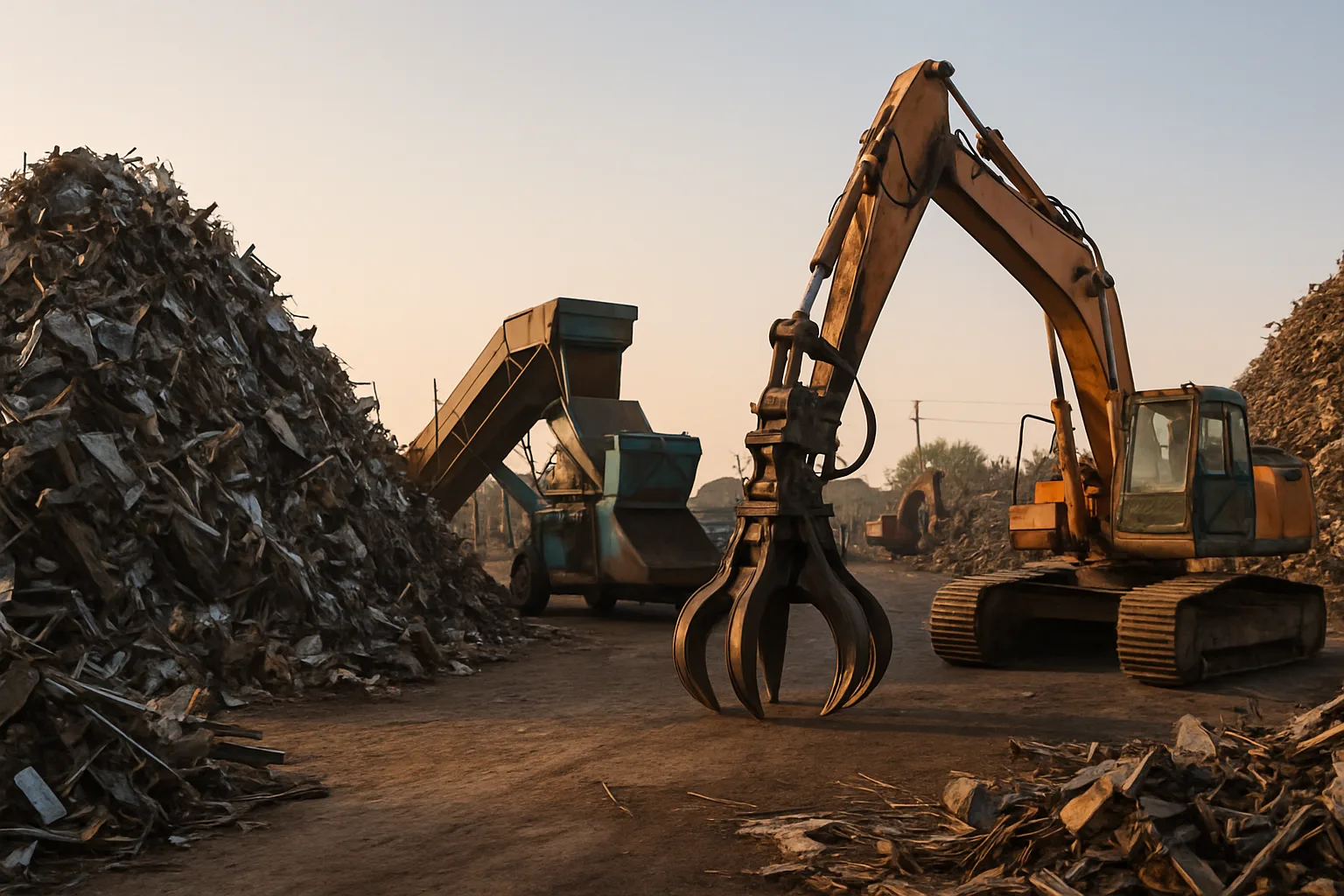
What Actually Happens to Your Scrap Metal After You Drop It Off
Most people hand over a load of metal, collect their cash, and drive away without a second thought. But what happens inside a scrap yard after you leave? Understanding how yards process and sort different metals can help you prepare better loads, get faster payouts, and avoid the frustrating price cuts that come from contaminated or unsorted material. If you're searching for a scrap yard near me Markham, knowing this process also helps you pick a yard that runs a tight operation — because how a yard handles metal directly affects what they'll pay you.
Metal recycling in Ontario is a serious business. Yards handle everything from a single car battery to multi-tonne loads of industrial scrap. The sorting, testing, and processing steps aren't just bureaucratic box-checking — they determine the final commodity value of every pound you bring in.
Step One: Receiving and Initial Sorting at the Scrap Metal Yard
When a load arrives, the first thing any reputable scrap metal yard in Markham does is weigh it. The scale ticket is your proof of weight — hold onto it. From there, an experienced yard hand does a fast visual sort. Is this ferrous or non-ferrous? Is the load mixed or clean? Are there obvious contaminants like plastics, fluids, or rubber still attached?
That first sort determines how the load moves through the yard. Clean, separated loads move fast and get better prices. Mixed loads go to a secondary sorting area where trained staff break things down further. Some yards use conveyor systems and magnetic separators for high-volume ferrous work. Smaller operations do more of this by hand. Either way, the goal is the same: get every type of metal to the right pile before it moves downstream.
- Ferrous metals (iron, steel, cast iron) go to the steel side — often crushed, shredded, or baled for mill sales
- Non-ferrous metals (copper, aluminum, brass, stainless) are sorted by grade and kept separate
- Mixed loads take longer to process and often receive a lower per-pound rate to cover the extra labor
How Yards Test and Identify Unknown Metals
Not everything that walks through the gate is labeled. That's where XRF analyzers come in — handheld guns that use X-ray fluorescence to identify exact alloy compositions in seconds. Yards use these on stainless steel, aluminum alloys, and any mystery metal that doesn't respond to a magnet. A piece that looks like aluminum might be a 6061 aerospace alloy worth significantly more than generic cast. Or it might be contaminated with zinc and worth less. The gun tells the truth.
Beyond XRF, yards also use visual and physical checks. Copper grades, for example, are sorted based on coating, cleanliness, and form:
- #1 Bare Bright Copper — uncoated, unalloyed wire, clean and shiny. Top price.
- #2 Copper — coated wire, pipe with fittings, slightly oxidized. Good price, but below bare bright.
- Copper Breakage / Mixed — motors, transformers, mixed copper sources. Processed further before valuation.
Aluminum follows a similar grading logic — cast versus sheet versus extrusion versus breakage. Each grade hits a different commodity market. Yards that don't bother to grade carefully often lump things together and sell at a discount. A yard with solid sorting practices is one that's worth doing business with repeatedly. When you find a scrap yard near you in Canada that invests in proper testing equipment, you'll see it reflected in their pricing consistency.
Processing High-Value Items: Catalytic Converters, Cores, and Non-Ferrous Loads
Catalytic converters are in a category of their own. They contain platinum group metals (PGMs) — platinum, palladium, and rhodium — that require specialized assay processing. A yard doesn't just weigh a cat and write you a check based on steel pricing. They identify the converter by serial number or by physical characteristics, reference it against a pricing database, and quote accordingly.
If you're looking to sell catalytic converters online, platforms like SMASH let you get competitive bids from vetted buyers across Canada rather than taking whatever your local yard offers as a take-it-or-leave-it number. That matters because cat prices swing hard. A single converter can be worth anywhere from $50 to over $500 CAD depending on the make, model, and current PGM market. Knowing your serial number and having photos of the unit gives buyers the confidence to bid accurately — and that's exactly what documented inventory enables.
Other high-value processing categories include:
- Electric motors — shredded or processed for copper content
- Radiators — typically aluminum/copper combinations, sorted by type
- Batteries (lead-acid) — drained, sorted, and sent to lead smelters
- Insulated wire — burned or mechanically stripped to recover copper
- Stainless steel — graded by alloy (304, 316, etc.) using XRF before sale
For large loads of non-ferrous material or specialty items like cats and cores, it pays to document everything before you drop it off. Photos, weights, serial numbers — these aren't just for your own records. They're negotiating tools. Platforms built for the scrap trade, like SMASH scrap, are designed around this kind of documentation, making it easier to get accurate bids before you commit to a single buyer.
Ferrous Processing: Shredders, Balers, and the Steel Side of the Yard
Ferrous scrap — your steel, iron, and cast — takes a different path through the yard. The goal here is volume and density. Mills that melt this material want consistent, dense packages they can charge efficiently. That means most ferrous scrap gets shredded, baled, or torched into manageable pieces before it leaves the yard.
Auto bodies go into industrial shredders that reduce a full vehicle to fist-sized chunks in under a minute. The shredded output runs through magnetic separation to pull out the steel, while non-ferrous residue (aluminum, copper, plastic) gets captured in a secondary stream called ASR (auto shredder residue). Balers compress light iron — sheet metal, clips, hoods — into dense cubes for efficient transport. Torch cutters handle structural steel, I-beams, and heavy plate that can't go through a shredder intact.
For sellers, the practical takeaway is this: heavily painted, coated, or contaminated steel gets downgraded. A load of clean structural steel cut to torch length gets a better number than a tangled heap of mixed gauges with attached hardware. Prep work pays. Yards in Markham and across the Greater Toronto Area compete for quality loads — knowing how to present your material gives you leverage.
How Transparent Yards Use Documentation to Price Your Load Fairly
The yards that operate with integrity document everything. Weight tickets, photos, grade designations, BOLs on outbound loads — this isn't extra paperwork. It's how a serious operation maintains consistency and accountability across hundreds of transactions a week. And it's how you, as a seller, can verify you're getting what you're owed.
Documentation also matters when you're selling to a buyer who can't physically inspect the material in advance. That's where the old way of doing business falls apart — one phone call, one number, take it or leave it, no real visibility into the market. SMASH flips that. When you list your load with documented weights, photos, and material grades, you're giving vetted buyers across Canada the information they need to compete for your material. More competition means better price discovery. It's that direct.
If you're based in Markham or anywhere in Ontario and you're regularly moving metal, it's worth understanding that the price you accept at the gate is often just a starting point — not a ceiling. To locate the closest Canadian scrap yard and compare what options are available to you before your next load, start there. Then layer in digital tools to see what the broader market will pay.
Want to go deeper on how to prepare different types of loads? Read Canadian scrap yard guides covering everything from vehicle dismantling to copper grading and non-ferrous prep.
What This Means for You as a Seller: Metal Recycling Ontario
Understanding the processing chain isn't just academic. It changes how you prepare loads, how you sort material before drop-off, and which yard you choose to work with. A yard that invests in proper sorting, testing, and documentation is one that can price consistently and explain their numbers. A yard that lumps everything together and offers a flat number for mixed material is one that's covering their uncertainty at your expense.
For metal recycling in Ontario, your best move is to:
- Sort ferrous from non-ferrous before you arrive — saves time and earns better prices
- Clean up high-value materials where possible (strip copper wire, remove steel brackets from aluminum)
- Photograph and document specialty items like cats, cores, and motors before drop-off
- Compare bids on larger or high-value loads before committing to a single buyer
- Work with yards that provide weight tickets and can explain how they graded your material
The scrap industry runs on information. Sellers who understand how yards work, what buyers actually want, and where the value lives in their material consistently come out ahead. Whether you're clearing out a shop, processing end-of-life vehicles, or running regular non-ferrous loads, preparation and documentation are the two levers you control. If you want to find a trusted scrap yard near you in Canada and explore your options — start at scrap-yard-near-me.ca.
Frequently Asked Questions
Q: How do scrap yards near me in Markham determine the price they pay for metal?
Yards price metal based on current commodity markets, the grade and cleanliness of the material, and their own processing costs. Clean, sorted loads earn better rates because they require less labor to process. Mixed or contaminated loads are priced lower to cover the additional sorting work.
Q: What's the difference between a ferrous and non-ferrous scrap yard in Markham?
Most full-service yards in Markham handle both ferrous (steel, iron) and non-ferrous (copper, aluminum, brass, stainless) material. Some smaller operations specialize. Non-ferrous material is generally more valuable per pound and gets sorted more carefully. Call ahead to confirm what a specific yard accepts before you load up.
Q: Can I sell catalytic converters at a scrap yard near me, or should I sell online?
You can sell cats at a local yard, but prices vary significantly from buyer to buyer depending on how they reference PGM values. If you're moving more than one or two converters, getting competitive bids through a platform like SMASH can reveal a wider range of offers. Document serial numbers and take clear photos before you sell — it protects you and attracts better bids.
Q: How do I know if a scrap yard near me is reputable?
Look for yards that provide written weight tickets, can explain how they graded your material, and have consistent pricing practices. Licensing under Ontario regulations is a baseline requirement. A yard that welcomes questions about their process is usually one worth trusting.
Q: What metals are not accepted at most scrap yards in Ontario?
Most yards won't accept radioactive materials, certain sealed containers, or heavily contaminated hazardous waste. Mercury-containing items (old thermostats, fluorescent tubes) often require specialized handling. When in doubt, call the yard before you arrive — it saves everyone time.
Stay current on scrap metal market trends and recycling industry news — follow SMASH on LinkedIn for regular updates straight from the scrap trade.