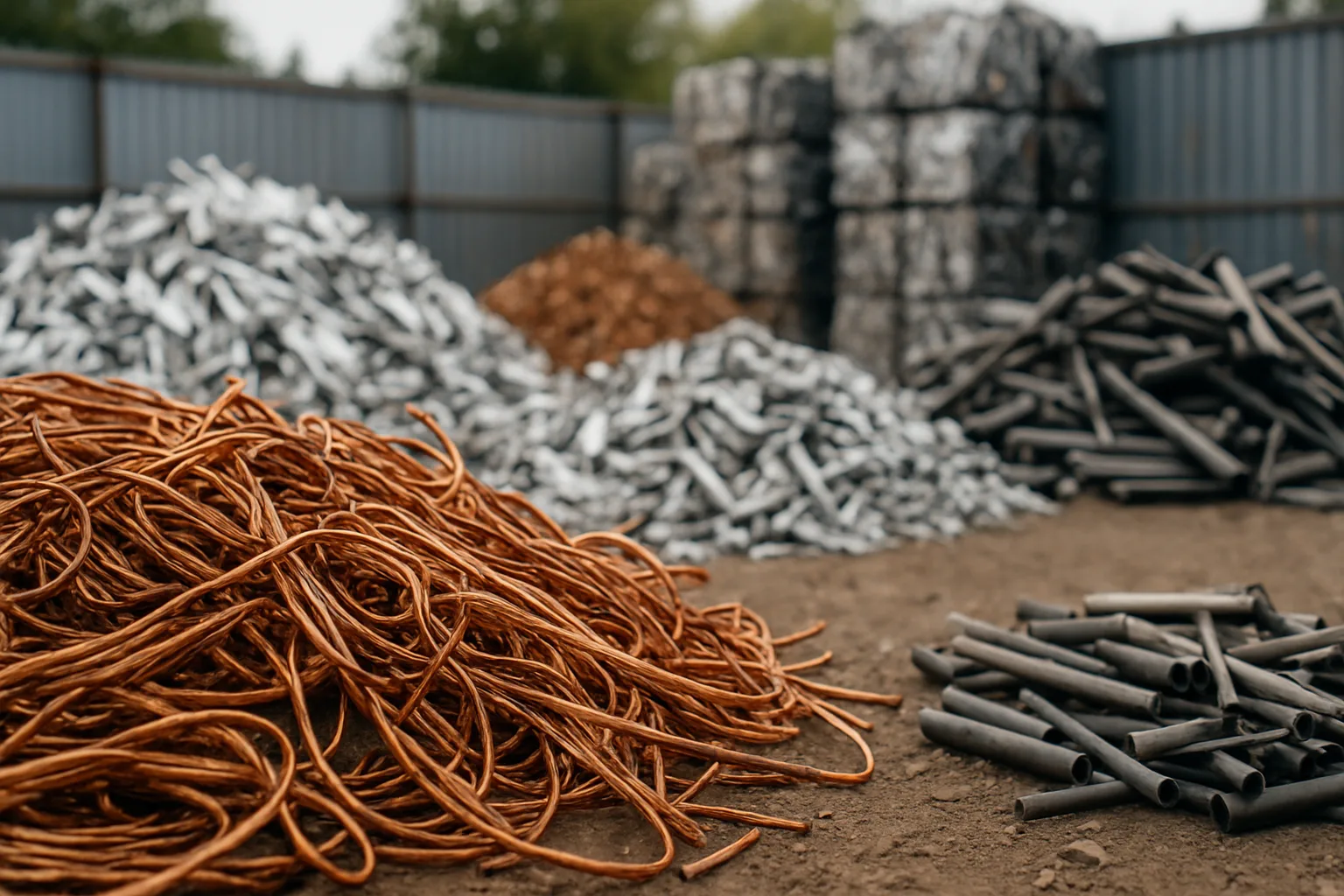
What Actually Happens to Your Metal After You Drop It Off at a Scrap Yard
Most people drive through the gate, unload their load, collect their ticket, and leave. But what happens to that pile of copper pipe, old steel rims, and mixed aluminum after you pull out? Understanding how scrap yards process and sort metals isn't just interesting — it directly affects what you get paid. Yards that sort smarter, document better, and sell through competitive channels return more value to the chain. That matters whether you're a residential seller in Prince George or a fleet operator clearing a maintenance yard.
This guide breaks down the sorting and processing workflow at a real scrap metal yard, explains why material grades matter for pricing, and shows you how platforms like SMASH help you compare scrap metal bids from Canadian buyers — so you're not guessing at what your load is worth before you haul it anywhere.
The First Step: Intake, Weighing, and Initial Sorting at a Scrap Metal Yard in Prince George
When your load arrives at a scrap metal yard in Prince George or anywhere else in British Columbia, the first job is weight and basic identification. You pull onto the scale. The yard records gross weight, tare weight, and net weight. That ticket is your baseline — everything downstream depends on it.
From the scale, material typically moves to a sorting area. This is where experienced yard workers make fast decisions about what's what. Ferrous or non-ferrous? Clean or contaminated? Whole unit or already stripped? Those decisions happen quickly, but they're not casual — misgrading material costs yards money and it costs sellers money.
Common categories sorted at intake include:
- Ferrous metals — iron, steel, cast iron, car bodies, structural steel
- Non-ferrous metals — copper, aluminum, brass, stainless steel, lead, zinc
- Insulated wire — copper wire with plastic or rubber jacket, graded by estimated copper recovery
- Mixed loads — material that needs further hand-sorting before a grade can be assigned
- Catalytic converters (cats) — separated immediately because of high PGM content and specific buyer requirements
A magnet test is the fastest first step. Ferrous metals stick. Non-ferrous don't. It's that simple at the basic level — but grading gets more nuanced after that initial split.
How Scrap Yards Grade and Value Different Metal Types
Grading is where the real money decisions happen. Two loads of copper can carry very different values depending on grade. A length of clean bare bright copper wire pays significantly more than insulated communications wire, even though both are copper. The difference comes down to processing cost and metal recovery rate.
Here's a breakdown of how common metals are typically graded:
Copper
- Bare bright (No. 1 copper): Clean, uncoated wire or solid copper with no solder or fittings. Top grade.
- No. 2 copper: Slightly oxidized, soldered, or with minor contamination. Still high value.
- Insulated wire: Graded by estimated percentage of copper inside — heavy gauge pays more than thin communications wire.
- Dirty copper: Mixed with other materials, painted, or corroded. Lowest copper grade before it becomes shred.
Aluminum
- Extrusions: Clean aluminum profiles from windows, doors, and framing. High recovery, clean material.
- Cast aluminum: Engine blocks, transmission housings — heavier, lower recovery rate than extrusions.
- Aluminum cans: Heavily traded, low per-pound value but high volume.
- Sheet aluminum: Roofing, siding, body panels — varies by alloy and cleanliness.
Steel and Iron
- Prepared steel (HMS 1 & 2): Cut to size, clean, no attachments. Easiest for mills to process.
- Unprepared or busheling: Sheet steel punchings and clippings from manufacturing.
- Cast iron: Stoves, radiators, engine blocks — denser than steel, priced differently.
- Car bodies: Shredded separately, often processed through dedicated auto shredders.
Yards that invest in proper grading equipment — XRF analyzers, spectrometers, proper lighting, and trained staff — can grade material more accurately. That accuracy flows both ways. Sellers get a fair read on their load. Buyers know exactly what they're bidding on. That's why documented, graded inventory sells for stronger prices on a scrap metal auction platform compared to a phone call where the buyer is pricing in uncertainty.
Processing: From Raw Drop-Off to Shippable Commodity
Sorting is just the start. Most material needs physical processing before it's ready to ship to a smelter or mill. This is the mechanical side of the yard — balers, shears, shredders, and wire choppers all play a role depending on the material type.
Here's how common materials move through processing:
- Ferrous scrap gets fed into a shredder or cut with a hydraulic shear to meet mill spec sizing requirements. Most mills specify maximum dimensions for prepared scrap.
- Non-ferrous metals are often baled — copper, aluminum, and brass get compressed into dense bales that are easier to weigh, document, and ship.
- Wire goes through a wire chopper or granulator that strips insulation mechanically, leaving copper granules and plastic fines that separate by density.
- Catalytic converters are catalogued individually — many yards use VIN lookup and serial tracking to identify OEM specs and match converters to accurate assay data.
- Electronics and e-scrap follow a separate processing path because of regulated materials like lead, mercury, and cadmium.
Processing costs money. Labour, energy, equipment maintenance — that all gets factored into the spread between what a yard pays you and what the yard eventually sells the processed material for. A well-run yard minimizes that spread by processing efficiently and selling into competitive markets rather than accepting the first offer from a single buyer.
Documentation, Photo Records, and Why It Matters for Price Discovery
This is where modern scrap yard practice separates from the old way. Historically, a lot of scrap trading happened on handshakes and phone calls. A buyer would take a rough description of a load, quote a price based on their best guess, and that was it. No photos. No grade breakdown. No competitive tension.
Documented inventory changes the equation. When a load is photographed, weighed accurately by grade, and listed with clear specs — packing lists, BOLs, grade weights — buyers can price it with confidence. Confident buyers bid higher. That's not theory. That's how auctions work.
Platforms like SMASH are built on this principle. When a yard lists a load through SMASH, vetted buyers see the documentation, compete against each other, and the price discovery happens in real time. No single buyer controls the number. The market sets it. For a Prince George scrap metal services provider or a yard anywhere in British Columbia, that kind of access to a national buyer pool matters — especially for non-ferrous loads and cats where regional price variation can be significant.
Good documentation also protects everyone from disputes. If a buyer receives a load and it doesn't match the grade, there's a photo and weight record to reference. That accountability keeps the supply chain honest.
How Pricing Works — and Why "Scrap Yard Near Me Prices" Varies So Much
If you've searched scrap yard open today near me prices and gotten wildly different numbers from different sources, that's not an accident. Scrap metal prices are genuinely volatile. They track global commodity markets — London Metal Exchange (LME) for non-ferrous, international steel indices for ferrous — and those markets move daily.
But local price variation goes beyond commodity swings. A few factors drive yard-to-yard differences in Prince George and across Canada:
- Freight and logistics: A yard far from a major port or rail hub has higher outbound costs. That spread gets passed down to the seller price.
- Buyer relationships: Yards with access to more buyers — especially through auction or competitive quoting — tend to return better prices than yards locked into a single offtake agreement.
- Processing capability: Yards that can upgrade material (chop wire, bale aluminum, separate alloys) capture more value per tonne than yards selling raw mixed loads.
- Volume and frequency: Regular high-volume sellers typically negotiate better rates. One-time drop-offs usually get posted prices.
- Market timing: Copper has weeks where it moves significantly. Selling during a dip versus a run can mean a real difference in your cheque.
Disclaimer: Scrap metal prices fluctuate based on global commodity markets and local yard conditions. Always confirm current rates directly with your yard or through a live pricing platform before making hauling decisions.
Platforms like SMASH help yards get real market exposure when they list loads. More buyers means better price discovery. That's the difference between one call to one buyer and a competitive process that reveals what the market actually thinks your load is worth. If you're a yard operator or a commercial seller, that difference adds up fast.
Finding a Scrap Yard Near You in Canada That Does This Right
Not every yard operates the same way. Some have invested in proper sorting infrastructure, accurate scales, and competitive selling channels. Others are still working off paper tickets and handshake deals with one or two regular buyers. When you're choosing where to take your load — whether it's a truckload of copper pipe from a renovation or a trailer full of mixed steel — the yard's processes matter as much as their posted price.
Look for yards that can tell you exactly how they grade your material, give you a weight receipt by grade (not just total weight), and have more than one buyer outlet for their material. If a yard can only move your load one direction, you're at their buyer's mercy.
Ready to find a scrap yard near you in Canada that operates with this kind of transparency? Or looking to locate the closest Canadian scrap yard to your location today? Start with the directory at scrap-yard-near-me.ca, and if you're a yard or commercial seller looking to put your loads in front of competitive buyers, check out what SMASH offers. You can also read Canadian scrap yard guides to sharpen your knowledge before you haul anything.
The scrap industry rewards people who understand how the process works. Now you do.
Frequently Asked Questions
Q: How do I find a scrap yard near me in Prince George that's open today?
The best approach is to check the scrap-yard-near-me.ca directory for current listings in your area, then call ahead to confirm hours and what materials they're accepting. Hours can vary by season and material type, especially for cat and non-ferrous drops.
Q: What metals pay the most at a scrap yard near me in British Columbia?
Non-ferrous metals generally pay more per pound than ferrous. Clean copper (bare bright or No. 1) sits at the top, followed by aluminum extrusions, brass, and stainless steel. Prices vary by grade, cleanliness, and current market conditions — always confirm rates before hauling a large load.
Q: Why does the price I get at a scrap metal yard in Prince George differ from online quotes?
Online spot prices reflect commodity exchange benchmarks, not what a local yard pays after factoring in freight, processing costs, and their own buyer margins. Your local yard price will be lower than LME because the yard needs to cover those costs and sell the processed material onward. Competitive platforms like SMASH can help yards close some of that gap by creating buyer competition at the yard level.
Q: Can I use a scrap metal auction platform as an individual seller?
Most auction platforms like SMASH are designed for yard operators and commercial sellers who move meaningful volume — think full loads of copper, aluminum bales, or catalytic converter lots. If you're a homeowner with a small amount of scrap, your best starting point is a local yard that accepts walk-in material. The directory at scrap-yard-near-me.ca can help you find one nearby.
Q: What should I do to get a better price at a scrap yard near me?
Sort your material before you arrive. Separate copper from aluminum, pull cats from your engine cores, and strip obvious contaminants if you can. Clean, sorted material grades higher and weighs honest — yards will pay you more for a load they don't have to spend labour on. Calling ahead to confirm current pricing by grade is also worth the two minutes.
Find a trusted scrap yard near you in Canada — check locations at scrap-yard-near-me.ca and get moving on your next load with confidence.
Stay current on scrap metal market trends and industry insights — follow SMASH on LinkedIn for regular updates from across the North American recycling market.