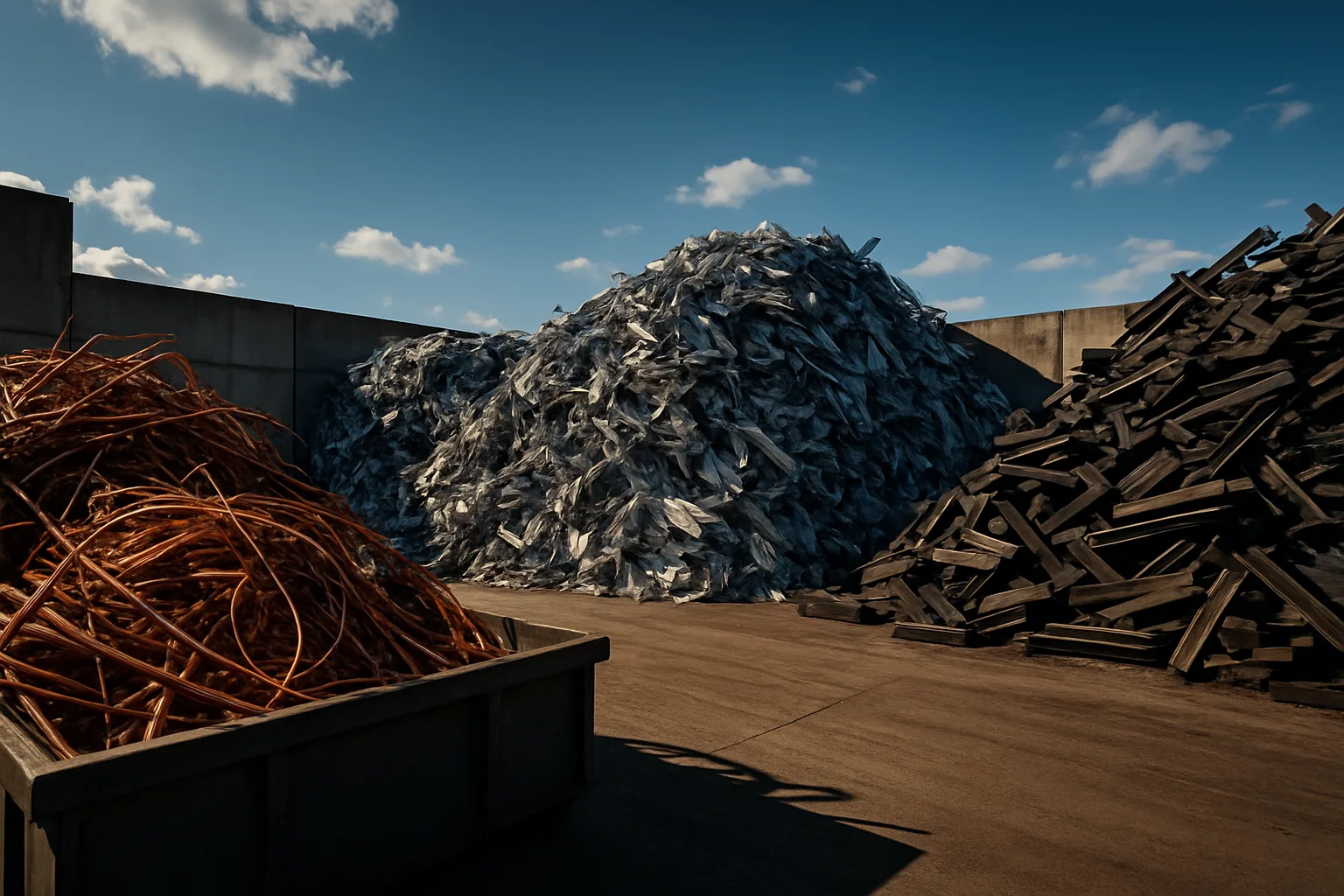
Most people show up at a scrap yard with a truck full of metal and no idea what's about to happen. Some loads get bought on the spot. Others get turned away at the gate — no explanation, no warning, just a wave-off and a drive home empty. If you're looking for metal recycling near me Gatineau or anywhere else in Quebec, knowing what scrap yards actually want saves you time, fuel, and frustration.
This guide breaks it down straight. What yards accept, what they refuse, and why — so you show up prepared and get paid.
---What Most Scrap Yards in Canada Will Accept
Scrap yards deal in metal. That sounds obvious, but "metal" covers a wide range of materials — and not all of it is treated equally. Yards typically sort incoming material into ferrous (iron and steel-based) and non-ferrous (everything else). Both categories are valuable. Non-ferrous metals like copper, aluminum, and brass usually command higher prices per pound.
Here's what the majority of Canadian scrap yards will take without hesitation:
- Ferrous metals: Structural steel, rebar, sheet iron, cast iron, I-beams, steel pipe, old appliances (fridges, washers, dryers), vehicle bodies
- Aluminum: Rims, extrusions, sheet, cans, radiators, castings
- Copper: Bare bright, #1 and #2 copper wire, copper pipe, flashing
- Brass: Fittings, valves, shell casings, rod
- Stainless steel: Industrial equipment, food-grade sinks, exhaust components
- Lead: Batteries, wheel weights, pipe
- Catalytic converters (cats): Accepted at most yards with proper ID and documentation
- Engines and transmissions: Accepted as cores at many yards — prices vary by condition
- End-of-life vehicles (ELVs): Cars, trucks, vans — either as whole units or stripped hulks
If you're looking for a scrap yard near me parts — meaning a place that buys auto cores, alternators, starters, or whole drivetrains — those facilities exist across Gatineau and throughout Quebec. Call ahead and confirm what's on their buy list that week. Prices shift with the market.
---What Scrap Yards Will Refuse — and Why It Matters
This is where most first-timers get surprised. Yards aren't just being picky — many refusals are driven by environmental regulations, liability, and processing limitations. In Quebec, provincial environmental rules around hazardous waste are strict. A yard that accepts the wrong material risks its operating license.
Expect most scrap yards to turn away the following:
- Sealed or pressurized containers: Propane tanks, freon cylinders, or anything that can't be confirmed empty. These are explosion risks.
- Asbestos-containing materials: Old pipe insulation, brake pads from certain eras, and some industrial components. Non-negotiable refusal in most provinces.
- PCB-contaminated equipment: Older electrical transformers may contain polychlorinated biphenyls. Regulated disposal only.
- Radioactive materials: Some industrial gauges contain radioactive elements. Yards are not equipped to handle these.
- Fully intact fuel tanks (still containing fuel): Tanks need to be drained and purged before a yard will accept them.
- Household garbage or mixed waste: Metal mixed with wood, concrete, plastic, or general debris. Yards buy metal — not landfill loads.
- Refrigerants and CFCs: Air conditioning units and refrigerators with intact refrigerant must be degassed before processing.
- Mercury-containing devices: Certain switches, thermostats, and fluorescent tubes. Hazardous waste stream, not scrap.
- Lead-acid batteries without proper documentation: Some yards take them; many require specific paperwork under provincial regulations.
The short version: if it could blow up, leak toxic chemicals, or require a hazmat permit to move, assume the yard won't take it. Call first. Ask specifically. Don't assume.
---The Documentation Problem — Why Yards Ask for ID
If you've never sold scrap before, being asked for government-issued ID at the gate can feel intrusive. It's not. Scrap yards across Canada — including yards in Gatineau — are required to log seller information for certain materials. This is tied directly to provincial and federal anti-theft legislation. Copper wire, catalytic converters, and automotive cores are high-theft targets.
What you'll typically need to bring:
- Valid government-issued photo ID (driver's licence is standard)
- Vehicle registration if you're selling a whole car
- A signed bill of lading or ownership transfer for loads over a certain value threshold
- Serial numbers or VIN documentation for automotive parts in some jurisdictions
Here's where platforms like smashrecycling.ca change the process for commercial sellers. SMASH builds photo documentation, VIN lookup, and serial tracking directly into the inventory tool. If you're selling a commercial load — cats, cores, or non-ferrous material — having that documentation done before you get to the gate speeds everything up and protects you if questions arise later.
Want to find a scrap yard near you in Canada that's set up to handle commercial loads efficiently? The right facility makes a real difference when you're moving volume regularly.
---Condition, Contamination, and Grades — What Actually Determines Your Price
Even when a yard accepts your material, the price you get depends heavily on how it's sorted and what condition it's in. "Scrap copper" isn't one price — it's five or six different grades, each with its own rate. A load of bare bright copper wire pays more than the same weight in insulated wire. #1 copper pipe beats #2 every time. The difference can be significant per pound when you're moving volume.
Key grading factors that affect your payout:
- Cleanliness: Stripped wire versus insulated wire. Aluminum free of steel bolts versus mixed assemblies.
- Contamination: Paint, rubber, plastic, and coatings all reduce grade. Yards factor in the cost to process what they can't use.
- Alloy identification: For aluminum castings, knowing the alloy (6061, 356, etc.) can change the price per pound.
- Size and form: Turnings and shavings pay differently than solid extrusions. Sheet is different from cast.
- Market conditions on the day you sell: Scrap prices move with global commodity markets. What you get Tuesday might be different from Friday.
This is exactly why single-buyer selling is a risky model. You call one buyer, they quote you a number, and you have no way of knowing if that's the actual market rate or just what they feel like paying today. A scrap metal auction platform solves this by putting your load in front of multiple vetted buyers at once. Competition does the work. SMASH runs that kind of competitive process — no guessing, no phone tag with one contact who may or may not be motivated that week.
If you're moving commercial volumes of non-ferrous material from a facility in Gatineau or anywhere in Quebec, locate the closest Canadian scrap yard and then ask whether their buyer network is actually competing for your load — or just giving you a take-it-or-leave-it number.
---Auto Parts and Vehicle Recycling — What Yards Want From Your Car
Vehicle recycling is its own category. End-of-life vehicles move through a specific process: fluids drained, hazardous components removed, then the body crushed for shredder feed. The parts with the most individual value — cats, engines, transmissions, alternators, starters — get pulled before the car hits the crusher.
If you're bringing in a vehicle, here's what yards care about most:
- Title and ownership documentation: A yard that buys a stolen vehicle is liable. Expect to show proof of ownership.
- Catalytic converter presence: A car that still has its cat is worth more than one that's been stripped. If you've already sold the cat separately, say so upfront — the yard needs to know.
- Condition of the drivetrain: A running engine or low-mileage transmission has core value beyond scrap weight.
- Fluid status: Gas in the tank, oil in the engine, coolant in the system — all of it needs managing before the car gets processed.
For anyone dealing in volume automotive recycling, SMASH's VIN lookup and photo documentation tools mean every vehicle in your inventory is documented before it moves. That matters when you're managing a rotating stock of end-of-life units and need buyers to trust what you're describing without a site visit for every load.
Want to go deeper on how auto parts recycling works? Read Canadian scrap yard guides covering everything from catalytic converter values to vehicle title requirements by province.
---How to Find the Right Scrap Yard for Your Material in Gatineau
Not every yard buys everything. Specialty yards exist for a reason — a facility focused on industrial non-ferrous isn't the right place to drop off a beat-up refrigerator. In Gatineau and the surrounding Quebec region, your options range from small independent yards to larger facilities connected to national buyer networks.
Before you load up and drive over, do this:
- Know what you have. Identify your material by type and approximate grade. Ferrous or non-ferrous? Clean or contaminated? Core value or scrap weight?
- Call ahead. Ask if they accept your specific material, what documentation they need, and whether they're open that day. Searching for scrap yards open today near my location is a good starting point — but a phone call confirms it.
- Ask about pricing transparency. A yard that won't explain how they grade your material is a yard that's pricing in their favour, not yours.
- Compare options. If you're moving volume, one buyer giving you one number is not price discovery. It's a guess in their favour.
- Consider a platform like SMASH for commercial loads. If you're a business or a yard moving loads regularly, competitive bidding through a scrap metal auction platform like SMASH puts multiple vetted buyers against each other. No subscription fees. They only win when you do.
Whether you're a homeowner clearing out an old workshop or a commercial recycler managing loads of non-ferrous material out of Quebec, the right buyer network makes a real difference. Being connected to more than one buyer — and having your inventory documented properly — changes the conversation entirely.
---Frequently Asked Questions
Q: What is the most common reason a scrap yard refuses material near Gatineau?
Contamination and hazardous content are the top reasons. Sealed pressurized containers, asbestos-containing materials, and loads with excessive non-metal debris will be turned away. Call ahead, describe your material honestly, and ask what preparation is required before you arrive.
Q: Do scrap yards near me in Quebec require ID to sell metal?
Yes. Most yards in Quebec require government-issued photo ID for all sellers, and additional documentation for high-value materials like catalytic converters and copper wire. This is tied to provincial anti-theft regulations and is standard practice across the industry.
Q: How do I know if I'm getting a fair price at a scrap yard near me in Gatineau?
The honest answer is: you don't, if you're only talking to one buyer. Scrap prices fluctuate with global commodity markets. Getting quotes from multiple buyers — or using a competitive auction platform like SMASH — gives you actual price discovery instead of one take-it-or-leave-it number.
Q: Can I sell a car without a title to a scrap yard in Quebec?
In most cases, no. Quebec scrap yards are required to verify ownership of vehicles before purchase. Without proper documentation, most reputable yards will decline the transaction. Contact the SAAQ or a licensed recycler for guidance on vehicles with missing paperwork.
Q: What does a scrap metal auction platform do differently from a regular scrap yard?
A scrap metal auction platform like SMASH puts your documented load in front of multiple vetted buyers simultaneously. Instead of accepting a single buyer's quote, you get competing bids — which means the market sets your price, not one buyer's margin. No subscription fees, and auto-invoicing handles the paperwork automatically.
---If you're ready to stop guessing and start getting paid what your material is actually worth, the first step is knowing where to take it. Find a trusted scrap yard near you in Canada — whether you're in Gatineau, across Quebec, or anywhere else in the country. The right facility and the right buyer network make all the difference.
Prices fluctuate with global commodity markets. Always confirm current rates directly with your buyer or yard before making any decisions based on pricing.
Follow SMASH on LinkedIn for industry updates, scrap metal market insights, and tips on getting more from every load you move.