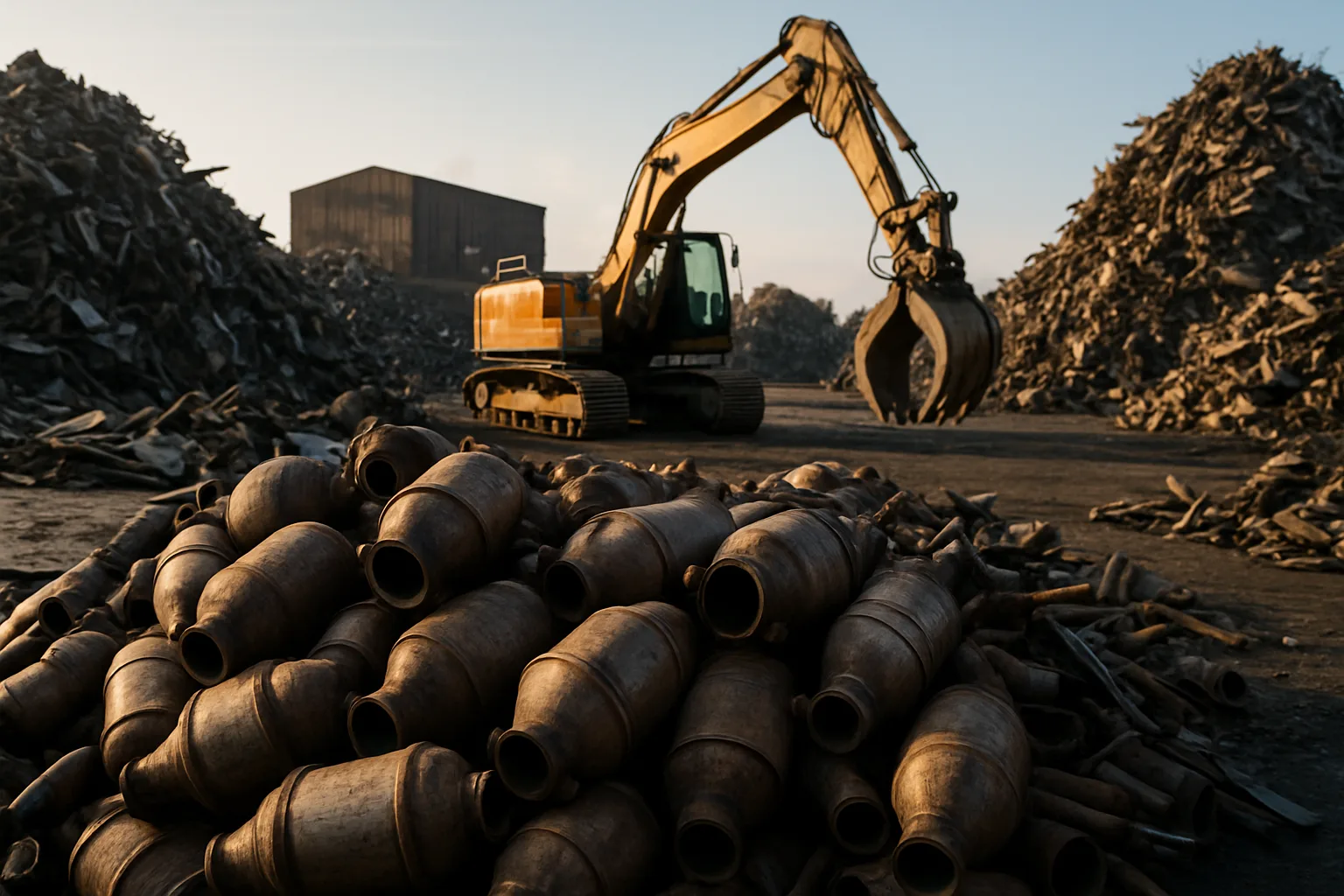
Catalytic Converters Are One of the Most Valuable — and Most Scrutinized — Items at Any Scrap Metal Yard Windsor Sellers Bring In
A single catalytic converter can contain more value per pound than almost anything else in your scrap load. Platinum, palladium, and rhodium sit inside that ceramic honeycomb — and yards, regulators, and buyers all know it. That's why the rules around selling cats have tightened significantly across Canada, and why knowing how a scrap metal yard Windsor handles them matters before you show up with a truckload.
This isn't a back-of-the-lot commodity anymore. Catalytic converter theft remains a serious issue across Ontario and the rest of Canada in 2026, and scrap yards are on the front lines of the compliance crunch. If you're a seller — individual or commercial — understanding the process protects you and speeds up your transaction.
What's Actually Inside a Catalytic Converter (And Why Yards Care So Much)
The precious metals inside a cat are called platinum group metals, or PGMs. The three main ones are platinum (Pt), palladium (Pd), and rhodium (Rh). Their concentrations vary significantly depending on the vehicle make, model, year, and engine type. A hybrid converter, for example, typically carries higher PGM loading than a standard economy car cat.
This is why serious buyers don't just eyeball a cat and throw a number at you. They use serial number lookups, physical assay data, and market indices to price each unit. Palladium and rhodium prices have been volatile — both have seen dramatic price swings over the past several years, and 2026 is no different. Pricing a cat without data is guesswork. Pricing it with data is a transaction.
- Platinum: Used primarily in diesel vehicle converters
- Palladium: Dominant in gasoline vehicle converters — historically the highest-value PGM in automotive recycling
- Rhodium: Present in smaller quantities but often commands extremely high spot values
- Ceramic substrate: The honeycomb structure that holds the PGMs — yield matters here
When you bring cats to a Windsor scrap metal services provider, a reputable yard will run the serial number or visual ID against a known database before quoting. That step isn't bureaucracy — it's how they protect you from leaving money on the table and how they protect themselves from buying stolen material.
How Ontario Regulations Shape Catalytic Converter Transactions at Local Scrap Yards
Ontario has continued to strengthen its scrap dealer regulations, particularly around high-theft commodities like catalytic converters. As of 2026, yards operating in Ontario are required to record seller identification, document the source of converters, and in many cases photograph the material at intake. These aren't optional best practices — they're compliance requirements that reputable local scrap yards in Windsor follow as standard procedure.
The Ontario government worked with law enforcement and the recycling industry to address the surge in catalytic converter theft that plagued the province throughout the early 2020s. The rules that came out of that effort put real accountability on both sides of the transaction. Sellers need to demonstrate legitimate ownership or sourcing. Yards need to maintain records and, in some cases, hold periods before processing.
What does this mean practically for you?
- Bring valid government-issued ID — this is non-negotiable at any compliant yard
- If you're selling from a vehicle, be ready to show ownership documentation
- Commercial sellers (shops, fleet operators) should keep invoices or removal records on file
- Expect photo documentation of your material at drop-off — this is standard, not suspicious
Yards that skip these steps aren't doing you a favour. They're exposing themselves — and potentially you — to legal liability. When you find a scrap yard near you in Canada, verify that they're operating under a valid dealer registration and following provincial requirements.
How Scrap Metal Recycling Canada Processes Cats After Intake
Once a converter clears intake documentation at a compliant facility, it enters a separate processing stream from ferrous and general non-ferrous scrap. Most yards don't process cats in-house — they aggregate loads and sell to a specialist processor or smelter. This is where the real value recovery happens, and it's also where pricing transparency becomes critical for sellers who are watching their margins.
The typical downstream path looks like this:
- Intake and ID: Serial number or visual identification, documentation completed
- Aggregation: Cats are sorted and staged by type (foreign, domestic, diesel, aftermarket)
- Lot assembly: Loads are built to meet processor minimums, often hundreds of units
- Assay or average pricing: Some processors assay individual units; others price by average yield tables
- Settlement: Payment flows back through the chain based on confirmed PGM content
This is a long chain. And historically, sellers at the beginning of that chain — the yards buying from the public — have had limited visibility into what the processor is actually seeing. That opacity has real consequences for the prices yards offer. When you bring ten cats to a local scrap yard in Windsor, the yard is pricing them against what they think they can get from their downstream buyer, not necessarily against what the material is actually worth on settlement.
Platforms like SMASH make it easier to find the best price for your scrap in Canada by putting your material in front of multiple vetted buyers at once. That competitive pressure is how sellers close the information gap. Competition can help reveal the market — that's not a slogan, it's how price discovery works.
What Sellers Should Know Before Bringing Cats to a Scrap Metal Yard in Windsor
Whether you're an auto shop clearing out a bin of spent converters or an individual who pulled one off a beater vehicle, a few preparation steps go a long way toward a smoother transaction and a better outcome.
Know what you have. Not all cats are equal. A large diesel cat from a heavy-duty truck is worth significantly more than a small economy car unit. Aftermarket converters — the kind installed as a cheap emissions fix — carry far less PGM content than OEM units. If you can read or photograph the serial number before you show up, you'll have a basis to cross-check the offer.
Don't strip or decan before you sell. Some sellers think they'll get more value by opening the converter and selling the substrate separately. In practice, this often backfires. Many buyers won't touch decanned or partial material because the liability profile changes. Sell whole units.
Get multiple quotes. This is the single most valuable thing you can do. A yard in Windsor might offer a flat rate per unit. Another buyer might price by the specific serial number. A third might aggregate your lot and return a value after assay. These approaches produce very different outcomes. More buyers means better price discovery — and SMASH exists precisely to create that competition for your material.
You can also read Canadian scrap yard guides to get a better feel for how different material types are priced and what to expect from the intake process at reputable facilities.
Non-Ferrous and Precious Metal Handling Beyond Catalytic Converters
Cats get most of the attention, but they're not the only precious-metal-bearing material flowing through Ontario scrap yards. Electronic scrap — circuit boards, CPUs, memory modules — carries gold, silver, and palladium. Certain industrial contacts and connectors contain silver. Dental scrap has historically been a niche but genuine source of precious metal recovery.
For non-ferrous material in general, the same principles apply: documentation matters, lot integrity matters, and buyer competition drives better outcomes. A yard that handles both catalytic converters and circuit board scrap should be giving you itemized documentation for each material stream — not a single blended total that obscures what each component was worth.
If you're a business generating consistent non-ferrous or precious metal scrap in Windsor or elsewhere in Ontario, the economics of a structured auction approach — rather than a standing agreement with one buyer — are worth taking seriously. A standing buyer has every incentive to price conservatively. A competitive process has the opposite dynamic.
When you're ready to locate the closest Canadian scrap yard with the right capabilities for your material, look for facilities that explicitly list cats and non-ferrous as core competencies, not afterthoughts.
Frequently Asked Questions
Q: Do I need ID to sell a catalytic converter at a scrap metal yard in Windsor?
Yes. Ontario regulations require registered scrap dealers to collect and record seller identification for catalytic converters and other high-theft materials. Bring valid government-issued photo ID. If the yard doesn't ask for it, that's a red flag about their compliance practices.
Q: How do local scrap yards in Windsor price catalytic converters?
Most yards use a combination of serial number identification and published pricing tables tied to PGM market rates. Some use average-yield pricing by cat type. Prices fluctuate based on platinum, palladium, and rhodium spot values, which change daily. Always get more than one quote before you commit.
Q: Can I sell catalytic converters from a vehicle I don't own?
Not at any compliant yard. You'll need to demonstrate legitimate ownership or authorized sourcing. Shops selling converters removed during service should keep customer invoices. Attempting to sell without documentation isn't just a transaction problem — it's a legal one.
Q: Are aftermarket catalytic converters worth less at a scrap metal recycling facility?
Generally, yes. Aftermarket converters typically contain lower PGM concentrations than OEM units, which reduces their scrap value. Some buyers won't touch certain aftermarket types at all. If you're not sure what you have, photograph the serial number and ask the yard to run an ID before accepting a quote.
Q: How does SMASH help sellers get better prices on catalytic converters and scrap metal?
SMASH puts your material in front of multiple vetted buyers through a competitive auction format, rather than locking you into a single buyer's offer. Documented inventory — including photo evidence and serial tracking — gives buyers more confidence, which supports better price discovery. No subscription fees. SMASH only wins when the seller wins.
If you're generating scrap in Windsor or anywhere across Ontario and you're tired of one-call, one-price transactions, it's time to see what competition actually does for your bottom line. Find the best price for your scrap in Canada with SMASH — and when you're ready to connect with a local facility, find a scrap yard near you in Canada at scrap-yard-near-me.ca.
Disclaimer: Scrap metal prices — including PGM-related values for catalytic converters — fluctuate daily based on global commodity markets. Always check current rates before finalizing any transaction.
Stay current on scrap metal market movements and industry regulation updates by following SMASH on LinkedIn — useful intel for anyone moving metal in Canada.