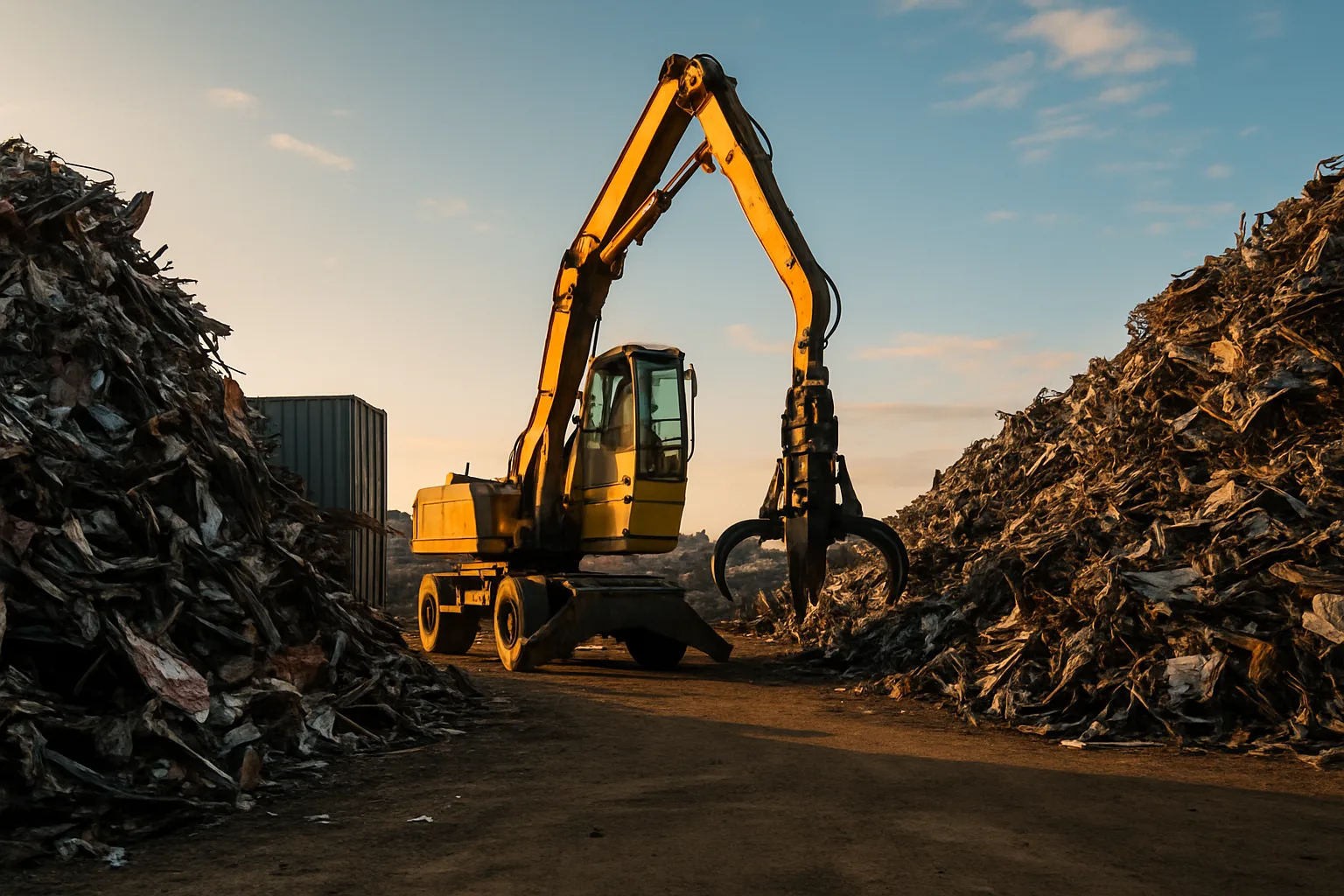
Most people pull up to an auto recycling yard in Saint John and hand over the keys. What happens next is invisible to them — and that invisibility costs money. When you understand how a yard actually sorts and processes incoming metal, you stop leaving cash on the table. You ask better questions. You bring better material. You walk away with a better check.
This isn't a technical deep-dive for engineers. It's a practical guide for anyone selling scrap in New Brunswick — whether you're offloading a single car, cleaning out a shop, or running a small recycling operation. The process matters because the value lives in the details.
---Why Metal Sorting Is the Foundation of Scrap Value
Not all metal is equal. A yard that mixes shredded steel with clean copper isn't running an efficient operation — it's destroying value. Sorting is how a facility turns a pile of mixed junk into sellable, graded commodities that buyers actually want to pay for.
At any legitimate auto recycling yard, incoming material goes through a triage process before anything else happens. Staff assess the load visually, sometimes with handheld XRF analyzers or magnet tests, to identify metal types. Ferrous metals — steel, cast iron — get separated from non-ferrous materials like aluminum, copper, brass, and stainless. That split alone determines which processing stream the metal enters and ultimately what price it fetches.
- Ferrous metals: Magnetic. Includes steel frames, iron engine blocks, body panels. Lower per-pound value but sold in large volume.
- Non-ferrous metals: Non-magnetic. Includes aluminum wheels, copper wiring, brass fittings, radiators. Higher per-pound value, sold in smaller grades.
- Catalytic converters (cats): Treated as a separate category entirely — assayed for platinum, palladium, and rhodium content.
- Cores: Starters, alternators, and other parts that hold additional value for remanufacturing markets.
Miss a sort step and you leave real money behind. A load of aluminum contaminated with plastic or steel is worth significantly less than clean, graded aluminum. Yards know this. Smart sellers learn it too.
---The Step-by-Step Process Inside an Auto Recycling Yard — Saint John and Beyond
Walk through what actually happens after a vehicle or metal load arrives at a yard. The process varies by facility size, but the core steps are consistent across serious operations from Saint John to Edmonton.
Step 1: Intake and Documentation
Every load gets logged. A yard running a tight operation records the vehicle VIN, captures photos, and notes weight at the scale. This matters for liability, environmental compliance, and accurate payout. Yards using modern platforms — like a scrap metal auction platform — can tie this documentation directly to buyer-facing listings, which builds trust and supports better price discovery.
Step 2: Fluid Removal and Depollution
Before any auto goes to shredder or auction, regulated fluids come out. Gas, oil, coolant, brake fluid, refrigerant — all of it. This isn't optional. Environmental regulations in New Brunswick, like across Canada, require proper depollution before a vehicle can be processed or crushed. Yards that skip this step face serious fines. Sellers should confirm the yard they use follows proper depollution protocol — it protects them too.
Step 3: Parts Harvesting
High-value components come off before the shell goes to shred. Catalytic converters, copper wiring harnesses, aluminum wheels, starters, alternators, and radiators are pulled and sorted separately. A catalytic converter from a late-model hybrid can be worth multiples of what the steel frame brings. That's why documentation and serial tracking for cats is essential — it protects the yard and creates a clear chain of custody.
Step 4: Shredding or Baling
What's left — the bare steel shell — typically goes to a shredder or gets baled for shipment. Shredded steel becomes shred, a commodity grade bought by steel mills in volume. Baled steel goes to buyers who can handle full bales. Either way, the material needs to meet grade specifications — cleanliness, density, and contamination levels all factor into what a mill will pay.
Step 5: Grading and Staging for Sale
Sorted, processed material gets staged into lots by grade. Clean aluminum rims stack separately from mixed aluminum. Insulated copper wire is categorized by grade — #1, #2, or bare bright. Each grade has its own market price, and the difference between grades can be substantial. This is where inventory tools and photo documentation become powerful — buyers bidding on material they've never physically touched rely on accurate grading and images to make informed offers.
---How Scrap Yards in New Brunswick Price Different Metal Grades
Pricing at any scrap yard near me in New Brunswick follows the same fundamental logic: commodity markets set the ceiling, and local supply, demand, and processing costs determine where within that range a yard prices their buy. Prices move daily. What you were offered last Tuesday may not be what you're offered today.
That's not a dodge — it's how commodity markets work. Copper tracks global futures. Aluminum prices respond to energy costs and Chinese smelter output. Shredded steel moves with mill demand in the U.S. Midwest and Ontario. Knowing this helps you time a sale when it makes sense, rather than panicking when prices dip temporarily.
- Shredded steel / HMS: Priced by the ton. Volume-dependent.
- Clean aluminum (rims, extrusions): Priced by the pound. Grade matters — cast vs. extruded vs. painted vs. bare all differ.
- Copper (wire, pipe, sheet): Priced by pound, grade by grade. Bare bright copper commands the highest rate.
- Catalytic converters: Priced by assay or database value — PGM content drives the number, not the weight.
- Stainless steel: Priced separately from mild steel. Grade matters here too — 304 vs. 316 stainless aren't the same.
Disclaimer: Metal prices fluctuate daily based on global commodity markets. Always confirm current rates directly with your local yard or check a live pricing source before you haul a load.
To find a scrap yard near you in Canada that posts transparent current pricing, use a directory that vets its listings — not just a random Google result.
---Why Competitive Auctions Produce Better Price Discovery Than One Phone Call
Here's where the old way of selling scrap breaks down. You sort your material, you load the truck, you call your one buyer — and you take whatever number they give you. Maybe it's fair. Maybe it isn't. You have no idea, because you only have one data point.
That's the problem a scrap metal auction platform like smashrecycling.ca is built to solve. When multiple vetted buyers bid on a documented, graded lot of material, the price discovery process does the work for you. Competition reveals the market. You don't have to guess whether you're leaving money behind — you find out.
For a yard processing consistent volume — whether that's catalytic converters in Saint John or loads of non-ferrous coming out of a shop in Edmonton — the difference between one buyer and multiple buyers bidding competitively adds up. Documented inventory, accurate photos, and weight verification give buyers confidence to bid aggressively. That's the SMASH model: no subscription fees, no guessing, and both sides of the transaction have the data they need to make a deal.
If you're serious about getting accurate market value for processed scrap, you need to locate the closest Canadian scrap yard that either auctions material or uses a platform that does.
---What Sellers Can Do Before They Arrive at the Yard
Preparation before you pull into the yard is worth real money. A sorted, documented load moves faster and often earns a better offer — because it costs the yard less labor to process and gives them confidence in what they're buying.
Here's what experienced sellers do before dropping a load:
- Separate ferrous from non-ferrous. Don't mix steel and aluminum in the same bin. Even rough sorting helps.
- Remove obvious contamination. Plastic, rubber, and dirt all reduce the grade of your load.
- Know what you have. Pull catalytic converters, copper wire, and aluminum before you mix it into a steel load.
- Weigh your load before you leave. A basic estimate helps you verify you're being paid accurately at the yard scale.
- Bring documentation. For vehicles, bring the title. For industrial scrap, bring packing lists if you have them.
- Take photos. A quick photo of your sorted load before drop-off gives you a record and builds credibility with the yard.
For the full breakdown on how to navigate the selling process, read Canadian scrap yard guides that walk you through each step in plain language.
If you're in the area and looking for reliable options, Saint John scrap metal services can connect you with vetted local facilities that handle everything from single vehicles to full industrial loads.
---Frequently Asked Questions
Q: How does an auto recycling yard in Saint John determine what to pay for my vehicle?
Yards factor in the vehicle's make, model, year, weight, current steel prices, and the value of any harvestable parts — cats, copper, aluminum wheels. The condition of the car matters less than the metal content and parts value. Calling ahead with your VIN gets you a faster, more accurate quote.
Q: What's the difference between a scrap yard and an auto recycling yard?
An auto recycling yard specializes in end-of-life vehicles — depollution, parts harvesting, and scrap processing are all done on-site. A general scrap yard accepts a wider range of ferrous and non-ferrous material but may not have the equipment or permits to properly depollute vehicles. For a complete car, an auto recycler is usually the right call.
Q: How do I find the best scrap yard in Saint John for my load?
Look for yards that offer transparent pricing, use certified scales, and provide a receipt with itemized weights and rates. Asking whether the yard auctions material or uses a platform like SMASH helps you understand whether they're competitive on price. Don't settle for the first number you're given — especially on non-ferrous loads.
Q: Are scrap metal prices the same across New Brunswick?
No. Prices vary by location, buyer demand, and local competition. A yard in a rural area with fewer buyers may offer less than one in a high-volume market. Using a platform that aggregates buyers — like a scrap metal auction platform — removes some of this geographic disadvantage by bringing competition to your material regardless of where you're located.
Q: Do I need to sort my scrap before I bring it to the yard?
You don't have to, but it pays to. Yards that receive unsorted loads either sort it themselves (and charge for that labor) or classify it as mixed scrap — which always pays less than graded, separated material. Even basic sorting — ferrous in one pile, non-ferrous in another — puts more money in your pocket.
---Knowing how yards sort and value metal turns you from a passive drop-off into an informed seller. Whether you're hauling a junked car, a load of copper wire, or a drum of catalytic converters, the more you know about what's behind the scale, the better you negotiate. If you're ready to find a facility that handles your material the right way, find a scrap yard near you in Canada — scrap-yard-near-me.ca has the local listings to get you started.
Stay current on scrap metal market trends and yard insights — follow SMASH on LinkedIn for regular updates from inside the industry.